


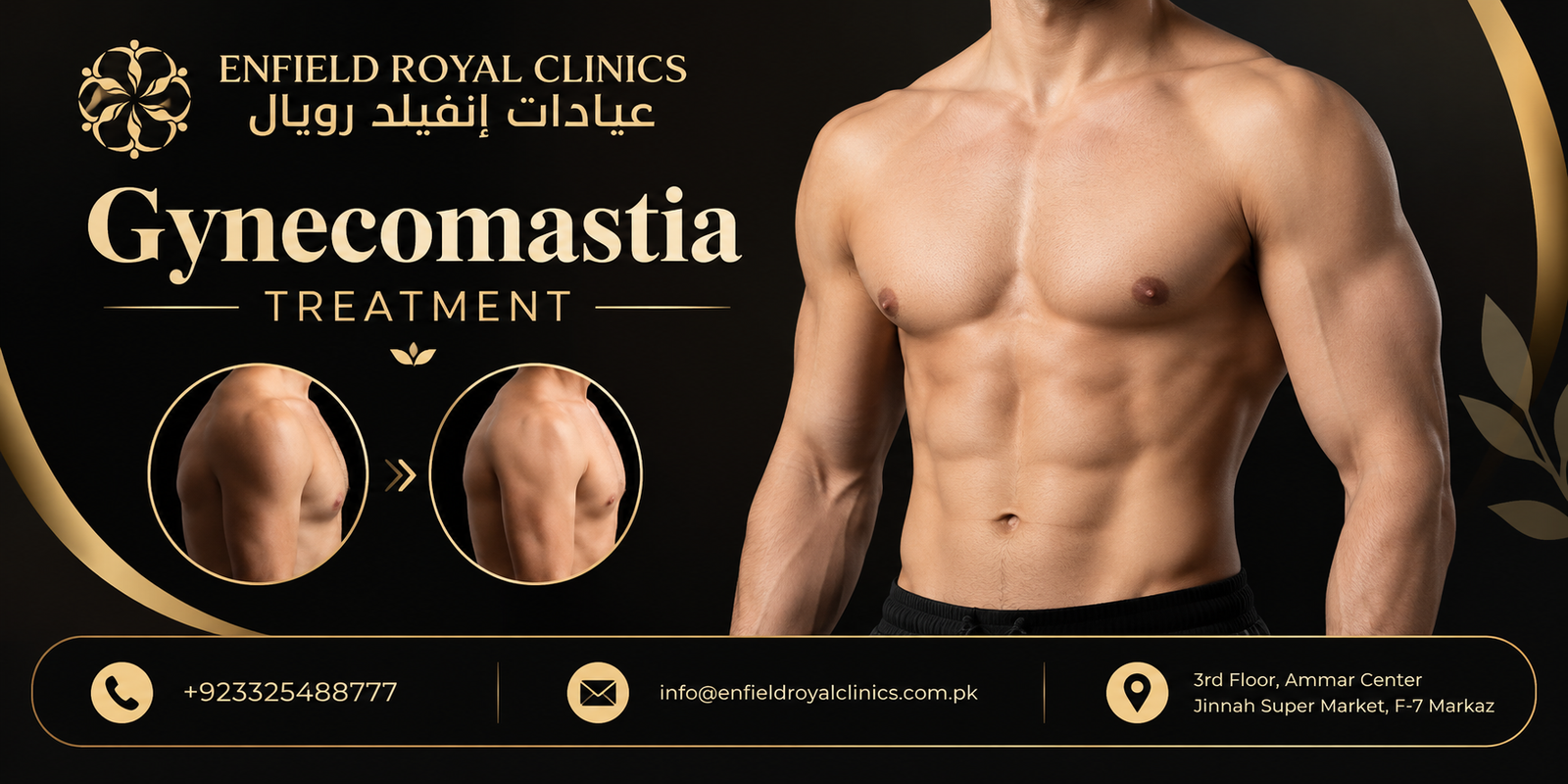
Puffy nipples can be a noticeable concern for men who feel that their chest looks rounded, swollen, or less defined than they would like. In some cases, the appearance is linked to gynecomastia, a condition involving enlargement of male breast tissue. When excess tissue develops behind or around the nipple, the areola may appear raised or puffy.
Gynecomastia surgery can help improve this appearance when enlarged glandular tissue, excess fat, or a combination of both is responsible. For men considering Gynecomastia in Islamabad, understanding the cause of puffy nipples is an important part of choosing an appropriate treatment approach. Not every case requires surgery, and the most suitable option depends on the individual's chest structure and underlying cause.
What Causes Puffy Nipples in Men?
Puffy nipples can develop for several reasons. One common cause is gynecomastia, where glandular breast tissue grows beneath the nipple and creates a raised appearance. The tissue may feel firm or rubbery and can sometimes be associated with tenderness or sensitivity.
Excess body fat can also make the chest appear fuller. This is sometimes referred to as pseudogynecomastia because the enlargement is primarily related to fat rather than glandular breast tissue.
Hormonal changes can contribute to gynecomastia as well. Puberty is a common period for temporary breast tissue enlargement, while certain medications, aging, weight changes, and some medical conditions may also play a role.
Determining whether the puffiness is caused by glandular tissue, fat, or both helps guide treatment planning.
Can Gynecomastia Surgery Reduce Puffy Nipples?
Yes, gynecomastia surgery can reduce the appearance of puffy nipples when excess glandular tissue or surrounding fat is responsible. The treatment is designed to reduce the tissue creating the unwanted fullness and improve the overall chest contour.
When firm glandular tissue is located directly beneath the nipple, it may need to be removed through an appropriate surgical technique. If excess fat is also contributing to chest fullness, liposuction may be used to reduce the surrounding fatty tissue.
For mixed cases, both approaches may be considered. Reducing the underlying excess tissue can allow the nipple and areola to sit more naturally against the chest.
The objective is not simply to make the nipples smaller. Instead, treatment aims to create a flatter and more proportionate chest while maintaining a natural appearance.
How Is the Nipple and Areola Area Improved?
The nipple and areola are closely connected to the tissues underneath them. When excess tissue pushes outward from beneath the nipple, the area can appear raised even when the rest of the chest is relatively flat.
By addressing the underlying tissue, surgery can reduce the pressure and fullness contributing to the puffy appearance. Careful contouring around the surrounding chest can also create a smoother transition between the nipple area and the rest of the chest.
The amount of tissue removed needs to be carefully considered. Excessive removal can potentially create a hollow or indented appearance. Appropriate treatment therefore focuses on controlled reduction rather than removing as much tissue as possible.
Can Liposuction Alone Treat Puffy Nipples?
Liposuction can be helpful when excess fat is a major contributor to chest fullness. It works by removing localized fat and can improve the overall contour of the chest.
However, liposuction does not directly remove firm glandular tissue. If the puffiness is mainly caused by dense tissue beneath the nipple, another surgical approach may be needed.
Some men have both fatty and glandular enlargement. In such situations, combining fat reduction with direct tissue removal may provide a more comprehensive contour improvement.
A physical assessment is important because the appearance of the chest alone may not reveal exactly which type of tissue is responsible.
What Results Can Men Expect After Surgery?
The appearance of the chest can become flatter and more defined after excess tissue has been reduced. Puffy nipples may become less prominent, while the surrounding chest can develop a smoother contour.
Results are not usually visible in their final form immediately. Swelling and bruising can temporarily make the chest appear uneven or fuller than expected. As healing continues, these effects generally decrease.
The final appearance depends on several factors, including the amount of tissue removed, skin elasticity, chest structure, body weight, and individual healing. Realistic expectations are therefore an important part of treatment planning.
What Is Recovery Like After Treating Puffy Nipples?
Recovery varies from person to person. During the early period, swelling, tenderness, bruising, and tightness may occur around the treated area.
A compression garment may be recommended to support the healing tissues and help manage swelling. Light activities can usually be introduced gradually, while strenuous exercise, heavy lifting, and intense chest workouts may need to be avoided until adequate healing has occurred.
Men should follow postoperative wound-care instructions and attend recommended follow-up appointments. Returning to demanding activities too quickly can increase swelling and place unnecessary stress on healing tissues.
As the recovery progresses, the chest gradually becomes more comfortable and the improved contour becomes clearer.
Is Surgery Needed for Every Case of Puffy Nipples?
Not every case of puffy nipples requires surgery. In adolescents, temporary hormonal changes can sometimes cause breast tissue enlargement that improves naturally over time.
If excess body fat is the main reason for a fuller chest, weight management may improve the appearance. However, persistent glandular tissue may not disappear through exercise or weight loss alone.
A medical assessment can help identify the underlying cause and determine whether observation, lifestyle changes, medical management, or surgery may be appropriate.
FAQs
1. Can gynecomastia surgery flatten puffy nipples?
Yes. When puffy nipples are caused by excess glandular tissue or surrounding chest fat, gynecomastia surgery can reduce the fullness and create a flatter chest contour.
2. Does exercise remove puffy nipples caused by gynecomastia?
Exercise can help reduce overall body fat and improve chest muscle development, but it may not remove firm glandular tissue beneath the nipple.
3. Can puffy nipples return after gynecomastia surgery?
Long-lasting improvement is possible, but significant weight changes, hormonal changes, certain medications, or other underlying factors may contribute to renewed chest enlargement.
4. How long does it take for puffy nipples to look flatter after surgery?
The chest may appear swollen during the early recovery period. As swelling decreases over the following weeks and months, the nipple area can gradually develop a flatter and more natural appearance.
For more information visit Enfield royal clinic in islamabad

 English
 Arabic
 French
 Spanish
 Portuguese
 Turkish
 Dutch
Dutch
 Italiano
 Russian
 Romaian
 Portuguese (Brazil)
 Greek
Greek