


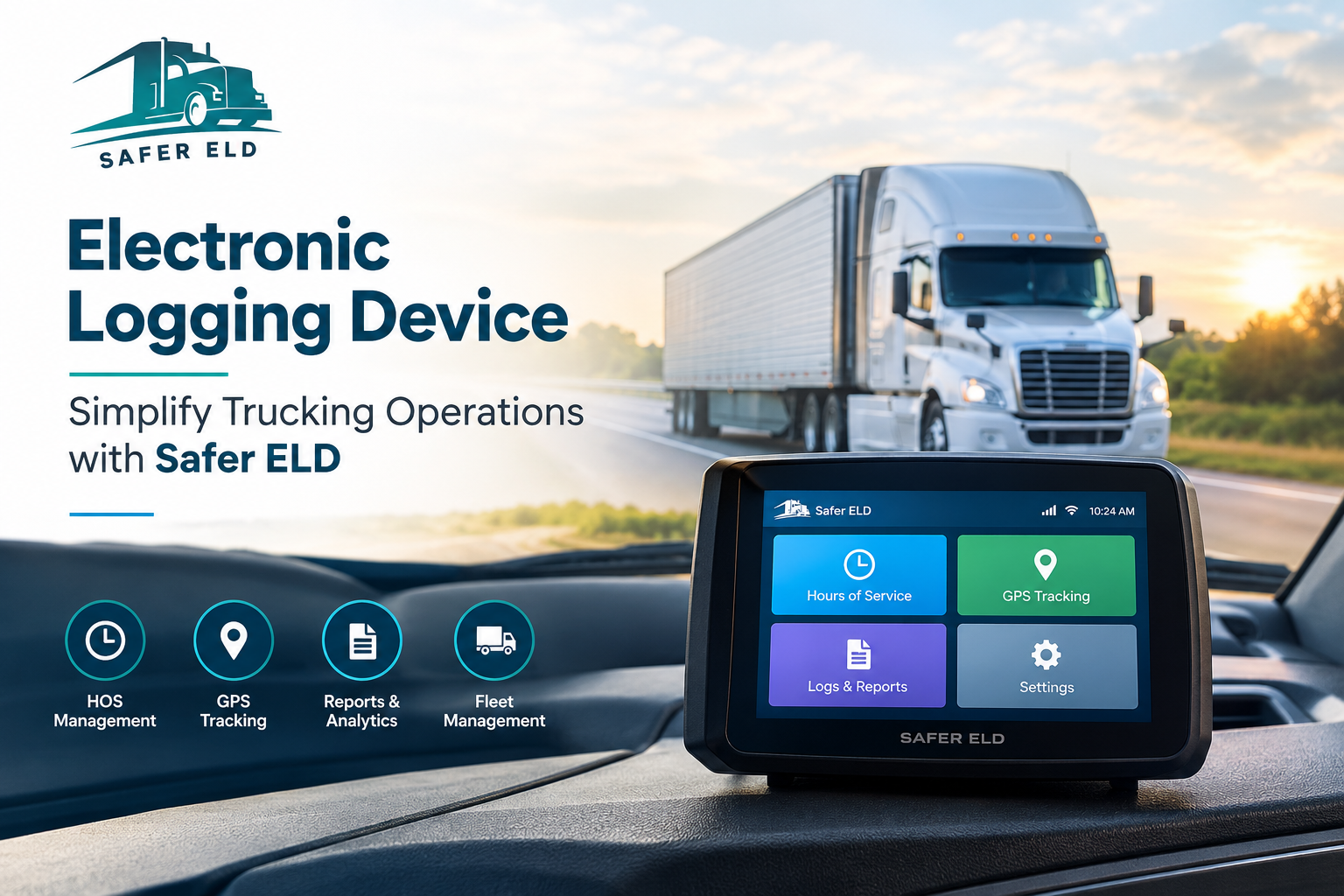
The trucking industry relies on accurate records, efficient operations, and reliable technology. An electronic logging device helps many truck drivers and fleet operators manage electronic logs and Hours of Service (HOS) records more efficiently. By moving from traditional paperwork to digital records, drivers can manage important duty-status information more conveniently.
Choosing the right ELD is not only about finding a low-cost option. Trucking businesses should also consider ease of use, connectivity, vehicle compatibility, reporting, support, and fleet-management requirements.
What Is an Electronic Logging Device?
An electronic logging device is a technology solution used to record information related to a commercial driver's driving activity and records of duty status. It helps drivers manage electronic logs while providing fleet managers with access to useful operational information.
Depending on the provider, an ELD solution may also include GPS information, reporting, fleet visibility, analytics, and other fleet-management features.
Why Is an ELD Important for Truckers?
Managing paper logs can be time-consuming and difficult to organize, especially for businesses operating multiple vehicles. An ELD provides a digital approach to maintaining and reviewing important records.
Some potential benefits include:
-
Easier electronic log management
-
Better organization of HOS records
-
Reduced manual paperwork
-
Convenient access to driver and vehicle information
-
GPS and fleet visibility options
-
Digital reports and analytics
-
Support for everyday fleet operations
The features available can vary depending on the provider and selected plan.
Important Features to Consider
HOS and Electronic Log Management
HOS management is an important consideration when choosing an ELD. Drivers should have an easy-to-use system for reviewing records, certifying logs, and making permitted edits or annotations.
Reliable Connectivity
Connectivity helps drivers and fleet managers access and transfer required information. Before choosing an ELD, check its available connectivity and data-transfer options.
GPS and Fleet Visibility
Many modern ELD platforms offer GPS and fleet-visibility features. These can help managers monitor vehicle locations and organize daily operations. Real-time tracking may be an additional fleet-management feature rather than a requirement of the ELD rule.
Reporting and Analytics
Reporting features can help fleet managers organize operational information and review useful trends. Depending on the provider, reports may cover drivers, vehicles, electronic logs, and other fleet activities.
Driver-Friendly Interface
A simple interface can make an ELD easier for drivers to use. Look for technology that makes everyday logging tasks clear and straightforward.
Why Consider Safer ELD?
Safer ELD provides practical ELD and fleet-management tools designed to support electronic logs, HOS management, GPS information, reporting, and everyday fleet operations.
Whether you are an owner-operator or manage a larger fleet, evaluate an ELD based on your actual requirements. Consider vehicle compatibility, connectivity, usability, reporting features, customer support, and overall cost before selecting a solution.
Verify ELD Registration Before Choosing
Before purchasing or using an ELD, carriers should verify that the specific device model appears on the current FMCSA list of registered, self-certified ELDs.
The official list can change over time, so checking the current status of a device is an important step when evaluating an ELD solution.
Choose the Right ELD for Your Operation
Different trucking businesses have different needs. Owner-operators may prioritize simple log management and ease of use, while larger fleets may require GPS visibility, reporting, centralized management, and additional fleet tools.
Instead of choosing an ELD based only on price, compare its features and determine whether they fit your daily trucking operations.
Conclusion
An electronic logging device can help trucking businesses manage electronic logs and HOS information while providing additional tools for everyday fleet operations. Features such as connectivity, GPS information, reporting, and fleet visibility can further support modern trucking workflows.
Safer ELD offers practical tools designed to support electronic logs, HOS management, GPS information, reporting, and fleet operations.
Looking for an ELD solution for your trucking business? Explore Safer ELD and find tools that fit your fleet-management needs.
FAQs
1. What is an electronic logging device?
An electronic logging device is a technology solution that records and manages information related to a commercial driver's driving activity and records of duty status.
2. What features should I look for in an ELD?
Important factors include HOS and electronic log management, connectivity, vehicle compatibility, driver usability, GPS information, reporting, customer support, and overall cost.
3. Can an ELD provide GPS tracking?
Many ELD solutions include GPS and fleet-visibility features. However, real-time tracking can be an additional fleet-management feature rather than a core ELD-rule requirement.
4. How can I verify an ELD before purchasing?
Carriers should check the specific device model against the current FMCSA list of registered, self-certified ELDs before purchasing or using it.
5. How can Safer ELD help trucking businesses?
Safer ELD provides tools designed to support electronic logs, HOS management, GPS information, reporting, and everyday fleet-management activities.

 Arabic
 French
 Spanish
 Portuguese
 Deutsch
 Turkish
 Dutch
Dutch
 Italiano
 Russian
 Romaian
 Portuguese (Brazil)
 Greek
Greek