


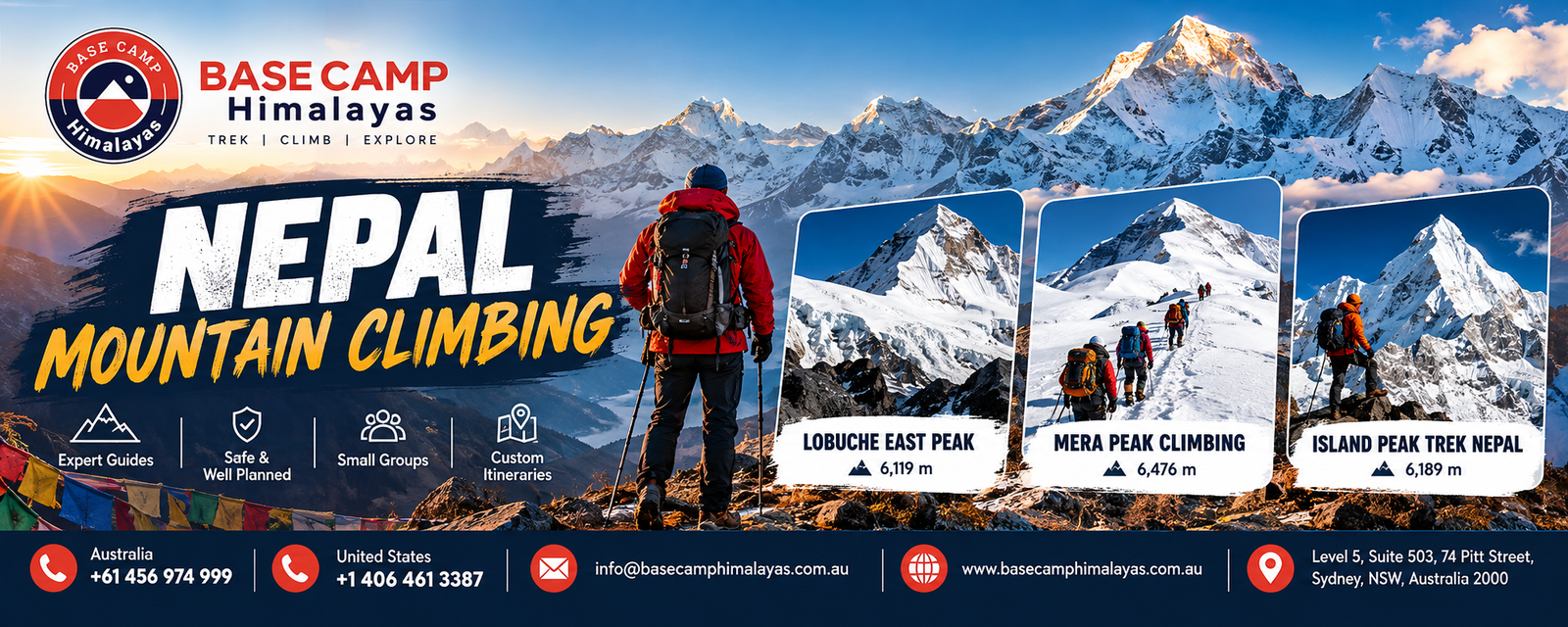
For adventure seekers, Nepal mountain climbing offers an extraordinary opportunity to move beyond traditional trekking and experience the challenge of high-altitude mountaineering. Nepal combines dramatic Himalayan landscapes, rich Sherpa culture, remote mountain communities and some of the world's most memorable trekking peaks. For travellers who want to turn a Himalayan trek into a genuine climbing experience, Mera Peak, Island Peak and Lobuche East provide three distinctive ways to take on the mountains.
Choosing the right expedition, however, requires more than simply selecting the highest summit. Fitness, acclimatisation, technical requirements, itinerary design, weather, equipment, local expertise and emergency planning all influence the experience. Base Camp Himalayas provides guided, all-inclusive Himalayan adventures designed around these practical considerations, with experienced local guides and structured itineraries.
Why Nepal Mountain Climbing Appeals to Adventure Travellers
Nepal offers an exceptional combination of accessible trekking routes and serious high-altitude objectives. Instead of spending the entire journey on established trekking trails, climbers can gradually progress towards glaciers, snow-covered slopes and mountain summits.
For first-time peak climbers, preparation and professional support are particularly important. Base Camp Himalayas highlights the importance of fitness, acclimatisation, appropriate equipment and experienced guidance when approaching peaks such as Mera, Island and Lobuche East.
A successful Himalayan climbing experience is not simply about reaching the summit. It is about managing altitude responsibly, understanding changing mountain conditions and having a team capable of making sensible decisions when circumstances change.
Island Peak Trek: A Step Towards Technical Mountaineering
The Island Peak trek is an excellent choice for trekkers looking to progress towards a more technical Himalayan climbing experience. Island Peak reaches approximately 6,189 metres and introduces climbers to mountaineering techniques that go beyond ordinary trekking.
The route can be combined with Everest Base Camp, allowing travellers to experience the famous Khumbu region before undertaking the summit challenge. Climbers may encounter glacier terrain, fixed ropes, steeper sections and a narrow summit ridge, making preparation and competent guidance essential.
For someone comparing Nepal's trekking peaks, Island Peak can be an attractive option when the goal is to experience genuine climbing techniques while still following a structured expedition rather than attempting a major Himalayan mountaineering objective.
17 Days Lobuche East Peak Trek for a More Challenging Experience
The 17 days Lobuche East Peak trek is designed for adventurers seeking a demanding combination of trekking and peak climbing. Lobuche East stands at approximately 6,119 metres and provides a more challenging climbing experience than a conventional Himalayan trek.
The journey through the Everest region adds another dimension to the expedition. Trekkers experience high-altitude landscapes, traditional settlements and spectacular mountain scenery before progressing towards the climbing objective.
Lobuche East requires strong endurance and greater technical awareness, particularly as climbers encounter more exposed alpine terrain. Base Camp Himalayas describes it as the most demanding of its three featured trekking peaks—Mera, Island and Lobuche East—making proper preparation especially important.
A carefully planned itinerary can help climbers progressively adapt to increasing altitude while developing the physical and mental resilience required for the summit attempt. Base Camp Himalayas currently offers an all-inclusive 17-day Lobuche East Peak and Everest Base Camp expedition.
Mera Peak Trek: A High-Altitude Adventure
The Mera Peak trek provides another compelling route into Himalayan peak climbing. At 6,476 metres, Mera Peak is Nepal's highest trekking peak and combines a remote trekking experience with a non-technical summit climb.
The journey travels through the quieter Hinku Valley, where trekkers encounter forests, traditional villages, alpine landscapes and dramatic mountain scenery. The expedition includes acclimatisation and preparation before climbers progress towards Mera Base Camp and High Camp.
One of the attractions of a Mera Peak expedition is the panoramic Himalayan scenery from the summit. Under suitable conditions, climbers can enjoy views encompassing Everest, Lhotse, Makalu and Cho Oyu.
While the route is considered non-technical compared with more advanced mountaineering objectives, it should not be underestimated. High altitude, cold temperatures, glacier travel and long summit days demand good fitness, preparation and appropriate support.
Choosing the Right Himalayan Climbing Adventure
Every climber has different goals. Some want their first introduction to mountaineering, while others want a more demanding alpine challenge.
Mera Peak can suit fit trekkers looking for a high-altitude summit with a non-technical climbing focus. Island Peak introduces additional technical elements and can provide a natural progression for people wanting more mountaineering experience. Lobuche East is better suited to adventurers prepared for a more demanding climbing objective.
The right choice should also consider previous trekking experience, physical conditioning, altitude tolerance, climbing skills and the amount of time available. A reputable operator should be willing to discuss these factors rather than treating every traveller as having identical requirements.
Why Experienced Local Guidance Matters
High-altitude expeditions require more than a good itinerary. Experienced local guides understand the terrain, weather patterns, acclimatisation requirements, logistics and practical realities of travelling through remote Himalayan environments.
Base Camp Himalayas works with certified Nepali guides and experienced Himalayan climbing professionals. Its team includes climbing guide and expedition leader Mingmar Dolma Sherpa, whose experience includes technical climbing, mountain rescue and wilderness first aid.
The company also emphasises small-group experiences, local expertise and responsible travel, while supporting local communities through its broader approach to Himalayan tourism.
Preparation Makes the Difference
Anyone considering Nepal mountain climbing should begin preparation well before arriving in Nepal. Cardiovascular fitness, leg strength, endurance and the ability to walk for extended periods are important foundations.
Climbers should also understand that altitude cannot simply be overcome through fitness. Proper acclimatisation, hydration, pacing and awareness of altitude-related symptoms are essential components of responsible high-altitude travel.
Equipment should be selected carefully and appropriate to the expedition. Depending on the peak and conditions, climbers may need equipment such as crampons, ice axes, helmets, harnesses and suitable cold-weather clothing. Professional operators can provide guidance on what is required and how equipment is used.
Begin the Journey with Base Camp Himalayas
The Himalayas offer far more than a photograph at the summit. They provide an opportunity to challenge personal limits, experience remote mountain cultures and develop confidence in an extraordinary environment.
Whether the goal is an Island Peak trek, a 17 days Lobuche East Peak trek, or a Mera Peak trek, choosing an experienced team can make the difference between simply following a route and experiencing a thoughtfully planned Himalayan expedition.
Base Camp Himalayas offers guided peak-climbing adventures supported by local expertise, structured acclimatisation, logistics and experienced trekking and climbing teams.
Ready to Take on the Himalayas?
Turn your dream of standing on a Himalayan summit into a carefully planned adventure.
Explore Nepal mountain climbing with Base Camp Himalayas, compare Mera Peak, Island Peak and Lobuche East, and choose the expedition that matches your experience, fitness and climbing ambitions. Start planning your Himalayan adventure today.

 Arabic
 French
 Spanish
 Portuguese
 Deutsch
 Turkish
 Dutch
Dutch
 Italiano
 Russian
 Romaian
 Portuguese (Brazil)
 Greek
Greek