


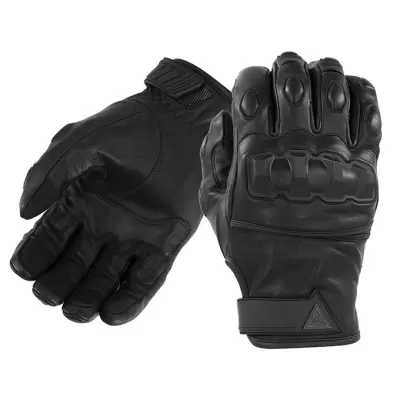
Protective gloves are often treated as a minor line item in equipment budgets, something to be purchased quickly and replaced often. For professionals who work in demanding environments, such as security personnel, law enforcement officers, tactical units, and industrial or field operators, that approach carries a hidden cost. Hands are among the most frequently injured parts of the body, and they are also the tools through which almost every task is carried out. Investing in high quality hard knuckle gloves is not simply a matter of buying better equipment. It is a decision that affects injury rates, operational confidence, and long-term spending.
2. Understanding What Hard Knuckle Gloves Are Designed to Do:
Hard knuckle gloves incorporate rigid protective elements over the knuckles, and sometimes across the back of the hand and fingers, to absorb and distribute impact. Unlike standard gloves that only offer a layer of fabric or leather, these designs are built to reduce the force that reaches bones and joints during strikes, collisions, and accidental impacts. The protective shell is typically made from materials such as molded thermoplastic, reinforced polymer, or composite structures, and it works together with padding and a durable outer layer.
The value of this design lies in how well each component works as part of a system. A hard shell with poor padding underneath can still transmit shock, and strong padding with a weak outer material can fail under abrasion. This is why quality matters so much in this category: the performance of the glove depends on the integration of every layer, not just the presence of a hard surface.
3. The Safety Advantages of High Quality Construction:
The most important benefit of high quality hard knuckle gloves is the level of injury protection they provide. Hand injuries such as fractures, contusions, lacerations, and joint damage can sideline a worker or officer for weeks, and some result in lasting loss of function. A well-constructed glove reduces both the likelihood and the severity of these injuries by absorbing impact energy and spreading it across a wider area instead of concentrating it on a single point.
Beyond impact protection, quality gloves offer better resistance to cuts, abrasion, and punctures. Reinforced stitching, tear-resistant outer fabrics, and properly bonded protective components keep the glove intact during rough contact with concrete, metal edges, or debris. Lower-grade gloves often fail at the seams or at the attachment points of the hard shell, which can leave the wearer exposed at precisely the moment protection is needed. Consistent protection is the real measure of safety, and it depends on materials and manufacturing standards that cheaper products rarely meet.
4. How Quality Gloves Improve Performance:
Safety and performance are closely linked, because a worker who trusts their equipment performs with greater confidence and focus. When protective gear fits well and moves naturally, the wearer does not need to think about it. High quality hard knuckle gloves are designed with articulated finger construction, precise sizing, and flexible materials in the areas that need movement, so that protection does not come at the expense of dexterity.
Grip is another important factor. Gloves that slip or restrict tactile feedback make it harder to handle tools, equipment, or gear securely, particularly in wet or high-stress conditions. Quality products often include textured palm surfaces and breathable linings that keep the hand comfortable and the grip firm over long shifts. Comfort also plays a role in endurance. Hands that are not overheating, chafing, or fatigued from stiff, poorly designed gloves can maintain steady performance for longer periods.
5. The Long-Term Economics of Buying Better:
It is easy to see a higher price tag and assume a higher cost, but the real figure is cost over time. Low-priced gloves tend to wear out quickly, lose their structure, and require frequent replacement. Each replacement cycle adds purchasing, logistics, and administrative expenses, and the repeated gaps in protection carry their own risk. High quality gloves hold their shape, fit, and protective properties through far more use, which lowers the cost per month of service.
There is also the cost of injuries to consider. Medical expenses, lost working days, compensation claims, and reduced team capacity can quickly outweigh whatever was saved on cheaper equipment. For organizations that equip large teams, even a small reduction in hand injuries can justify the investment. Seen this way, quality gloves function as a form of risk management as much as a piece of gear.
6. What to Look for When Choosing High Quality Hard Knuckle Gloves:
Buyers should begin by examining the materials and the way the glove is built. The hard knuckle protection should be firmly anchored, with padding beneath it that absorbs shock rather than simply cushioning contact. Stitching should be dense and reinforced at stress points, and the outer material should resist abrasion and tearing. Fit is equally important, since a glove that is too loose can shift on impact while one that is too tight restricts circulation and movement.
Practical features deserve attention as well. Breathability, closure systems that secure the wrist, and compatibility with other gear can all affect daily usability. For organizations purchasing in volume, working with an established manufacturer that offers consistent quality control, clear specifications, and the ability to meet sizing and customization needs helps ensure that every pair performs to the same standard. Requesting samples and testing them in real conditions before placing a large order is a sensible way to confirm that a product meets expectations.
7. Conclusion:
High quality hard knuckle gloves deliver value on several fronts at once. They protect the hands from the injuries most common in demanding work, they support confident and precise performance, and they reduce long-term costs by lasting longer and preventing avoidable losses. For any professional or organization that depends on the reliability of its people, treating hand protection as a serious investment rather than an afterthought is a decision that pays back in safety, efficiency, and peace of mind.

 Arabic
 French
 Spanish
 Portuguese
 Deutsch
 Turkish
 Dutch
Dutch
 Italiano
 Russian
 Romaian
 Portuguese (Brazil)
 Greek
Greek