


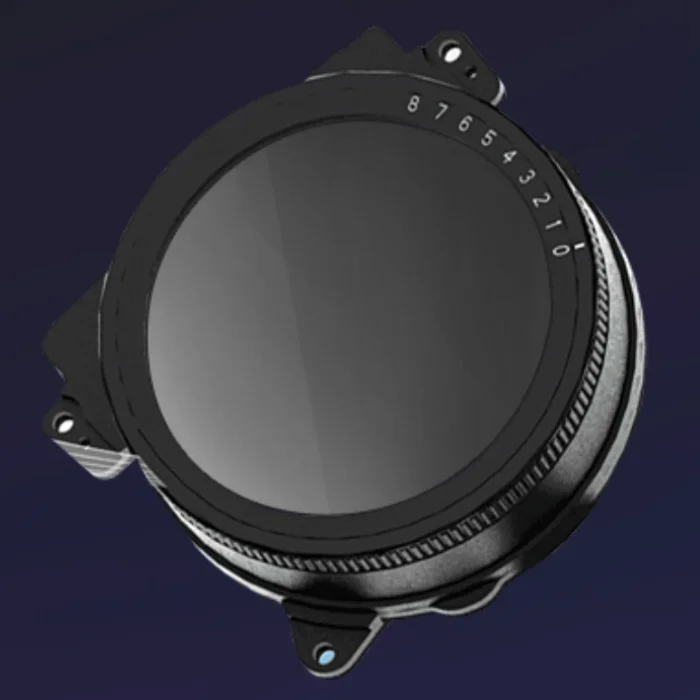
The demand for lightweight, compact, and visually engaging wearable devices continues to influence the development of augmented reality and virtual reality technology. As manufacturers work to reduce headset size without compromising the viewing experience, advanced optical systems have become increasingly important. A Pancake optical module offers an approach to managing light within a limited space, making it relevant to modern near-eye display systems designed for immersive digital experiences.
Pancake optics use a folded optical path to reduce the distance light travels within a display assembly. Depending on the design, the system can incorporate reflective and polarizing optical elements that allow light to pass through multiple interactions before reaching the viewer's eye. This configuration can help reduce the depth of the optical assembly compared with some conventional lens arrangements, creating additional opportunities for compact headset design.
One of the main benefits of pancake optical technology is its potential to support slimmer wearable devices. Headset dimensions affect portability, comfort, storage, and overall product appearance. By folding the optical path, designers can explore more compact configurations while accommodating the display and other electronic components. The final size and weight depend on the complete device architecture, but optical design remains a significant factor in achieving a streamlined form.
Image quality is another important consideration when evaluating a pancake optical module. Resolution, contrast, brightness, color reproduction, field of view, and distortion can all influence the user's visual experience. Because folded optical systems involve multiple optical interactions, designers must carefully manage light transmission and unwanted reflections. Selecting suitable optical materials and coatings can help address these requirements according to the intended application.
Pancake optical modules are particularly relevant to virtual reality headsets, where users view digital environments through displays positioned close to the eyes. A compact optical arrangement can create more flexibility when designing the headset housing and positioning internal components. Depending on the system, the optical configuration must also account for eye relief, exit pupil size, interpupillary distance adjustment, and the intended range of users.
User comfort extends beyond reducing device thickness. Headset weight distribution, facial interface design, heat management, and viewing ergonomics all contribute to the overall experience. An optical module must integrate effectively with these elements to support practical everyday use. Product developers should evaluate the complete headset during prototyping rather than relying solely on individual component specifications.
Pancake optics can also be considered for selected augmented reality and mixed-reality applications, depending on the system's optical architecture. However, different applications may have different requirements for transparency, brightness, environmental visibility, and image placement. Manufacturers should determine whether a particular module is suitable for the intended viewing mode before finalizing their design. This helps ensure that the chosen technology aligns with the product's actual functionality.
When selecting an optical module, engineering teams should review technical specifications, mechanical dimensions, display compatibility, optical efficiency, and integration requirements. Thermal behavior, manufacturing tolerances, and assembly alignment may also influence the final performance. Testing prototypes under realistic operating conditions can help identify potential challenges early and guide adjustments before mass production.
Supplier selection is another important part of product development. Businesses can benefit from reviewing available optical module configurations, technical documentation, customization options, and application suitability. Clear communication about the headset design, performance targets, and manufacturing requirements can make it easier to evaluate possible solutions and determine the next steps for integration.
As AR and VR technologies continue to evolve, pancake optical systems provide manufacturers with another way to balance optical functionality and compact product design. Although every configuration involves trade-offs, careful attention to brightness, image quality, viewing comfort, and component integration can help teams identify a suitable approach for their devices.
Businesses developing immersive headsets and near-eye display systems can explore the Pancake optical module range from ARV Optical. Comparing available options against project requirements can help product designers make informed decisions and work toward compact, well-integrated optical solutions for next-generation visual experiences.

 English
 Arabic
 French
 Spanish
 Portuguese
 Deutsch
 Dutch
 Italiano
 Russian
 Romaian
 Portuguese (Brazil)
 Greek