


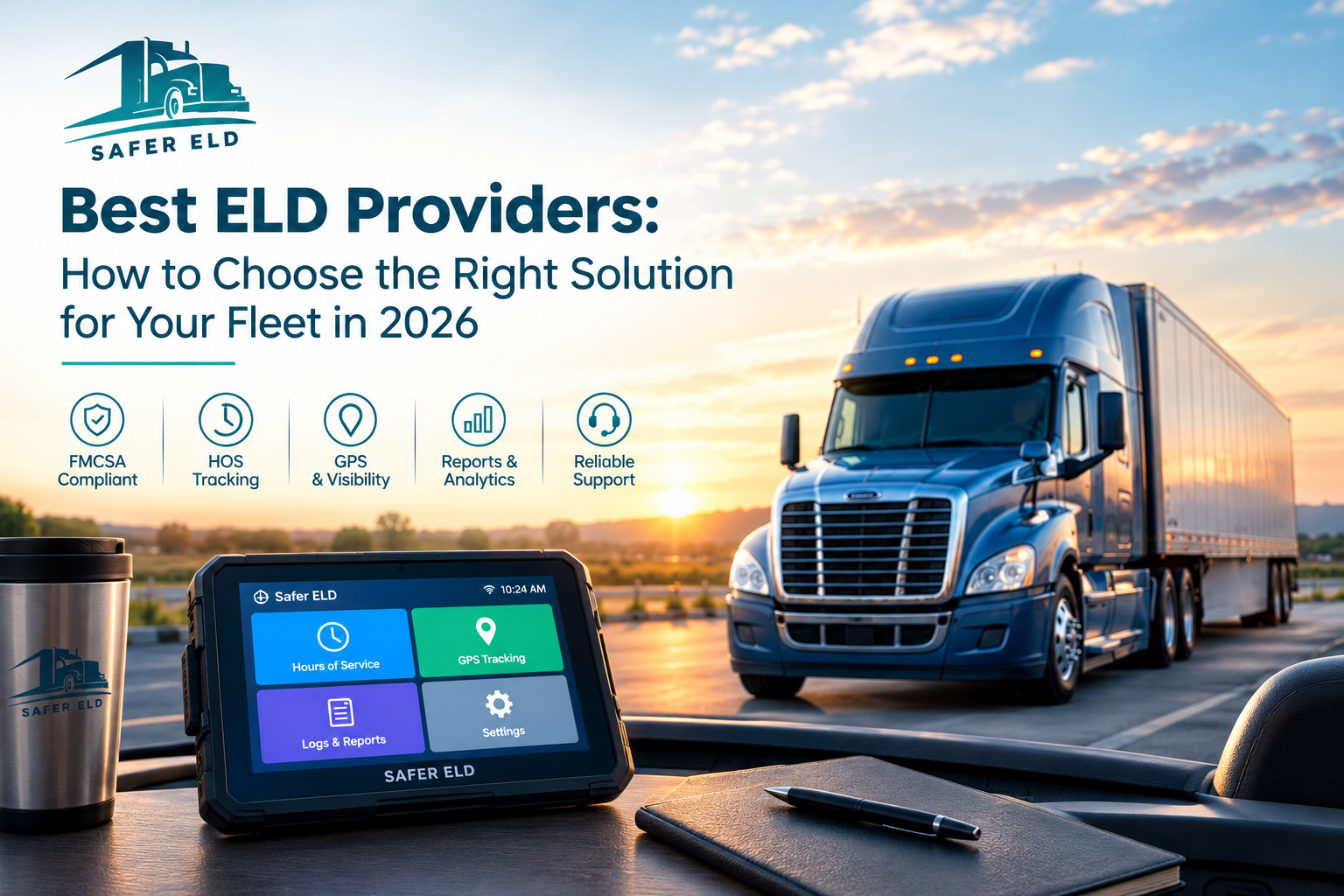
Choosing among the best ELD providers is an important decision for truck drivers, owner-operators, and fleet managers in the United States. An Electronic Logging Device (ELD) helps record driving activity and required duty-status information, supporting electronic recordkeeping under applicable federal regulations.
However, not every ELD solution offers the same features, pricing, or customer support. Before selecting a provider, businesses should evaluate their operational needs, device compatibility, reporting tools, and long-term costs. Safer ELD offers ELD and fleet-management tools designed to support everyday trucking operations.
What Should You Look for in an ELD Provider?
The right ELD solution should meet your operational requirements while remaining practical for drivers and fleet managers. Consider these essential factors before making a decision.
1. FMCSA Registration and Compliance
Before purchasing an ELD, verify that the specific device appears on the current FMCSA Registered ELD List. FMCSA maintains a list of registered, self-certified devices, and registration status can change.
An ELD can support accurate recordkeeping, but it does not automatically guarantee compliance. Drivers and carriers remain responsible for following the Hours of Service (HOS) regulations that apply to their operations.
2. Hours of Service Tracking
HOS tracking is a core consideration when comparing ELD solutions. Look for features that help drivers record duty status, review available driving hours, and manage electronic logs.
A user-friendly system can make daily recordkeeping easier for drivers while helping fleet managers access relevant information. Before choosing a provider, confirm that the system supports the functions your business requires.
3. GPS Tracking and Fleet Visibility
GPS tracking can help businesses monitor vehicle locations and review fleet activity. Depending on the provider and plan, features may include location information, trip details, and real-time tracking.
These capabilities can be useful for fleet coordination and operational visibility. However, expanded real-time GPS tracking is an additional feature, not a general requirement of the federal ELD rule.
4. Reporting and Data Management
Reliable reporting tools help fleet managers organize information and review daily operations. Depending on the solution, available features may include electronic log reports, mileage information, and fleet activity summaries.
When comparing the best ELD providers, ask whether their reporting tools are easy to access, whether data can be transferred when needed, and whether the available reports match your business requirements.
5. Pricing and Customer Support
The total cost of an ELD may include hardware, installation, software subscriptions, connectivity, and optional features. Compare these costs instead of focusing only on the advertised monthly price.
Also review technical support availability, warranty terms, device compatibility, software updates, and contract conditions. A provider with clear pricing and helpful support can make managing your ELD system more straightforward.
How Safer ELD Supports Trucking Operations
Safer ELD provides ELD and fleet-management tools designed to support electronic logs, HOS recordkeeping, GPS information, reporting, and everyday fleet operations.
Depending on the selected solution and plan, businesses can explore features such as:
-
Electronic logs and HOS tools: Support the management of driving records and duty-status information.
-
GPS tracking: Provide additional visibility into vehicle locations and fleet activity.
-
Reports and analytics: Help organize operational information for review.
-
Fleet-management tools: Support daily fleet visibility and operational workflows.
-
AI dashcam solutions: Offer additional technology options for fleet monitoring.
Before choosing Safer ELD, review the available features, compatibility, support options, and pricing to determine whether the solution fits your fleet's needs.
How to Choose the Right ELD Solution
Before making your final decision, follow these practical steps:
-
Verify the device's current FMCSA registration.
-
Identify your electronic logging and HOS recordkeeping needs.
-
Compare GPS capabilities, reporting, and device compatibility.
-
Review total costs, contract terms, and customer support.
-
Request a demonstration before committing to a solution.
This approach helps businesses make informed decisions based on operational needs rather than price alone.
Conclusion
Selecting an ELD provider requires careful consideration of registration status, HOS recordkeeping, GPS features, reporting, pricing, and technical support. The right solution should fit your fleet's workflow and provide the tools needed to manage electronic records effectively.
Safer ELD offers ELD and fleet-management tools designed to support trucking businesses with electronic logs and operational information. Explore the available features and verify the specific device's current FMCSA registration before purchasing.
Frequently Asked Questions
1. What are the best ELD providers for trucking businesses?
The right provider depends on fleet size, required features, budget, device compatibility, and support expectations. Compare available solutions and verify each device's current FMCSA registration.
2. What features should an ELD include?
Important features may include electronic logging, HOS recordkeeping, supported data transfer, GPS capabilities, reporting tools, and technical support.
3. Are all ELD providers FMCSA-approved?
No. FMCSA maintains a list of registered, self-certified ELDs rather than a general list of government-endorsed providers. Check the specific device on the
4. Do ELD providers offer GPS tracking?
Many ELD solutions offer GPS or fleet-tracking features, but capabilities vary by provider and plan. Confirm which tracking features are included before purchasing.
5. What does Safer ELD offer?
Safer ELD provides ELD and fleet-management tools designed to support electronic logs, HOS recordkeeping, GPS information, reporting, and everyday fleet operations.

 English
 French
 Spanish
 Portuguese
 Deutsch
 Turkish
 Dutch
 Italiano
 Russian
 Romaian
 Portuguese (Brazil)
 Greek