


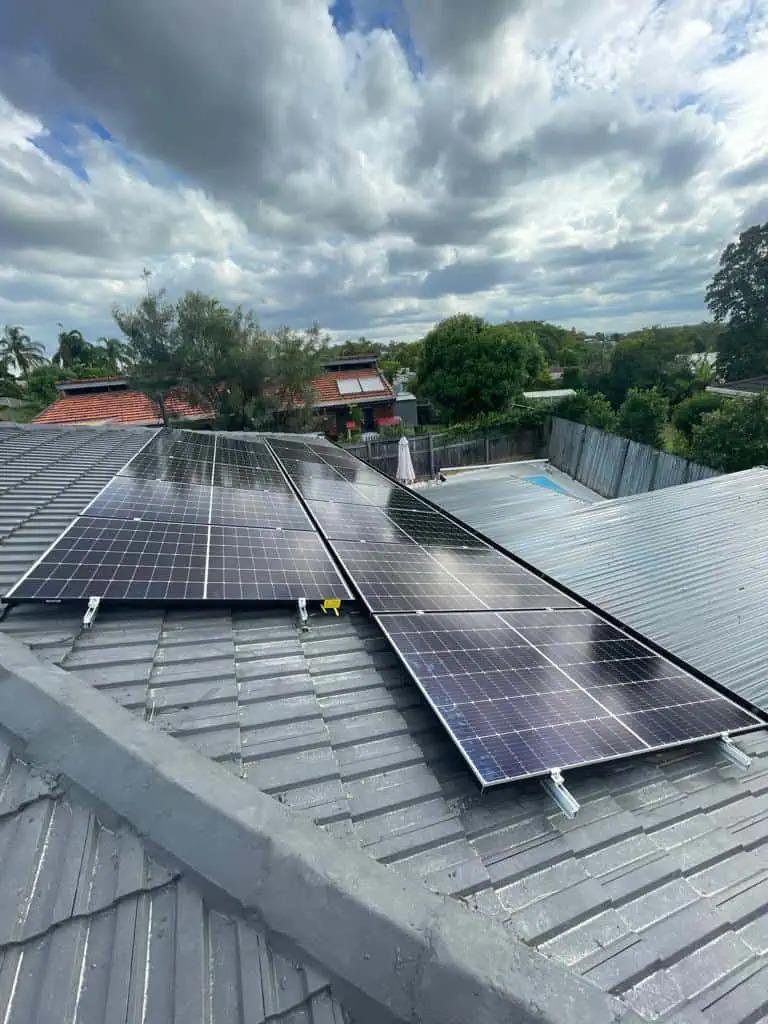
For many Australian businesses, electricity is one of the largest ongoing operating expenses. Retail stores, warehouses, offices, manufacturing facilities, workshops, farms, and other commercial properties can consume substantial amounts of electricity throughout the year.
This has led many business owners to ask an important question: Is commercial solar worth it in Australia?
The answer depends on factors such as electricity consumption, system size, solar generation, electricity tariffs, operating hours, available roof space, and financing. However, one area that deserves particular attention is demand charges.
What Is Commercial Solar?
Commercial solar refers to solar photovoltaic systems installed for businesses and commercial properties. These systems are typically larger than residential installations and are designed around the energy requirements of the business.
Commercial solar can be installed on:
- Office buildings
- Retail stores
- Warehouses
- Factories
- Workshops
- Agricultural facilities
- Hotels and hospitality businesses
- Schools and institutions
- Shopping centres
- Other commercial properties
The primary objective is generally to generate electricity on-site and reduce the amount of electricity the business needs to purchase from the grid.
What Are Demand Charges?
Demand charges are electricity costs that may be based on the highest level of electricity demand recorded during a particular billing period.
For example, a business may consume a large amount of electricity during a short period when several high-powered machines, air-conditioning systems, refrigeration units, or other equipment operate simultaneously.
This makes demand management particularly important for businesses with high or unpredictable electricity loads.
How Can Commercial Solar Reduce Demand Charges?
Solar panels generate electricity during daylight hours. When a business is using electricity at the same time, solar generation can supply part of that demand locally.
Suppose a commercial property has several large electrical loads operating during the middle of the day. Without solar, much of that electricity may come from the grid.
With an appropriately sized solar system, some of the demand can instead be supplied by solar generation.
This can reduce the property's reliance on grid electricity during periods when solar output is available.
Demand Charges vs Energy Charges
Understanding the difference between these two charges is essential when evaluating commercial solar.
Energy Charges
Energy charges are generally based on the amount of electricity consumed, commonly measured in kilowatt-hours (kWh).
The more electricity a business uses from the grid, the greater its energy consumption charges may be.
Solar can reduce these charges by supplying electricity directly to the property.
Demand Charges
Demand charges are associated with the rate at which electricity is being drawn from the grid during relevant demand periods. They are commonly associated with peak demand and may be measured using kilowatts (kW).
This is why analysing a business's electricity bill requires more than simply looking at annual kWh consumption.
A Simple Demand Charge Savings Example
Consider a commercial facility that experiences a significant daytime electricity demand.
Before solar:
Peak grid demand: 250 kW
After installing solar:
Peak grid demand: 190 kW
In this simplified example, the solar system has potentially reduced the grid demand peak by:
250 kW − 190 kW = 60 kW
If the applicable demand tariff charges the business based on each kW of peak demand, reducing the relevant demand level could potentially produce additional savings.
For example, if a tariff were $20 per kW for the applicable billing period, a 60 kW reduction could represent:
60 × $20 = $1,200
The actual savings will depend on the electricity retailer, tariff structure, demand measurement period, billing rules, and the timing of the property's peak demand.
This example is illustrative rather than a prediction of savings for a particular business.
Why Timing Matters
One of the most important considerations is when a business reaches its peak demand.
A solar system can only reduce grid demand when it is generating electricity.
For example, if a business experiences its highest electricity demand at 1:00 pm on a clear day, solar generation may help reduce that peak.
But if the property's highest demand occurs at 8:00 pm, solar panels alone may not be able to reduce that particular peak because solar generation is unavailable after sunset.
This is where battery storage and energy management can become relevant.
Can Batteries Help Reduce Demand Charges?
Battery storage can complement commercial solar by providing electricity during periods when solar generation is unavailable or insufficient.
A battery can potentially be charged using excess solar energy during the day and discharged when the business experiences high electricity demand.
This approach is sometimes referred to as peak shaving.
For businesses with significant demand charges, battery storage can therefore serve a purpose beyond simply storing excess solar energy.
However, batteries involve additional costs and should be evaluated based on the business's specific tariff, load profile, operating schedule, and financial objectives.
Which Businesses Can Benefit Most From Commercial Solar?
Commercial solar can be particularly attractive for businesses that have substantial daytime electricity consumption.
Potential examples include:
- Manufacturing facilities
- Warehouses
- Cold-storage facilities
- Agricultural businesses
- Food-processing operations
- Retail centres
- Workshops
- Large offices
- Hospitality properties
- Distribution centres
Businesses that operate equipment during daylight hours may be able to use a significant portion of their solar electricity directly.
Properties with large air-conditioning, refrigeration, pumping, or machinery loads may also have strong opportunities for reducing grid consumption.
What Determines Whether Commercial Solar Is Worth It?
There is no single payback period or return on investment that applies to every Australian business.
Several factors influence the economics of a commercial solar installation.
1. Electricity Consumption
Businesses with high electricity consumption generally have more opportunity to use solar generation and reduce grid purchases.
2. Daytime Energy Usage
Solar production occurs primarily during daylight hours. Businesses that consume substantial electricity during this period may achieve higher solar self-consumption.
3. Electricity Tariffs
The structure of the business's electricity contract can significantly affect potential savings.
Energy rates, demand charges, time-of-use pricing, fixed charges, and export rates can all influence the financial outcome.
4. Solar System Size
A system should be sized according to the property's energy requirements, available installation area, budget, and financial objectives.
Installing more capacity is not automatically better if much of the generated electricity is exported at a relatively low value.
5. Roof Orientation and Shading
The amount of sunlight available at the installation site affects solar generation.
Roof orientation, tilt, shading, panel placement, and local conditions should therefore be assessed before determining the appropriate system design.
6. Financing and Upfront Cost
The way a business finances its solar system can influence cash flow and the overall return on investment.
Businesses should compare the upfront investment with expected energy savings, maintenance requirements, financing costs, and system lifespan.
Don't Focus Only on Electricity Bill Reduction
One of the biggest mistakes businesses can make when evaluating solar is looking only at total kWh savings.
A detailed assessment should examine the property's load profile.
For businesses facing demand charges, this analysis can be particularly valuable because the timing of electricity consumption may have a significant impact on the final bill.
Solar Monitoring Can Help Identify Savings Opportunities
After installation, monitoring the system's performance can help businesses understand how much electricity their solar system generates and how that generation aligns with their consumption.
Monitoring can help identify:
- Changes in solar production
- Unexpected system faults
- High electricity consumption periods
- Opportunities to shift energy usage
- Potential demand peaks
- Battery performance
- Seasonal production patterns
This information can support better energy-management decisions over the lifetime of the system.
Is Commercial Solar Worth It in Australia?
For many Australian businesses, commercial solar can be a worthwhile investment, particularly when the system is designed around the property's actual electricity consumption.
However, demand charge savings should never be assumed without analysing the business's actual electricity tariff and load profile.
A business with high daytime demand may have a very different solar opportunity from one whose major electricity consumption occurs overnight.
How to Calculate the Potential Return
A simplified commercial solar assessment can consider:
Annual Solar Savings = Energy Bill Savings + Potential Demand Charge Savings + Other Eligible Benefits − Ongoing Costs
The investment can then be evaluated using measures such as:
- Simple payback period
- Return on investment
- Lifetime energy savings
- Net present value
- Internal rate of return
- Financing costs
Professional financial modelling can provide a more accurate picture because electricity prices, tariff structures, system degradation, maintenance, financing, and future energy consumption can all influence the result.
Conclusion
So, is commercial solar worth it in Australia? For many businesses, the answer can be yes—but the strongest business case comes from understanding exactly how the property uses electricity.
Commercial Solar vs Grid Power: Demand Charge Reduction for Australian Industries
Understanding Seasonal Solar Output Variations for Solar Systems in Australia

 Arabic
 French
 Spanish
 Portuguese
 Deutsch
 Turkish
 Dutch
 Italiano
 Russian
 Romaian
 Portuguese (Brazil)
 Greek