



How Resealable Packaging Improves Snack Packaging
Resealable packaging has become an important part of modern snack packaging, especially for products that are opened, stored, and eaten over several occasions. A resealable zipper, strong seal, suitable barrier layer, and easy-open feature are considered when packaging is prepared for snacks such as beef jerky, nuts, dried fruit, granola, and other dry foods. Freshness retention, moisture control, odour protection, convenience, and shelf-life protection are closely linked with the structure of the package. For Canadian snack brands, food-contact safety and labelling requirements are also important. This article explains the benefits, material choices, freshness considerations, Canadian regulations, and practical features associated with resealable snack packaging.
Why Resealable Packaging Matters For Snacks
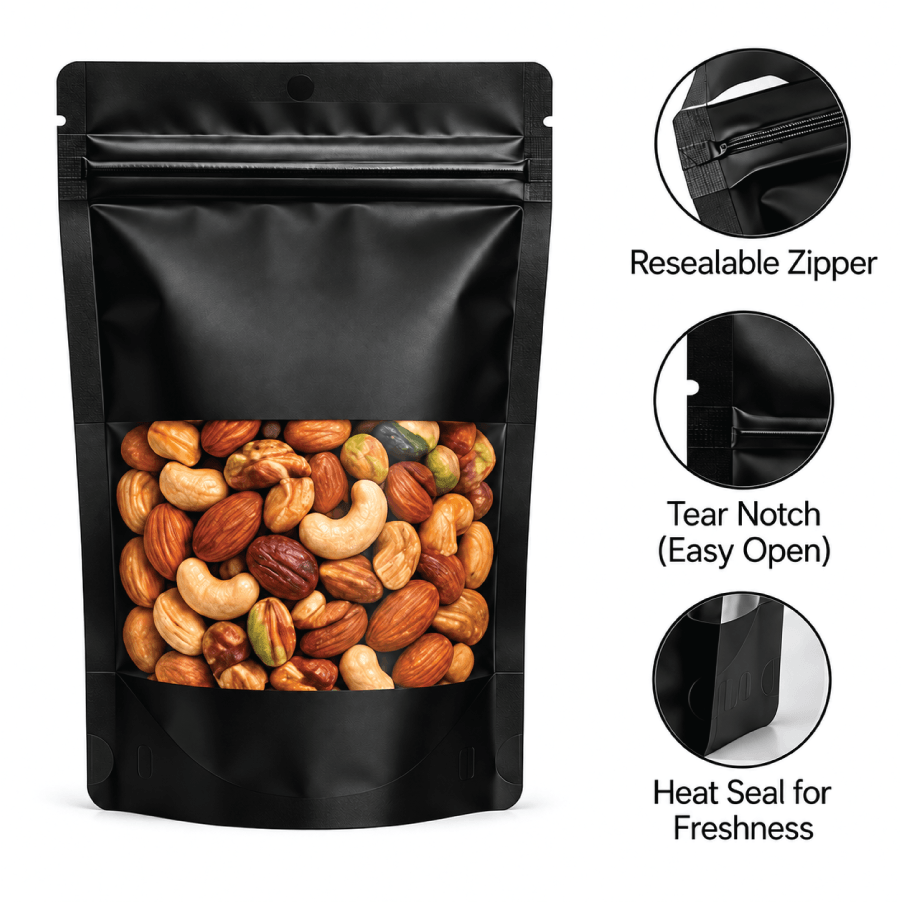
Snacks are often eaten over more than one sitting, so protection from air, humidity, light, and odours becomes important after opening. Resealable packaging is suitable for repeated use, with a zipper closure included for easy opening and closing. An easy-open feature and tear notch are added for convenient access, while a heat seal is applied before first opening for additional protection. For snack food brands, the presentation of the product is also considered through clear information, suitable finishes, personalized artwork, and custom printed packaging. Screen and UV printing are considered for suitable packaging requirements.
“Customers will occasionally buy products not because they want them but because of how they are presented to them.” — James Clear
Key Benefits Of Zip-Lock Snack Packaging

Zip-lock closures are widely associated with resealable snack bags because repeated opening and closing is made simple. Once the package has been opened, the closure is pressed together again, reducing direct exposure of the contents to the surrounding environment. A suitable material combination is therefore considered according to moisture sensitivity, oxygen exposure, odour transfer, seal strength, and expected shelf life.
Several practical benefits are associated with resealable snack packaging:
-
Portion control: Smaller amounts are removed at a time, while the remaining contents stay enclosed between uses. This arrangement is useful for snacks intended for gradual consumption.
-
Storage convenience: The package is closed after opening, so a separate storage container is less often needed.
-
Shelf-life protection: Suitable barrier layers and a secure closure reduce exposure to air and moisture after opening.
-
Handling convenience: A stand-up pouch is positioned upright on shelves and during storage, while the resealable closure is kept accessible for repeated use.
For retail products, the visibility of the product is also considered during packaging development. A clear hierarchy of product name, flavour, quantity, and required information is normally arranged on the front panel. Personalization options are also considered when different product varieties or seasonal artwork are being prepared.
How Resealable Bags Preserve Snack Freshness

Freshness retention is influenced by the complete package structure, seal quality, storage conditions, and characteristics of the snack. For beef jerky and similar meat snacks, moisture and oxygen barriers are considered to protect texture, flavour, and shelf life, while odour protection is included for strongly flavoured products. Food-grade materials are selected for direct food contact under applicable Canadian requirements. Before first opening, a heat seal is applied for initial closure, while the resealable zipper is used for repeated closure after opening, making the packaging suitable for snacks consumed over several occasions.
Choosing The Right Resealable Packaging Material
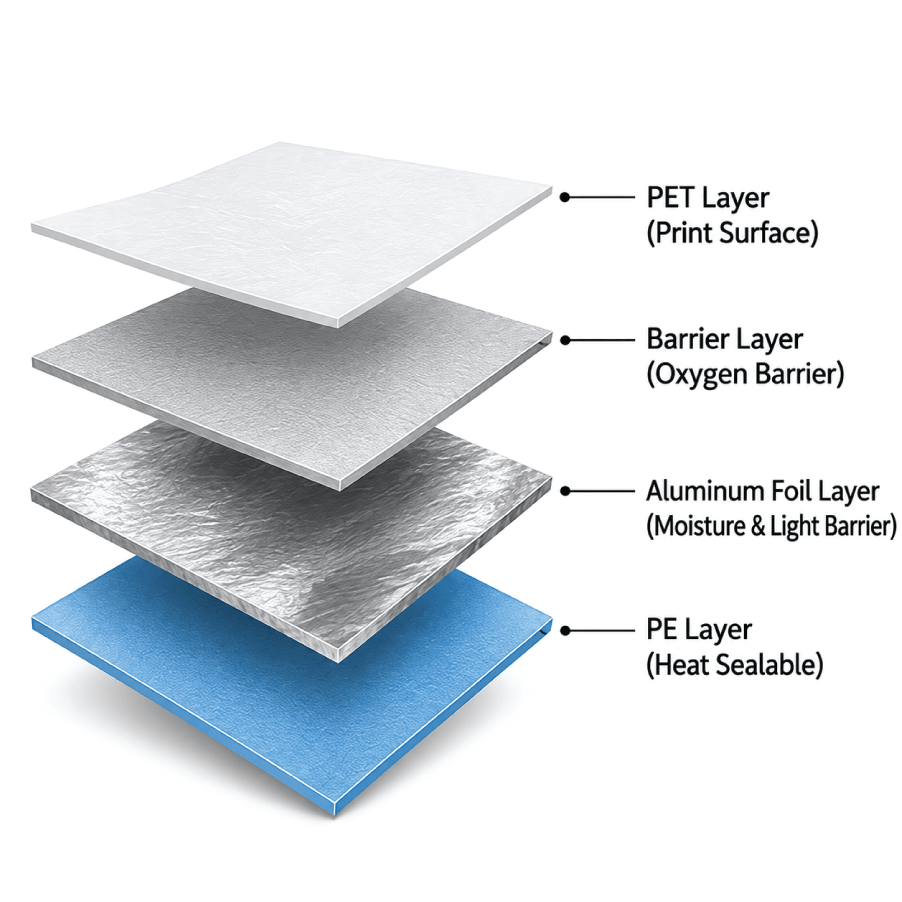
The right material is selected according to the snack type, storage conditions, and protection needed. Moisture, oxygen, seal strength, and food-contact safety are considered before the packaging structure is finalized.
-
Moisture barrier: A suitable layer is included for moisture-sensitive snacks and texture protection.
-
Oxygen barrier: A higher barrier structure is considered for freshness and flavour protection.
-
Pouch structure: Flexible packaging and stand-up pouches are considered for lightweight storage and repeated opening.
-
Food-contact safety: Food-grade materials are selected for direct food contact, with Canadian requirements reviewed before production.
-
Sustainability: Recyclable and recycled-content materials are considered according to applicable requirements.
-
Printing: Screen and UV printing are used for suitable applications, while personalized artwork is prepared according to the needs of the brand.
Overall, the material structure is selected according to the actual storage, handling, freshness, and food-safety needs of the snack.
How Long Does Beef Jerky Last In A Ziplock Bag

The storage period of beef jerky in a ziplock bag depends on whether the jerky was The storage life of beef jerky depends on whether it is commercially packaged or homemade, along with moisture level, processing, storage temperature, and closure quality. Commercial jerky should be stored according to the manufacturer’s instructions after opening, while homemade jerky needs greater care because drying, handling, moisture, and storage conditions affect its storage life. For longer storage, refrigeration is considered when recommended, while unusual odour, mould, excess moisture, or major appearance changes are treated as signs of spoilage. For commercial snack brands, resealable packaging is considered alongside proper processing, sealing, and safe storage rather than as a replacement for them. Learn More
Canadian Regulations For Resealable Food Packaging

Canadian snack packaging is subject to food-contact, labelling, and environmental requirements based on the food, packaging material, and method of sale. Division 23, Section B.23.001 addresses food-contact packaging safety, while SFCR, SOR/2018-108, Section 218 covers applicable prepackaged food labelling requirements, including bilingual information under relevant provisions. The Single-use Plastics Prohibition Regulations, SOR/2022-138, apply only to defined single-use plastic categories and do not automatically prohibit flexible snack bags. ISO 14021:2016 is relevant to recycled-content environmental claims, while a Health Canada Letter of No Objection remains voluntary and is not a mandatory certification or legal approval.
Conclusion
Resealable packaging is useful for snacks consumed over several occasions, with freshness retention supported through suitable barrier layers, secure heat sealing, and a reliable resealable zipper. For beef jerky, moisture, oxygen, odour, storage, and processing are considered together. Universal Packaging Canada is considered when suitable pouch structures, materials, closures, and specifications are reviewed. Canadian food-contact and labelling rules also require attention, particularly under Division 23 and SOR/2018-108. Environmental claims and recycled materials are assessed according to relevant standards and Canadian requirements. Proper structure and closure selection support practical snack packaging for the intended market.
FAQs
Is resealable packaging suitable for beef jerky?
Yes. Resealable packaging is commonly considered for beef jerky because repeated opening and closing is expected during consumption. Suitable moisture and oxygen barriers are also important for the intended storage period.
Does a zipper separately result in keeping snacks fresh?
No. Freshness is influenced by the complete package structure, barrier properties, seal quality, food characteristics, and storage conditions. The zipper is mainly used for repeated closure after the original seal has been opened.
Are resealable snack bags covered by Canadian food packaging rules?
Yes. Food-contact packaging is subject to applicable Canadian requirements, including Division 23 of the Food and Drug Regulations. The exact requirements depend on the food and packaging application.
What material is best for resealable snack packaging?
There is no single material that is best for every snack. The choice is based on moisture sensitivity, oxygen exposure, aroma protection, seal strength, storage conditions, food-contact requirements, and sustainability considerations.

 English
 French
 Spanish
 Portuguese
 Deutsch
 Turkish
 Dutch
Dutch
 Italiano
 Russian
 Romaian
 Portuguese (Brazil)
 Greek
Greek