


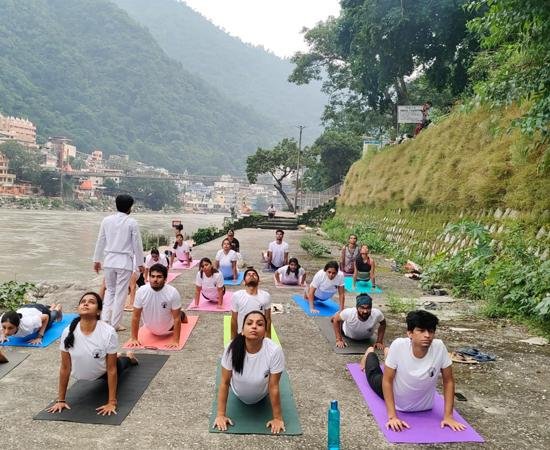
Rishikesh has long been associated with yoga, meditation, spirituality, and traditional Indian wisdom. Located beside the sacred Ganges and surrounded by the Himalayan foothills, the city attracts yoga practitioners from across the world. For students who want to move beyond the basics and develop a deeper understanding of yoga, a 500 Hour Yoga Teacher Training Course in Rishikesh can be an intensive and meaningful step forward.
A 500 Hour program generally brings together foundational and advanced teacher training, often combining a 200-hour course with a 300-hour advanced course. Schools in Rishikesh structure these programs differently, but common subjects include asana, pranayama, meditation, yoga philosophy, anatomy, teaching methodology, and practical teaching.
What Is a 500 Hour Yoga Teacher Training Course?
A 500 Hour Yoga Teacher Training is an advanced and comprehensive yoga education program designed to develop both personal practice and teaching ability. In many Rishikesh schools, the program is structured as a combination of 200 hours of foundational training and 300 hours of advanced training. Some schools deliver the two components consecutively as one residential program, while others offer them separately.
The first stage usually establishes a strong foundation in yoga. Students learn fundamental postures, breathing techniques, meditation, basic anatomy, teaching principles, and important concepts from yogic philosophy.
Why Choose Rishikesh for 500 Hour Yoga Teacher Training?
Rishikesh offers something that is difficult to reproduce in a conventional classroom. Yoga is deeply connected with the city's cultural and spiritual identity, and students can experience their training within an environment where yoga, meditation, and traditional practices are part of everyday life.
The presence of the Ganges, Himalayan landscape, temples, ashrams, and meditation centers creates a distinctive atmosphere for personal reflection. For many students, being away from their normal routines makes it easier to dedicate several weeks to focused study.
Rishikesh also has a large international yoga community. This means students often meet practitioners from different countries and backgrounds, creating opportunities to learn through cultural exchange as well as formal classes.
What Will You Study During a 500 Hour YTT?
The exact syllabus varies between schools, but a comprehensive program normally covers several major areas.
1. Advanced Asana Practice
Asana practice is one of the central components of most yoga teacher training courses. During a 500 Hour program, students can expect to move beyond basic posture practice and study alignment, modifications, sequencing, transitions, and teaching techniques.
Depending on the school, training may include Hatha Yoga, Ashtanga Yoga, Vinyasa, or other traditional and contemporary approaches. Students may also work with inversions, balancing postures, backbends, twists, and other challenging techniques at an appropriate level.
2. Pranayama and Breathwork
Pranayama introduces students to the relationship between breath, concentration, and yogic practice. Training may include techniques such as Nadi Shodhana, Ujjayi, Bhastrika, Kapalabhati, Sheetali, and Sheetkari, depending on the school's approach.
Students learn how techniques are performed and how they can be incorporated responsibly into a yoga class.
3. Meditation and Mindfulness
Meditation is another important part of advanced yoga education. Students may explore concentration techniques, mantra meditation, Yoga Nidra, breath awareness, and traditional meditation practices.
Regular meditation can also help students develop the concentration and self-awareness needed for teaching. A teacher who understands the experiential side of yoga can communicate practices more thoughtfully rather than treating them as purely theoretical subjects.
4. Yoga Philosophy
Yoga is much more than physical exercise. A 500 Hour course provides an opportunity to study the philosophical foundations behind the practice.
Topics may include the eight limbs of yoga, the Yoga Sutras of Patanjali, Yamas and Niyamas, different paths of yoga, meditation, self-discipline, and concepts related to yogic lifestyle.
5. Anatomy and Physiology
Understanding the human body is essential for responsible yoga teaching. Anatomy classes may cover muscles, joints, bones, movement patterns, breathing mechanisms, and major body systems.
Advanced training may also discuss biomechanics, common movement limitations, injury prevention, and appropriate modifications.
Who Should Join a 500 Hour Yoga Teacher Training?
A 500 Hour course is generally suitable for people who want extensive yoga education rather than a short introduction to teaching.
It can be a good choice for:
Practitioners who want to deepen their personal yoga practice.
Existing yoga teachers who want more advanced knowledge.
Students interested in developing stronger teaching skills.
People who want to study yoga philosophy alongside physical practice.
Practitioners interested in building a long-term career in yoga.
Students who prefer immersive learning in a traditional yoga environment.
How to Choose the Right Yoga School in Rishikesh
Choosing a school deserves careful research because programs can differ considerably.
First, examine the curriculum. Make sure the course includes sufficient practical training as well as theory.
Second, research the teachers. Look at their qualifications, experience, teaching background, and areas of specialization.
Third, verify the certification structure. If a school advertises Yoga Alliance registration or RYT-500 eligibility, check exactly what the school provides and what additional registration steps, if any, are required.
Fourth, review accommodation and meals. Residential programs can last nearly two months, so comfortable accommodation, nutritious food, cleanliness, internet access, and a suitable study environment can make a significant difference.
Finally, read recent student reviews carefully. Look for comments about teaching quality, practical classes, organization, communication, accommodation, and overall student support rather than relying only on promotional claims.
Benefits of Completing a 500 Hour YTT
The benefits of an extended teacher training go beyond receiving a certificate.
A well-designed program can help you develop greater confidence in teaching, a deeper understanding of yoga philosophy, improved awareness of anatomy, better class-planning skills, and a more disciplined personal practice.
The extended duration also gives you time to make mistakes and learn from them. You can teach a sequence, receive feedback, make adjustments, and try again. That process can be more valuable than simply memorizing information.
For some students, the greatest benefit is personal. Spending several weeks focused on yoga can encourage self-reflection and help create habits that continue after returning home.

 English
 Arabic
 French
 Spanish
 Portuguese
 Turkish
 Dutch
Dutch
 Italiano
 Russian
 Romaian
 Portuguese (Brazil)
 Greek
Greek