


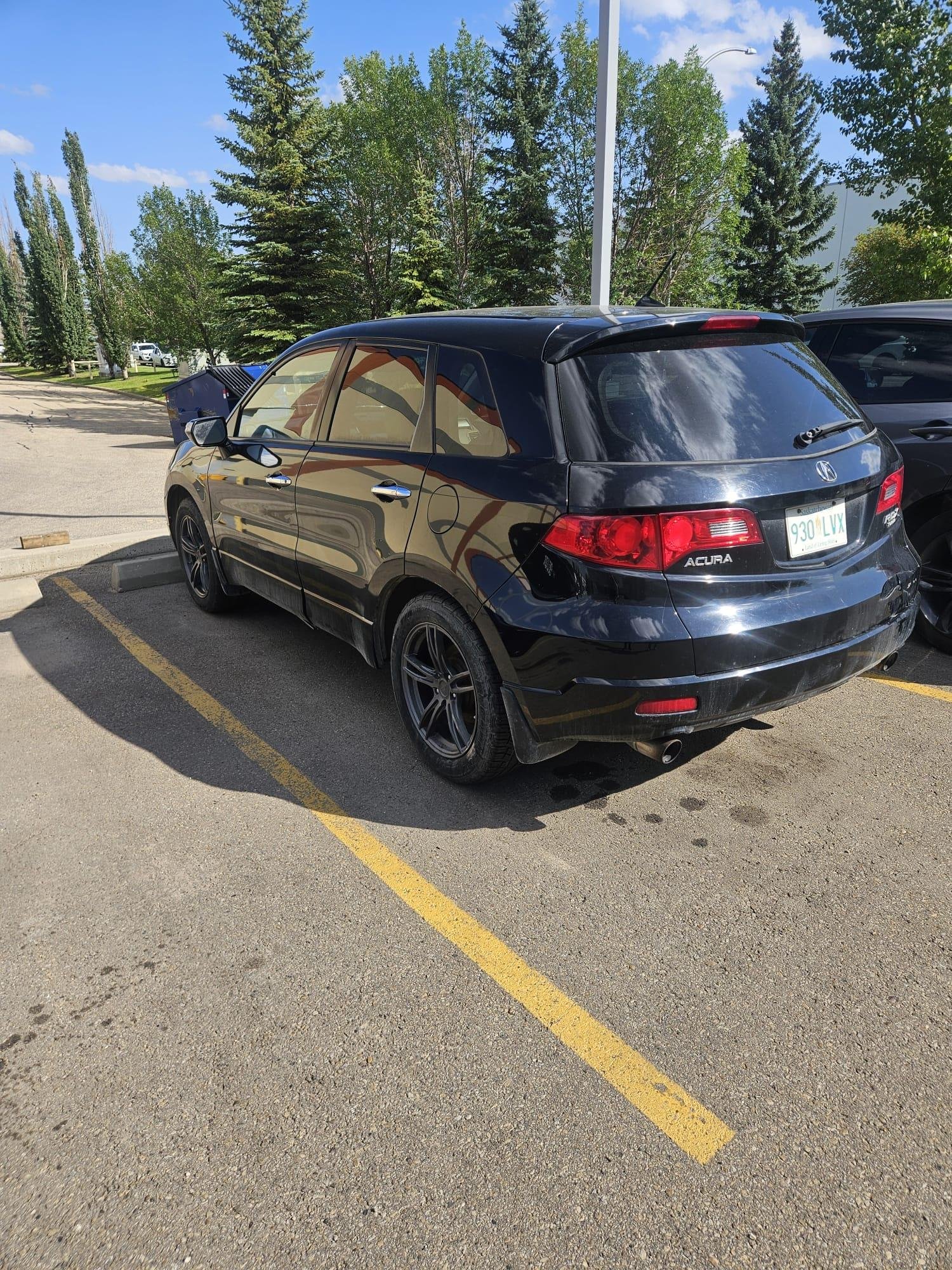
Winter can be hard on any vehicle, but older SUVs often take an especially serious beating.
Months of snow, ice, freezing temperatures, road salt, potholes, gravel, and short trips can leave an SUV looking and driving very differently by spring. Maybe the check-engine light has appeared. Perhaps the brakes are getting noisy, the battery is weak, or the tires have seen better days.
You may start wondering:
Is my old SUV still worth selling, or has winter damage reduced it to almost nothing?
The good news is that an older SUV does not automatically lose all of its value after a difficult Calgary winter. In many cases, it may still be worth selling for cash even if it needs repairs, has cosmetic damage, or is no longer reliable enough for daily driving.
The key is understanding what is actually wrong with the SUV and whether repairing it makes financial sense.
Why Calgary Winters Can Be Hard on Older SUVs
SUVs are popular in Calgary because they provide extra ground clearance, cargo space, and capability in snow.
But driving an SUV through a Calgary winter does not make it immune to wear.
Cold weather and winter roads can affect:
- Battery performance
- Engine fluids
- Brakes
- Tires
- Suspension components
- Wheel alignment
- Exhaust systems
- Body panels
- Undercarriage
- Electrical components
- Transmission performance
Road salt and moisture can also contribute to corrosion, particularly on older vehicles.
After several winters, these small problems can start appearing at the same time.
That is when an SUV that once felt dependable can suddenly become expensive.
Start With the Biggest Question: Does the SUV Still Run?
Before worrying about scratches or rust, determine whether the SUV starts and moves under its own power.
A running SUV generally gives you more selling options than one that does not start.
However, a non-running SUV is not necessarily worthless.
An SUV that will not start may still contain valuable parts and recyclable materials. Its engine, transmission, wheels, catalytic converter, electronics, body panels, and other components may have value depending on condition and demand.
If the SUV stopped running after winter, don't automatically assume you need to spend thousands of dollars getting it back on the road.
First find out what is actually wrong.
A dead battery is a very different problem from a failed engine.
Check the Battery Before Assuming the Worst
Cold weather can expose a weak battery.
If your SUV struggles to start after sitting outside, you may hear clicking, slow cranking, or nothing at all.
Before deciding the vehicle is finished, have the battery tested.
You may simply need:
- A battery recharge
- A boost
- A battery replacement
- Cleaning of corroded battery terminals
But if the SUV has several other problems at the same time, a battery replacement may only be the beginning.
That is why it is important to look at the vehicle as a whole rather than fixing problems one at a time without considering the total cost.
What About Winter Tires?
Tires are one of the first things to inspect after winter.
Look for:
- Low tread depth
- Uneven wear
- Cracks
- Sidewall damage
- Embedded objects
- Poor alignment
- Excessive vibration
A set of worn tires can significantly affect the safety and usability of an older SUV.
But here's something many owners overlook:
You don't necessarily need to buy expensive new tires just to sell an old SUV.
If the vehicle already has major mechanical problems, spending hundreds or thousands of dollars on tires solely to improve its selling condition may not produce a worthwhile return.
Calculate the numbers first.
Don't Ignore Rust Underneath the SUV
One of the biggest post-winter concerns is corrosion.
Winter moisture and road salt can reach areas that are difficult to see during a normal walk-around inspection.
Check the:
- Frame
- Subframe
- Brake lines
- Exhaust system
- Suspension components
- Wheel wells
- Rocker panels
- Undercarriage
Surface rust is not the same as serious structural corrosion.
Light corrosion may simply be part of owning an older vehicle in a harsh climate.
But severe rust affecting structural components can become a much bigger problem.
If your SUV has significant corrosion, find out whether repairs are realistically affordable before putting more money into it.
Did Potholes Damage Your SUV?
Calgary's winter and spring road conditions can be rough on suspension and wheels.
Hitting a pothole can cause:
- Bent rims
- Tire damage
- Alignment problems
- Worn ball joints
- Damaged control arms
- Shock or strut problems
- Steering issues
You might notice the SUV pulling to one side or the steering wheel shaking.
Maybe there is a clunking sound whenever you drive over a bump.
These symptoms can indicate that winter road conditions have created mechanical wear.
If the SUV is otherwise valuable and reliable, repairing these problems may be worthwhile.
But on an older, high-mileage SUV with multiple existing issues, the repair bill can quickly become difficult to justify.
High Mileage Doesn't Automatically Mean No Value
Many owners assume an SUV with 200,000 kilometres or more is impossible to sell.
That's not necessarily true.
Mileage matters, but it is only one part of the equation.
A high-mileage SUV with a strong engine, good maintenance history, clean interior, and limited rust may still attract buyers.
Meanwhile, a lower-mileage SUV with a failed transmission, major accident damage, or severe corrosion could be worth considerably less.
Think beyond the odometer.
The more useful question is:
What condition is the SUV actually in today?
Should You Repair the SUV Before Selling It?
This is where many vehicle owners make an expensive mistake.
They spend money repairing an old SUV because they believe every repair will increase its selling price.
Unfortunately, that isn't always how vehicle value works.
Imagine your SUV could sell for around $5,000 in its current condition.
You discover it needs:
- $1,200 in suspension work
- $900 in brakes
- $1,000 in tires
- $1,500 in rust repair
Suddenly, you could be spending thousands of dollars just to make the SUV easier to sell.
Even after the repairs, you may not recover every dollar spent.
Before repairing anything, ask:
Will this repair increase the vehicle's selling value enough to justify the cost?
If the answer is no, selling the SUV in its current condition may be the smarter financial decision.
What If the SUV Has a Major Mechanical Problem?
Winter may expose problems that were already developing.
For example, you might discover:
- A failing transmission
- Blown head gasket
- Engine problems
- Cooling-system issues
- Electrical faults
- Severe brake problems
- Four-wheel-drive failure
Major repairs can be particularly difficult to justify on an older SUV.
A transmission replacement alone can represent a significant percentage of the vehicle's actual market value.
At that point, getting a cash offer for the SUV as-is can make more sense than continuing to invest in it.
Your SUV May Have More Value Than You Think
Even when an SUV isn't ideal for the road, it may still have value beyond its appearance.
Potential value can come from:
Usable parts: Engines, transmissions, alternators, starters, electronics, wheels, interior components, and body parts may be reusable.
Scrap metal: Older vehicles contain recyclable metals and materials.
Catalytic converter: Depending on the vehicle and condition, this component may contribute to overall vehicle value.
Four-wheel-drive components: Some SUVs have desirable driveline and drivetrain components.
This is why an old or damaged SUV should not automatically be treated as worthless.
How to Prepare Your SUV for a Cash Offer
If you've decided that selling is better than repairing, make the process easier.
Start by gathering:
- Vehicle make and model
- Model year
- Current mileage
- Registration information
- Ownership documents
- Key availability
- Known mechanical problems
- Accident history
- Tire condition
- Whether it starts and runs
Remove personal belongings from the vehicle.
You don't need to spend heavily on cosmetic improvements, but cleaning out the interior and providing accurate information can make the selling process smoother.
Most importantly, be honest about the condition.
If the SUV has transmission problems or serious rust, disclose it.
So, Is Your Old SUV Still Worth Selling After Winter?
In many cases, yes.
A difficult Calgary winter can reduce an SUV's condition, but it does not automatically eliminate its value.
Your SUV may still be worth selling if it has high mileage, cosmetic damage, worn tires, suspension problems, rust, or even certain mechanical failures.
The real question is not:
"Is my SUV old?"
It is:
"Does putting more money into this SUV make financial sense?"
If a relatively small repair can keep a reliable SUV running for years, fixing it may be the right choice.
But if winter has exposed several expensive problems and the vehicle is already approaching the end of its useful life, continuing to spend money on it may only delay the inevitable.
For Calgary drivers considering cash for cars, selling an older SUV as-is can be a practical way to avoid another season of repair bills, insurance costs, maintenance expenses, and unexpected breakdowns.
Sometimes your old SUV isn't worthless.
It has simply reached the point where its remaining value is better taken as cash than spent on another repair.

 Arabic
 French
 Spanish
 Portuguese
 Deutsch
 Turkish
 Dutch
Dutch
 Italiano
 Russian
 Romaian
 Portuguese (Brazil)
 Greek
Greek