


There is something almost funny about the way pets choose their favorite things. You can spend money on a fancy toy, only to find your dog or cat completely fascinated by an old blanket, a cardboard box, or something that was never meant to be a toy in the first place.
That is one reason simple comfort items can be surprisingly useful.
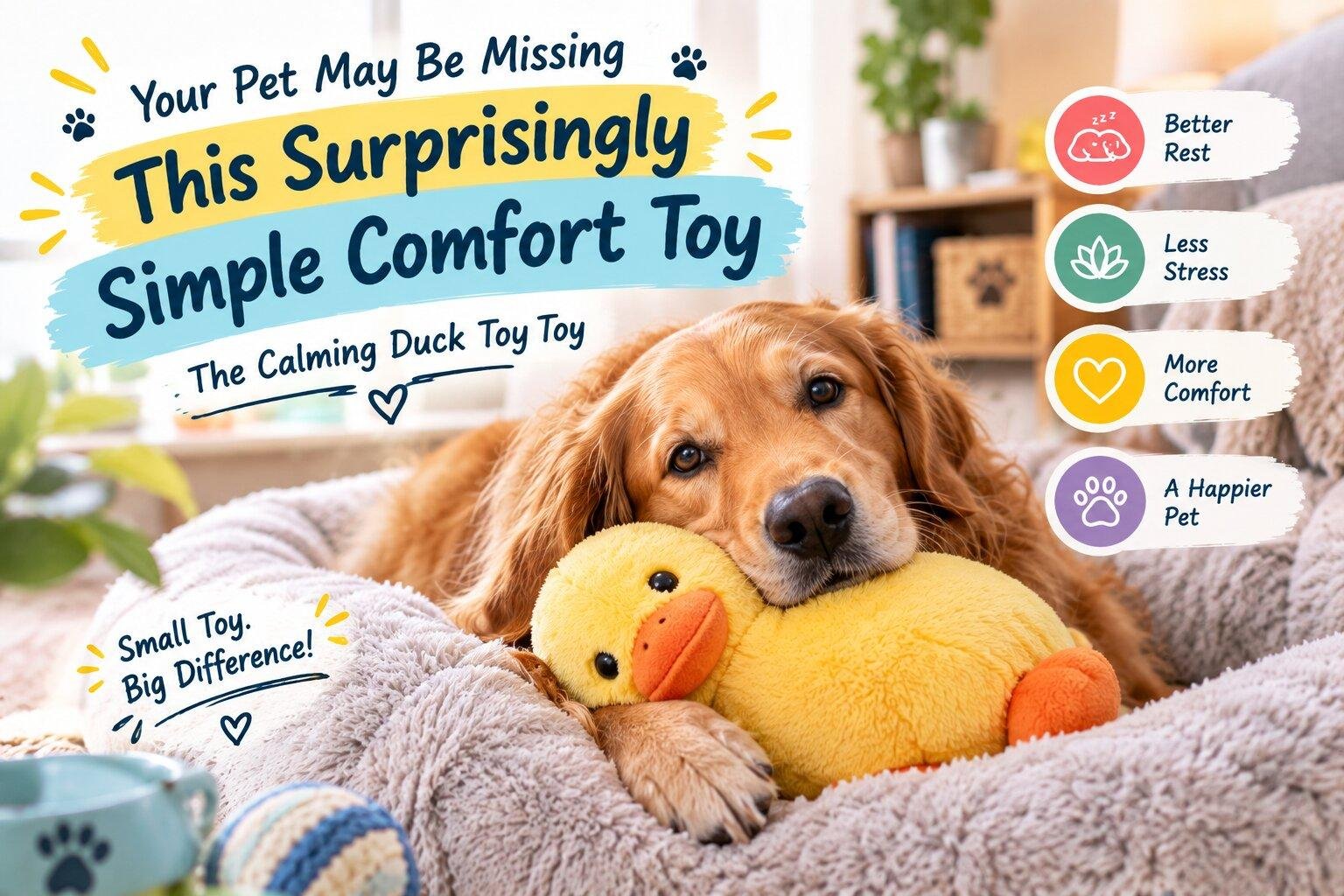
A Calming Duck Toy is a good example. It may look like an ordinary soft toy at first glance, but its appeal can go beyond play. A familiar shape, soft texture, gentle design, and comforting presence can give some pets another option for relaxing, settling down, or simply having something familiar nearby.
Of course, every pet is different. A toy will not magically solve anxiety or behavioral problems. However, when introduced appropriately, a comforting toy can become a small but meaningful part of a pet's everyday routine.
So, what makes this type of toy interesting, and why might your pet enjoy one?
Let's take a closer look.
Why Do Pets Like Comfort Objects?
Pets have individual personalities just like people do. Some are independent and rarely care about toys. Others carry a favorite toy around the house, sleep beside it, or become excited the moment they see it.
Comfort objects can become appealing for several simple reasons.
For one, familiar objects provide consistency. Your pet sees, smells, and interacts with the same object repeatedly. Over time, that familiarity can make the item feel like a normal part of the environment.
Texture can also matter. Soft toys may be enjoyable to touch, carry, nudge, or cuddle. Dogs, especially, often explore objects through their mouths and noses, so the physical characteristics of a toy can influence whether they find it interesting.
There is also the behavioral side. Playing with an appropriate toy gives pets something to do. Carrying it, tossing it, chewing it gently, or lying beside it can become part of their daily routine.
A Calming Duck Toy can fit into this idea because it combines the familiar role of a toy with the potential comfort of a soft companion.
What Is a Calming Duck Toy?
A Calming Duck Toy is generally designed to be more than an object for energetic play. Its soft, friendly appearance and comforting shape can make it suitable for quiet interaction as well.
The exact design varies between products, so pet owners should always check the materials, construction, size, and intended use before giving one to an animal.
The important idea is not the duck shape alone. It is how the toy fits into the pet's environment.
A pet might:
- Carry the toy around
- Sleep beside it
- Cuddle with it
- Nudge it with its nose
- Use it during quiet time
- Play with it occasionally
- Keep it in a familiar sleeping area
Some pets may completely ignore it. Others may become attached almost immediately.
That difference is perfectly normal.
The Power of Something Familiar
Imagine walking into a room filled with unfamiliar objects. Now imagine finding something you recognize sitting in the corner. Even if the object is simple, its familiarity can make the environment feel less strange.
Pets experience their surroundings differently from humans, but familiarity still plays an important role in their everyday lives.
A new home, a change in routine, visitors, travel, or a different sleeping location can alter what feels normal to a pet. Having familiar items around can help maintain some consistency.
A Calming Duck Toy may become one of those familiar objects.
The key is repetition rather than forcing attachment. If your pet naturally chooses to spend time with the toy, allowing that relationship to develop can be more useful than constantly placing the toy in front of them.
Why Soft Toys Can Be Appealing
Texture is one of the first things pets notice when interacting with an object.
A soft toy can feel different from hard plastic toys, balls, or rope toys. That difference may make it suitable for quieter activities.
Some dogs enjoy carrying plush toys gently. Others like resting their heads against them. Some will cuddle with a soft toy when they are tired.
Cats can also show strong preferences for particular textures, although their interests can be very individual.
A Calming Duck Toy with a soft exterior may therefore serve a different purpose from an energetic fetch toy. Instead of encouraging constant movement, it may simply become something your pet enjoys having nearby.
That does not mean softness automatically makes a toy calming. Your pet's personal preference matters more than the label.
Can a Toy Really Help a Pet Feel More Relaxed?
This is where it is important to keep expectations realistic.
A toy cannot diagnose or treat anxiety. If a pet shows serious fear, destructive behavior, aggression, repeated panic, or other concerning changes, owners should speak with a veterinarian or qualified animal behavior professional.
However, appropriate toys can support healthy enrichment.
For example, a pet may use a favorite toy during a quiet period after exercise. Another might carry it to its bed before settling down. A familiar object may become associated with ordinary relaxation routines.
In this sense, a Calming Duck Toy can be part of an environment that encourages appropriate rest and enrichment.
Think of it as one small piece of the puzzle rather than a complete solution.
The Connection Between Play and Rest
Play and rest may seem like opposites, but healthy routines usually include both.
A dog that receives appropriate physical activity and mental stimulation may be more ready to settle afterward. A cat that has opportunities to explore and play may naturally transition into periods of rest.
A comfort toy can fit between these activities.
Your pet might play with the toy for a few minutes and then lie beside it. Or they may ignore it during active periods and return to it later.
This flexibility is one of the reasons simple toys can become useful household items.
Rather than deciding exactly how your pet should use the toy, observe what they naturally do.
A Comfort Toy Can Become Part of a Routine
Pets often thrive on predictable routines.
Meals happen around familiar times. Walks may follow similar patterns. Bedtime may involve the same room, blanket, or sleeping area.
A favorite toy can become another part of that pattern.
For example, you might notice your dog carrying its Calming Duck Toy to its bed every evening. That behavior does not necessarily mean the toy is treating anxiety. It may simply mean the dog has developed a preference for having the toy nearby during quiet time.
That distinction matters.
Comfort and treatment are not the same thing.
The goal is simply to provide an appropriate object that your pet can choose to interact with.
Choosing the Right Size Matters
A toy should always be appropriate for the animal using it.
A very small toy may not be suitable for a large dog, while an oversized toy could be awkward for a smaller pet to carry or interact with.
When choosing a Calming Duck Toy, consider your pet's:
- Size
- Age
- Chewing habits
- Play style
- Jaw strength
- Supervision needs
- Ability to carry or handle the toy
There is no universal “best” size for every pet.
A gentle dog that likes carrying plush toys may have completely different needs from a powerful chewer.
Safety Should Come Before Comfort
This is perhaps the most important part of choosing any pet toy.
Soft does not automatically mean safe.
Inspect the toy regularly for loose stitching, damaged fabric, exposed filling, detached pieces, or other signs of wear. If your pet tears toys apart quickly, supervision becomes particularly important.
Some animals are gentle with plush toys. Others immediately try to destroy them.
If your pet removes stuffing, swallows fabric, or breaks pieces off toys, do not leave that toy unattended.
Pet owners should also follow any age, size, or usage recommendations supplied with the specific product.
A Calming Duck Toy should never replace proper supervision when a pet has a habit of chewing or destroying toys.
Where Should You Keep a Comfort Toy?
Location can influence whether your pet uses a toy.
A quiet area may be more suitable for a comfort-focused toy than a busy hallway or high-traffic part of the house.
Consider placing it near an established resting area, such as:
- A dog bed
- A comfortable blanket
- A favorite corner
- A crate, when appropriate
- A cat's resting area
Do not force the toy into your pet's sleeping space if they clearly dislike it.
Instead, let them investigate it at their own pace.
Sometimes simply leaving a new toy nearby is enough to encourage curiosity.
What If Your Pet Ignores It?
Nothing is wrong with your pet.
Not every dog or cat enjoys plush toys. Some prefer balls. Others like interactive puzzles, chew toys, scratching posts, or toys that move.
Personality matters.
If your pet ignores a Calming Duck Toy, try observing what they already enjoy. Do they like soft textures? Do they carry objects? Do they prefer squeaky toys? Are they interested in scent-based activities?
Their existing preferences can tell you much more than a product description.
The goal is not to convince your pet to love a particular toy. The goal is to offer appropriate choices.
How to Introduce a New Comfort Toy
Introducing a new toy does not need to become an event.
Place the toy somewhere your pet already spends time and allow them to investigate it naturally.
You can also introduce it during a calm period rather than immediately after an exciting activity.
Avoid pushing the toy toward your pet repeatedly. If they walk away, give them space.
If they show interest, let them explore.
Over time, you may notice that the toy becomes part of their routine.
Some pets bond with new toys quickly. Others need days or weeks before deciding that something is worth their attention.
Don't Use Comfort Toys to Replace Human Interaction
Pets need interaction, enrichment, exercise, and appropriate care. A toy can provide entertainment and companionship, but it cannot replace those things.
Dogs still need walks, training, social interaction, and opportunities to explore. Cats need suitable play, environmental enrichment, scratching opportunities, and attention according to their individual needs.
A Calming Duck Toy works best as an addition to a healthy routine.
Think of it as something your pet can choose when they want to play, carry, cuddle, or simply have an object nearby.
Signs Your Pet May Enjoy a Comfort Toy
Every animal communicates differently, but certain behaviors can suggest that a pet has developed an attachment to a toy.
You might notice your pet:
- Carries it from one room to another
- Sleeps beside it
- Brings it to you
- Searches for it
- Plays with it regularly
- Grooms or nudges it
- Keeps it near their resting area
- Chooses it during quiet periods
These behaviors do not necessarily indicate anxiety or emotional distress.
Often, they simply show that the animal has developed a preference for a familiar object.
When a Toy Is Not Enough
There is an important difference between ordinary restlessness and a genuine behavioral concern.
If your pet suddenly becomes fearful, hides frequently, stops eating, displays destructive behavior, becomes unusually aggressive, vocalizes excessively, or shows other significant changes, do not assume a comfort toy will solve the problem.
Changes in behavior can have many causes, including medical issues.
A veterinarian can help determine whether something physical may be contributing to the change. For persistent behavioral concerns, a qualified behavior professional can also provide guidance.
A toy can be useful enrichment, but it should not become a substitute for professional care when that care is needed.
Frequently Asked Questions
Is a Calming Duck Toy only for anxious pets?
No. A comfort-oriented toy can be enjoyed by pets that are perfectly relaxed. It can simply provide play, companionship, or another form of enrichment.
Can puppies and kittens use soft comfort toys?
They may, depending on the toy and the animal's age, size, chewing behavior, and supervision needs. Always check whether the specific toy is appropriate and monitor young pets closely.
Should I leave the toy with my pet overnight?
That depends on your pet's behavior and the toy's construction. If your pet tends to destroy and swallow parts of toys, unsupervised access may not be appropriate.
Will every pet like a duck-shaped toy?
Definitely not. Pets have different personalities and preferences. Some may love it, while others may prefer completely different toys.
How often should I clean a comfort toy?
Clean it according to its material and care instructions. Regular cleaning can help keep a frequently used toy fresh, especially if your pet carries it around or sleeps with it.
Can a comfort toy cure separation anxiety?
No. A toy should not be presented as a cure for separation anxiety. Pets with significant separation-related problems may need a structured behavior plan and professional guidance.
Final Thoughts
Sometimes the things pets enjoy most are surprisingly simple.
A soft toy may become a favorite companion not because it has complicated features, but because it fits naturally into an animal's everyday world. It can be carried, cuddled, played with, or simply left beside a favorite sleeping spot.
That is where a Calming Duck Toy can have a place in a pet's routine. It can provide another form of enrichment and, for some animals, become a familiar object associated with quiet and comfortable moments.
The most important thing is to follow your pet's lead.
Choose an appropriate toy, introduce it naturally, watch how your pet interacts with it, and replace it when it becomes damaged. Most importantly, remember that every animal has its own idea of fun and comfort.
Your pet may love the little duck.
Or they may completely ignore it and choose the cardboard box sitting next to it.
And honestly, that is part of what makes living with pets so entertaining.

 English
 Arabic
 French
 Spanish
 Portuguese
 Turkish
 Dutch
Dutch
 Italiano
 Russian
 Romaian
 Portuguese (Brazil)
 Greek
Greek