


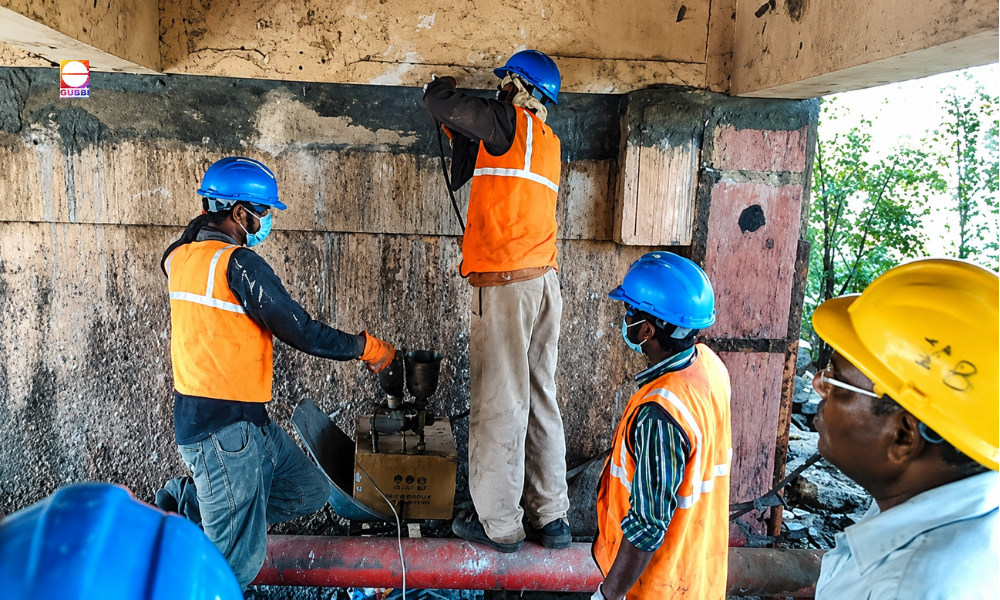
Grouting is an important technique used in construction, repair, waterproofing, and structural rehabilitation to address cracks, voids, leakage paths, weak zones, and other concealed defects. Unlike surface-level repair methods, grouting allows suitable materials to be introduced into specific areas through controlled injection. This makes it useful for existing buildings, industrial structures, foundations, basements, bridges, tunnels, and other concrete structures requiring targeted rehabilitation.
When an existing structure develops cracks, seepage, cavities, or internal voids, simply repairing the visible surface may not solve the underlying problem. The defect may continue beneath the concrete or through connected pathways. Grouting helps address such conditions by placing a suitable grout material into the affected zone. The selected method depends on the defect, moisture condition, crack characteristics, structural requirement, and intended repair outcome.
Why Grouting Matters in Structural Rehabilitation
Structural rehabilitation focuses on restoring or improving an existing structure instead of replacing it completely. In many rehabilitation projects, the damage is not limited to what can be seen on the surface. Water may travel through fine cracks, concrete may contain hidden voids, and interfaces may lose proper contact. Grouting can provide a targeted treatment where direct access to internal defects is limited or impractical.
The requirement for grouting can arise from several conditions, including concrete cracking, water leakage, construction joints, foundation voids, honeycombing, settlement-related gaps, porous concrete, and deterioration around structural elements. The purpose is not simply to fill an opening with material. The grout must be selected according to the reason for the defect and the performance expected from the completed rehabilitation work.
Chemical Grouting for Structural Rehabilitation
Chemical grouting for structural rehabilitation involves injecting specially formulated materials into cracks, joints, voids, or other accessible pathways where conventional cement-based repair may not provide the required penetration or sealing. Depending on the selected system, chemical grout can be used for water leakage control, crack sealing, void treatment, and rehabilitation of difficult-to-access areas within existing structures.
Chemical grouting becomes particularly useful when water is actively entering through cracks or joints and conventional surface treatment cannot reach the actual leakage path. Certain chemical grout systems can penetrate fine pathways and react or cure within the affected area. However, chemical grouting should be selected after understanding the condition of the structure rather than treating it as a universal solution for every crack or leakage problem.
Common Problems That Can Require Grouting
Concrete structures can experience different types of defects during their service life. Water penetration is one common concern because repeated moisture exposure can contribute to deterioration of concrete and reinforcement. Cracks, construction joints, honeycombing, voids, and poorly compacted areas can also create pathways for moisture. Grouting can be considered when the defect requires material to be introduced beyond the exposed surface.
In industrial and infrastructure environments, the need can be more complex because structures may experience vibration, chemical exposure, changing temperatures, heavy loads, groundwater pressure, and continuous operation. Foundations, pits, tanks, basements, retaining structures, tunnels, and process areas may therefore require specialized repair approaches. Grouting services can form one part of a broader structural repair and rehabilitation strategy when conditions are properly assessed.
Types of Grouting Used in Rehabilitation
Different grouting materials are available because different defects require different properties. Cement grouting can be considered for suitable void filling, consolidation, and certain foundation-related applications. Epoxy injection is generally associated with suitable stable concrete cracks where bonding and restoration of continuity are required. Polyurethane grouting is commonly considered for water-bearing cracks and leakage control applications.
Microfine cement grouting is another option where finer cement particles are required to penetrate suitable small voids or permeable zones. Chemical grouts may include polyurethane, acrylic, or other specialized resin systems depending on the project requirement. The selection should consider crack width, movement, moisture, water pressure, substrate condition, required penetration, and the expected service environment rather than relying only on the material name.
Chemical Grouting for Concrete Crack Repair
Concrete cracks can develop for many reasons, including shrinkage, thermal movement, structural loading, settlement, reinforcement corrosion, construction deficiencies, or changes in the surrounding environment. Not every crack requires injection grouting, and the first step should be understanding why the crack has developed. A repair method that only seals the visible opening may fail if movement, water pressure, or structural deterioration remains unresolved.
Chemical grouting can be considered when cracks provide pathways for water or when the internal route of the defect needs to be treated. Low-viscosity materials can be useful for selected fine cracks and concealed pathways. For structural cracks, the repair approach must be determined through engineering assessment. Depending on the condition, injection may need to be combined with concrete repair, strengthening, corrosion treatment, or other rehabilitation measures.
Grouting for Water Leakage and Seepage
Water leakage is one of the most common reasons property owners and facility managers consider injection grouting. Leakage can appear in basements, underground structures, parking areas, water-retaining structures, tunnels, foundations, construction joints, and concrete walls. Surface waterproofing may not always address leakage when water is travelling through an internal crack or concealed pathway.
Grouting services can target specific leakage points by installing injection points along the affected area and introducing an appropriate material under controlled pressure. For active water leakage, suitable polyurethane or other chemical systems may be considered depending on the site conditions. The objective is to control the water pathway while maintaining compatibility with the existing structure and avoiding unnecessary damage during the repair process.
Grouting for Industrial Structures
Industrial structures often require repair methods that consider both structural condition and operational requirements. A manufacturing facility, process plant, warehouse, cooling structure, foundation, underground chamber, or industrial floor may have limited access for extensive demolition. Grouting can be useful in selected situations because treatment can be concentrated around the affected location instead of removing large sections of the existing structure.
Industrial grouting may be associated with foundation voids, equipment foundations, concrete cracks, leakage, construction joints, underground structures, pits, tanks, and other areas requiring rehabilitation. Before selecting a method, engineers should consider operating conditions, chemical exposure, vibration, loading, water presence, accessibility, and shutdown limitations. For projects with complex deterioration, grouting may be combined with structural repair, waterproofing, concrete restoration, or strengthening.
Grouting for Foundations and Voids
Voids beneath or around suitable structural interfaces can affect contact and stability, particularly when caused by settlement, erosion, construction deficiencies, or loss of supporting material. Depending on the cause and structural condition, grouting can be used to fill appropriate cavities and restore contact. However, filling the visible void alone may not address the reason it developed in the first place.
Foundation grouting requires careful assessment because soil conditions, groundwater, loading, foundation geometry, and existing settlement can influence the repair strategy. The grout material and injection pressure should be selected according to the project requirements. In some cases, pressure grouting may form part of a larger foundation rehabilitation program, while other situations may require structural strengthening or ground improvement instead.
How the Grouting Process Works
A professional grouting process generally starts with an inspection of the affected structure. Engineers examine the location, extent, pattern, and characteristics of cracks, leakage, voids, or other defects. Moisture conditions, water pressure, concrete quality, reinforcement condition, accessibility, and structural significance are also considered. This assessment helps determine whether grouting is suitable and what type of material and injection arrangement may be required.
After assessment, the affected area is prepared and the injection points are identified. Packers or suitable injection ports may be installed at calculated locations along the crack or leakage path. The selected grout is then injected using appropriate equipment and controlled pressure. After injection, the repaired area is checked to confirm that the intended pathway has been treated before completing surface restoration and finishing work.
Importance of Choosing the Right Grout Material
Choosing a grout only because it is widely used can lead to an unsuitable repair. Cement-based materials, epoxy systems, polyurethane grouts, and microfine cement systems have different characteristics and applications. A grout suitable for filling a large void may not be appropriate for a fine crack, while a material designed for active water leakage may not provide the properties required for restoring a stable structural crack.
Material selection should therefore consider the defect and the expected performance after rehabilitation. Crack movement, moisture, temperature, water pressure, chemical exposure, substrate condition, and accessibility can all influence the decision. For complex rehabilitation projects, consulting an experienced contractor such as Gubbi Civil Engineers Limited can help align the grouting method with the actual site condition and repair objective.
Grouting and Waterproofing Are Not Always the Same
Grouting and waterproofing are closely connected in many repair projects, but they are not identical. Waterproofing generally aims to prevent water from entering or passing through a structure, while grouting can be used to treat specific cracks, voids, joints, or internal leakage pathways. In some projects, injection grouting becomes one component of the overall waterproofing system rather than the complete waterproofing solution.
For example, a basement may experience leakage through construction joints and concrete cracks. Injection grouting can address the identified leakage pathways, while additional surface treatment, drainage improvement, joint sealing, or protective coating may be required depending on the condition. Understanding this difference helps property owners avoid expecting one repair technique to solve every waterproofing problem.
When Chemical Grouting May Be Preferred
Chemical grouting can be considered when conventional repair methods cannot effectively reach the affected area or when the defect involves active water movement through fine pathways. It may also be useful where the repair needs to be localized and extensive removal of concrete would create unnecessary disruption. The ability of certain chemical grout systems to penetrate narrow pathways makes them relevant for selected rehabilitation conditions.
However, chemical grouting should not automatically be considered whenever a crack is visible. Cracks caused by reinforcement corrosion, structural movement, significant loading, settlement, or major deterioration may require additional investigation. The visible crack is often only a symptom. Identifying the underlying cause is essential for deciding whether chemical grouting alone is appropriate or whether a combination of rehabilitation methods is necessary.
Benefits of Professional Grouting Services
Properly planned grouting can provide several practical benefits during structural rehabilitation. It can allow localized treatment, reduce unnecessary surface removal, address selected concealed pathways, and help control water ingress. Depending on the material and application, grouting can also support void filling, crack sealing, foundation-related repairs, and rehabilitation of difficult-to-access areas.
The quality of the final result depends heavily on diagnosis, material selection, injection pressure, equipment, workmanship, and verification. Poorly planned injection can result in incomplete filling, uncontrolled grout movement, recurring leakage, or inadequate treatment of the original defect. Professional grouting services therefore require more than simply injecting material into a crack. They require a planned methodology based on the actual condition of the structure.
Grouting Applications Across Different Structures
Grouting can be used in a wide range of suitable construction and rehabilitation situations. Common applications include RCC buildings, industrial plants, basements, foundations, parking structures, tunnels, bridges, dams, water-retaining structures, underground chambers, retaining walls, process areas, and infrastructure assets. Each application has different exposure conditions, structural requirements, and access limitations.
In older structures, grouting may also form part of a larger rehabilitation program where concrete deterioration, water ingress, corrosion, or cracking has developed over time. Depending on the assessment, grouting can be integrated with concrete repair, micro-concrete repair, structural strengthening, jacketing, protective coatings, waterproofing, or corrosion-control measures. This integrated approach can address several related causes rather than treating only one visible defect.
Common Mistakes During Grouting Work
One common mistake is treating every crack in the same manner. Crack width, depth, movement, moisture, cause, and structural significance can vary considerably even within the same building. Another mistake is selecting a grout material without assessing water conditions or substrate characteristics. Excessive injection pressure can also create problems by forcing material into unintended areas or damaging already weakened concrete.
Another important issue is failing to verify the completed repair. A repaired surface may look satisfactory while water continues travelling through a concealed pathway. Proper inspection after injection helps determine whether the intended leakage path has been treated. Where necessary, additional injection points or complementary repair measures may be considered based on the observed performance of the completed work.
How to Select Grouting Contractors
Selecting grouting contractors should involve more than comparing quotations. Property owners should consider whether the contractor understands structural rehabilitation, can assess the cause of the defect, has appropriate injection equipment, and can recommend suitable materials for different conditions. Experience with industrial and infrastructure environments can also be important where access, safety, operating conditions, and project timelines are significant.
It is useful to discuss the complete repair methodology before work begins. Ask how the defect will be assessed, why a particular grout has been selected, how injection pressure will be controlled, how the repair will be verified, and whether additional structural repairs may be required. This approach helps ensure that the grouting work is connected to the actual rehabilitation requirement instead of being treated as an isolated surface repair.
Why Assessment Should Come Before Grouting
A successful rehabilitation project begins with understanding the problem. A crack may be caused by movement, corrosion, shrinkage, settlement, overload, or environmental exposure. Similarly, water leakage may originate from a joint, crack, porous concrete, groundwater pressure, or another concealed route. Without identifying the likely cause, choosing a grout simply because it is commonly available may provide only temporary improvement.
Assessment also helps determine whether the affected area requires grouting at all. Some cracks may require surface treatment, some may require epoxy injection, while others may require structural strengthening or concrete replacement. In water-related situations, chemical injection may be appropriate. The correct solution depends on the condition, which is why inspection and diagnosis are essential parts of structural rehabilitation.
Long-Term Approach to Structural Rehabilitation
Grouting should be viewed as part of a broader maintenance and rehabilitation strategy when the structure has multiple defects. Treating leakage without addressing deteriorated concrete, or filling a void without investigating settlement, may leave the underlying problem unresolved. A coordinated approach can combine inspection, repair, waterproofing, strengthening, and protective measures according to the condition of the asset.
For building owners and facility managers, early attention to cracks, seepage, voids, and concrete deterioration can help prevent minor defects from becoming more complicated repair requirements. Regular inspection and planned maintenance can also help identify changes in existing structures before extensive deterioration develops. Grouting is most valuable when it is used as an engineering solution within this wider rehabilitation approach.
Grouting has an important role in repairing and rehabilitating existing concrete and infrastructure where cracks, leakage paths, voids, joints, or other concealed defects require targeted treatment. Chemical grouting for structural rehabilitation is particularly relevant for selected water-bearing cracks and difficult-to-access pathways, while cement, epoxy, polyurethane, and microfine cement systems can serve different project requirements.
The success of grouting depends on understanding the defect, selecting the appropriate material, controlling the injection process, and verifying the completed treatment. For this reason, building owners and industrial facility managers should focus on diagnosis and repair methodology rather than choosing a grout based only on price or material name. A technically planned approach can make grouting a valuable part of structural repair and rehabilitation.
Frequently Asked Questions About Grouting
What is grouting used for?
Grouting is used for suitable applications involving cracks, voids, joints, leakage paths, foundations, porous zones, and other areas requiring filling, sealing, consolidation, or stabilization. The exact purpose depends on the type of structure and the defect being treated.
What is chemical grouting?
Chemical grouting involves injecting specially formulated chemical or resin-based materials into selected cracks, joints, voids, or leakage pathways. It is commonly considered for situations where fine penetration, water leakage control, or localized rehabilitation is required.
Is grouting suitable for concrete cracks?
Grouting can be suitable for certain concrete cracks, but the appropriate method depends on the crack's cause, width, depth, movement, moisture condition, and structural significance. Some cracks may require epoxy injection, while others may need strengthening or concrete repair.
Can grouting stop water leakage?
Selected grouting systems can help control water leakage through suitable cracks, joints, and concealed pathways. The leakage source, water pressure, crack characteristics, and substrate condition should be assessed before selecting the injection material.
What are common grouting services?
Common grouting services include cement grouting, pressure grouting, epoxy injection grouting, polyurethane grouting, and microfine cement grouting. Different systems are used for different applications such as crack repair, leakage control, void filling, foundation treatment, and structural rehabilitation.
Is chemical grouting suitable for industrial buildings?
Chemical grouting can be suitable for selected industrial applications involving leakage, cracks, joints, pits, foundations, underground structures, and other areas where localized injection is required. The operating environment and exposure conditions should be considered before material selection.
How are grouting contractors selected?
Look for contractors who can assess the defect, explain the proposed repair method, select suitable materials, use controlled injection equipment, and verify the completed work. Experience with structural rehabilitation is particularly valuable for complex industrial and infrastructure projects.
Does grouting replace structural strengthening?
Not always. Grouting addresses specific defects and applications, but some structures may require additional strengthening, concrete repair, corrosion treatment, jacketing, or other rehabilitation measures. The appropriate combination depends on the structural assessment and project requirements.
Grouting is not simply about filling cracks or injecting material into concrete. It is a targeted rehabilitation technique that requires an understanding of the defect, structure, material behavior, water conditions, and expected performance. When properly assessed and executed, grouting services can support crack treatment, leakage control, void filling, foundation-related repairs, and broader structural rehabilitation projects.

 English
 Arabic
 French
 Spanish
 Portuguese
 Deutsch
 Turkish
 Dutch
Dutch
 Italiano
 Russian
 Portuguese (Brazil)
 Greek
Greek