


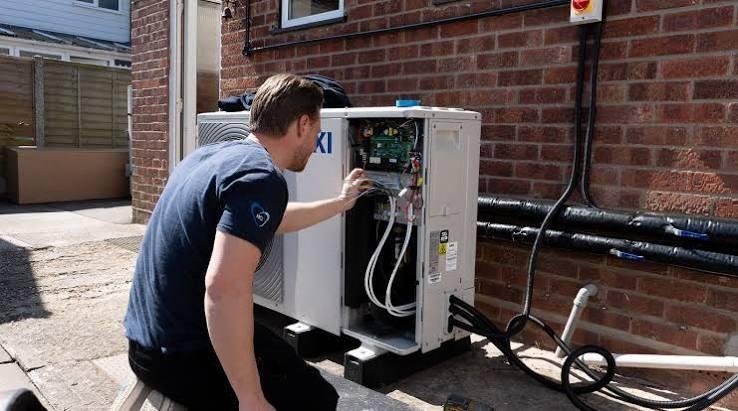
Choosing a modern heating system is a significant decision for homeowners and landlords who want dependable warmth, better control over energy use, and a lower-carbon way to heat their property. Heat pumps are increasingly being considered across South Yorkshire because they can provide heating and, with suitable systems, hot water while using electricity to transfer heat rather than generating heat solely by burning fuel.
A successful heat pump project, however, involves much more than choosing a unit and mounting it outside. The property, insulation, heat loss, radiators or underfloor heating, hot-water requirements, electrical supply, controls, and outdoor space all need to be considered together. For households researching Heat Pump Installation Sheffield , understanding the process before requesting quotations can make it easier to compare proposals and ask useful questions.
This guide explains how heat pumps work, what a professional installation involves, which properties can benefit, what affects costs, and how to prepare for a new system.
What Is a Heat Pump?
A heat pump transfers heat from one place to another. An air source heat pump, for example, extracts heat energy from outdoor air and raises its temperature through a refrigeration cycle before delivering it into a property's heating system. Ground source systems use heat stored in the ground instead.
Unlike a conventional boiler, a heat pump does not normally create heat by burning gas or oil. Its performance depends on factors such as outdoor temperature, system design, flow temperature, building heat loss, and installation quality.
Air Source and Ground Source Systems
Air source heat pumps are often more practical for existing homes because they require outdoor space for the external unit but generally do not need extensive ground excavation. Ground source systems can provide consistent performance but usually require buried pipework, trenches, or boreholes, making site requirements more substantial.
For many residential projects, an air-to-water system is considered where the goal is to supply radiators or underfloor heating and domestic hot water. The correct choice should be based on a property's actual requirements rather than on the equipment's headline output alone.
Why Consider a Heat Pump in Sheffield?
Sheffield contains a wide range of property types, from older stone and brick terraces to semi-detached houses, modern developments, flats, and larger detached properties. This variety means there is no universal installation approach.
Local weather conditions also make proper system design important. A heat pump needs to be sized for the building's heat demand and expected operating conditions. Oversizing or undersizing can affect efficiency, comfort, cycling behaviour, and running costs.
Potential Benefits for Homeowners
A well-designed heat pump system can offer several advantages:
-
Reduced reliance on combustion-based heating.
-
Efficient operation when correctly sized.
-
Stable indoor temperatures through longer, lower-temperature heating cycles.
-
Compatibility with underfloor heating and appropriately sized radiators.
-
Potential integration with smart controls and renewable electricity.
-
Lower household carbon emissions compared with some fossil-fuel heating arrangements.
These benefits depend on the property and system design. A heat pump is not automatically efficient simply because it is a heat pump. Insulation, controls, emitter sizing, installation quality, and user settings all influence real-world performance.
Assessing Your Property Before Installation
A professional installer should assess the building before recommending equipment. The aim is to understand how much heat each part of the property needs and how that demand changes during colder conditions.
Heat Loss Assessment
Heat loss calculations consider elements such as walls, windows, roofs, floors, ventilation, room dimensions, and desired indoor temperatures. A room-by-room assessment is more useful than selecting equipment based only on the size of the boiler being replaced.
This information helps determine the required heat-pump output and whether existing radiators can deliver sufficient heat at the lower flow temperatures typically associated with heat pumps.
Insulation and Airtightness
Improving insulation can reduce heat demand and make it easier for a heat pump to maintain comfortable temperatures. Loft insulation, wall insulation, suitable glazing, and measures that reduce uncontrolled draughts may all be relevant.
However, homeowners should avoid assuming that every property needs a complete refurbishment before a heat pump can be installed. The sensible approach is to identify measures that offer practical value and assess how they interact with the heating design.
Radiators and Underfloor Heating
Traditional boiler systems may use relatively high water temperatures. Heat pumps generally work more efficiently when delivering heat at lower temperatures over longer periods.
Some existing radiators may therefore need replacing with larger models, while others may already be suitable. Underfloor heating can work particularly well because it operates effectively at lower water temperatures and provides a broad heat-emitting surface.
What Happens During Heat Pump Installation?
A typical Heat Pump Installation Sheffield project begins with a survey and design stage rather than immediate equipment fitting. Once the property assessment is complete, the installer can specify the heat pump, cylinder, controls, emitters, pipework, and other components.
Step 1: Property Survey
The installer reviews the building, heating requirements, electrical arrangements, outdoor location, access, and existing hot-water system. Planning or building-control considerations may also need to be checked depending on the property and installation.
Step 2: System Design
The design determines the heat pump's capacity and operating temperatures. It should also establish the required pipe sizes, cylinder arrangement, controls, buffer components if appropriate, and heating-emitter requirements.
A good design avoids treating the heat pump as an isolated appliance. The whole heating system needs to operate as one coordinated system.
Step 3: Installation
The work may involve positioning the outdoor unit, installing internal equipment, adapting pipework, connecting controls, modifying radiators, and integrating the system with hot-water storage.
The outdoor unit needs appropriate airflow and clearance. It should also be positioned with consideration for noise, access, drainage, maintenance, and the surrounding property.
Step 4: Commissioning
Commissioning is a critical stage. The installer should check temperatures, pressures, controls, flow rates, safety functions, and system operation. The homeowner should receive instructions on controls and normal operation.
A system that has been installed but not correctly commissioned may not deliver the performance expected from its design.
How Much Does a Heat Pump Cost?
The cost of Heat Pump Installation Sheffield varies considerably because properties differ in size, heat demand, insulation, existing heating infrastructure, electrical requirements, and the amount of alteration needed.
A straightforward installation may cost substantially less than a project requiring new radiators, extensive pipework, electrical upgrades, hot-water storage, or significant building work.
Factors That Affect the Final Price
When comparing quotations, consider:
-
Heat pump model and capacity.
-
Type and size of hot-water cylinder.
-
Radiator or underfloor-heating modifications.
-
Pipework and insulation requirements.
-
Electrical work.
-
Outdoor-unit mounting and drainage arrangements.
-
Controls and zoning.
-
Labour and commissioning.
-
Removal or alteration of the existing heating system.
-
Any eligible government funding or grant support.
A low initial quotation is not necessarily the lowest-cost solution over the system's lifetime. Homeowners should compare what is included, what assumptions were made about the building, and whether commissioning and aftercare are covered.
Government Grants and Eligibility
Funding can reduce the upfront cost of eligible heat-pump projects. In England and Wales, the Boiler Upgrade Scheme provides grants for qualifying installations, subject to current eligibility requirements and approved categories.
As grant rules and values can change, homeowners should check the latest government and Ofgem guidance rather than relying on an old article or quotation. Eligibility can depend on the property, technology, existing heating arrangement, and installer requirements.
Why MCS Certification Matters
For relevant government-supported installations, MCS certification can be an important part of the process. Ofgem states that the Boiler Upgrade Scheme is installer-led and that MCS-certified installers can apply for and redeem vouchers on behalf of property owners.
Before proceeding, ask the installer whether the proposed system and installation meet the current requirements for any grant being discussed. Do not assume that every heat pump installation automatically qualifies.
How to Choose an Installer
The installer you select can influence the system's design, installation quality, commissioning, and long-term support. Rather than choosing solely on price, ask for evidence of relevant experience and a clear explanation of the proposed system.
Questions Worth Asking
Consider asking:
-
How was the property's heat loss calculated?
-
What heat-pump capacity has been recommended and why?
-
Will existing radiators be suitable?
-
What flow temperatures are expected?
-
What hot-water cylinder will be installed?
-
What electrical work is required?
-
How will the outdoor unit be positioned?
-
What commissioning checks are included?
-
What warranties apply to equipment and workmanship?
-
Is the proposed installation eligible for current funding?
A detailed answer to these questions can reveal whether a quotation is based on a genuine system design or simply on a standard package.
Connect + Plumbing and Heating Ltd can be considered as part of a homeowner's local research when comparing heating services, provided its proposed design, credentials, quotation, and aftercare arrangements are assessed alongside other relevant options.
Running a Heat Pump Efficiently
Operating a heat pump efficiently is different from using a boiler. Instead of repeatedly turning the heating fully on and off, many systems are designed to maintain a relatively stable indoor temperature.
Use Controls Correctly
Modern controls can include weather compensation, thermostats, timers, zoning, and smart-home integration. The exact setup should reflect the property and the homeowner's routine.
Lower flow temperatures can support efficient operation, but they must still provide enough heat to maintain comfort. If rooms are consistently cold, changing settings without understanding the cause may hide a design or balancing issue.
Maintain the System
Routine maintenance helps keep the system operating safely and reliably. Outdoor units should remain clear of obstructions, while filters, pipework, controls, refrigerant-related components, and other equipment should be inspected according to manufacturer and installer guidance.
Keeping records of servicing and performance can also help identify changes in operation over time.
Common Mistakes to Avoid
Several mistakes can reduce the value of a heat-pump project.
Choosing Equipment by Property Size Alone
Two homes with the same floor area can have very different heat demands. Age, insulation, windows, construction, occupancy, and ventilation all matter.
Ignoring Heat Emitters
A heat pump may be correctly sized while the existing radiators are not large enough to deliver the required heat at the intended flow temperature. This should be assessed during design.
Focusing Only on the Upfront Price
The equipment, installation, controls, cylinder, radiators, commissioning, warranty, and aftercare should all be considered. A quotation that excludes necessary work may appear cheaper while providing an incomplete comparison.
Expecting Boiler-Like Operation
Heat pumps often work best when the system is allowed to run steadily and efficiently rather than being treated exactly like a traditional boiler. Homeowners should understand the control strategy before judging performance.
Frequently Asked Questions
Is a heat pump suitable for an older Sheffield home?
It can be. Older homes require careful assessment because construction, insulation, glazing, heat loss, and radiator capacity can vary significantly. The right approach is to assess the property rather than rule it out based solely on age.
Do heat pumps work in cold weather?
Yes. Heat pumps are designed to operate in cold conditions, although their performance changes with outdoor temperature. Proper sizing and system design are important so that the property remains adequately heated during colder periods.
Will I need new radiators?
Not necessarily. Some existing radiators may be suitable, while others may need to be replaced or upgraded to provide enough heat at lower water temperatures.
How long does installation take?
The timescale depends on system complexity, property access, alterations to radiators or pipework, electrical work, and whether additional building work is required. A simple project can be much quicker than a full heating-system conversion.
Can a heat pump provide hot water?
Many air-to-water systems can provide domestic hot water through a suitable cylinder. The cylinder size and recovery requirements should be included in the design.
Final Considerations for Homeowners
Heat Pump Installation Sheffield should be approached as a whole-property heating project rather than a simple appliance replacement. The most important factors are accurate heat-loss assessment, appropriate equipment sizing, suitable heat emitters, sensible controls, professional installation, thorough commissioning, and clear aftercare.
For homeowners comparing local services, Connect + Plumbing and Heating Ltd may be one provider to research, while independent checks of credentials, system design, warranty terms, funding eligibility, and quotation details can help ensure the chosen solution matches the property's needs.
A successful heat-pump project starts with good information. By understanding the technology, asking detailed questions, and comparing complete system proposals rather than headline prices alone, Sheffield property owners can make a more informed decision about modern home heating.

 English
 Arabic
 French
 Portuguese
 Deutsch
 Turkish
 Dutch
Dutch
 Italiano
 Russian
 Romaian
 Portuguese (Brazil)
 Greek
Greek