


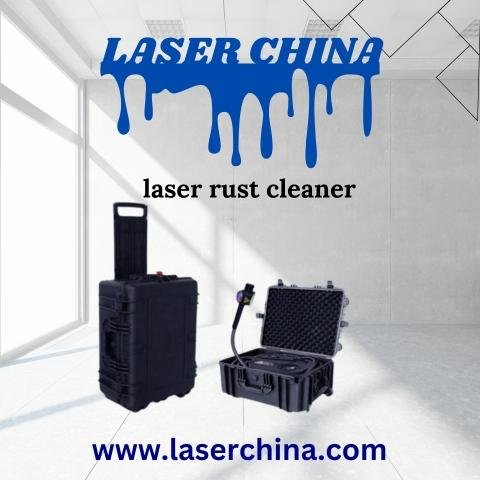
Rust is one of the most common problems affecting metal surfaces in workshops, factories, construction sites, automotive facilities, and industrial production environments. When moisture and oxygen react with iron or steel, oxidation gradually develops and creates a layer of rust that can affect the appearance and condition of the material. Removing this contamination efficiently is an important part of maintenance and surface preparation.
A laser rust cleaner provides a modern method for removing rust and unwanted surface contaminants through controlled laser energy. Instead of depending primarily on abrasive materials or chemical treatments, laser cleaning uses focused light to interact with the unwanted layer on the surface. This approach has become increasingly relevant for businesses looking for accurate and controlled metal cleaning processes.
What Is a Laser Rust Cleaner?
A laser rust cleaner is an industrial cleaning system designed to remove rust and other unwanted materials from metal surfaces. The equipment directs a concentrated laser beam toward the contaminated area. When the laser energy reaches the rust layer, the contamination absorbs the energy and is removed from the surface.
The process can be adjusted according to the material, contamination, and cleaning requirements. Operators can control parameters such as laser power, scanning speed, and working pattern to achieve the desired cleaning result.
Laser cleaning is commonly used on materials such as steel, stainless steel, iron, aluminum, and various industrial metal components. The exact cleaning method depends on the material condition and the type and thickness of contamination.
How Does Laser Rust Cleaning Work?
The basic principle behind laser rust cleaning involves the interaction between laser energy and the unwanted surface layer. Rust generally has different physical and optical properties from the underlying metal. With suitable laser parameters, energy can be directed toward the rust while limiting the effect on the base material.
As the laser moves across the surface, the contaminated layer absorbs energy and separates from the substrate. Depending on the application, the removed material may become loose particles, vapor, or small fragments that can then be collected using appropriate ventilation or extraction equipment.
The operator normally moves the laser cleaning head across the affected surface or uses an automated scanning system. This makes it possible to treat specific areas without unnecessarily processing clean sections of the component.
Preparing Metal Before Laser Cleaning
Proper preparation can make the cleaning process more consistent. Before using a laser rust cleaner, the operator should inspect the surface and identify the type and condition of the contamination.
Loose debris, dirt, oil, grease, or other materials may need to be removed when they interfere with the cleaning process. The operator should also determine the type of base metal and examine whether the surface contains coatings, paint, plating, or delicate details.
Testing a small section before processing the complete component is a practical step. It allows the operator to establish suitable settings and observe how the material responds to the laser.
Removing Rust From Steel Components
Steel parts are frequently exposed to moisture, industrial chemicals, outdoor conditions, and other factors that can produce corrosion. Rust can appear on machinery frames, tools, automotive components, structural parts, molds, pipes, and fabricated metal products.
A laser rust cleaner can be used to process localized rust or larger contaminated areas. By adjusting the scanning pattern and operating parameters, users can work on different surface conditions while maintaining control over the cleaning operation.
For industrial maintenance teams, controlled cleaning can be particularly useful when components need to be prepared for inspection, repair, welding, painting, or further manufacturing.
Laser Cleaning for Automotive Applications
Automotive workshops and manufacturing facilities deal with many metal components that require regular maintenance and surface preparation. Rust may develop on tools, brackets, engine components, molds, frames, and other metal parts.
Laser cleaning can be incorporated into selected automotive maintenance procedures where accurate removal of oxidation is required. For example, a contaminated metal component can be processed to expose a cleaner surface before inspection or additional treatment.
The technique can also be useful when working around detailed components where conventional abrasive cleaning could remove more material than intended.
Industrial Machinery Maintenance
Industrial machinery operates in environments where dust, moisture, oil, oxidation, and other contaminants can accumulate over time. If these materials are not properly managed, maintenance and inspection can become more difficult.
A laser rust cleaner can be used for selected maintenance tasks involving machine components, metal structures, production tools, and equipment parts. The focused cleaning process allows operators to target specific contaminated areas instead of treating an entire component unnecessarily.
This can be particularly useful during scheduled maintenance when equipment needs to be cleaned before inspection or refurbishment.
Preparing Surfaces for Welding
Clean metal surfaces are important for many welding applications. Rust, oxidation, paint, and other contaminants can interfere with surface preparation and may affect the consistency of subsequent manufacturing work.
Laser cleaning can be used before welding to prepare selected metal areas. The operator can target the required section and establish suitable cleaning parameters according to the material and contamination.
Cleaning Rust From Tools and Equipment
Hand tools, industrial tools, molds, fixtures, and metal equipment can gradually develop rust when exposed to humid environments or stored for long periods. Conventional cleaning may require considerable manual effort, especially when oxidation covers detailed or difficult-to-reach surfaces.
A laser rust cleaner can be used for controlled treatment of suitable metal tools. Operators can move the cleaning head across the affected areas and concentrate the laser where rust is present.
Before cleaning valuable or precision components, testing should always be performed because different materials, coatings, and surface finishes respond differently to laser energy.
Selecting the Appropriate Laser Rust Cleaner
Choosing suitable equipment requires consideration of the intended application rather than simply selecting the highest available laser power. The type of metal, thickness of rust, component size, cleaning area, required working speed, and production environment all influence equipment selection.
Portable systems can be practical for maintenance teams that need to move equipment between different work areas. Larger industrial systems may be appropriate for production environments where repeated cleaning operations are performed.
Safe Operation and Workplace Practices
Laser cleaning equipment should always be operated according to the manufacturer's instructions and applicable workplace safety requirements. Industrial laser systems can present serious eye and skin hazards if used incorrectly.
Appropriate laser safety measures should include controlled access to the work area, suitable protective equipment, proper operator training, and appropriate extraction or ventilation for particles and fumes generated during cleaning.
The cleaning environment should also be organized so that reflective surfaces and unnecessary personnel exposure are minimized. Operators should understand the equipment's controls and emergency procedures before beginning production work.
Applications Across Different Industries
The use of laser rust cleaning extends across many industrial sectors. Manufacturing companies can use it for surface preparation, while automotive businesses can apply it to selected components and tools. Construction and maintenance teams may use laser systems for metal restoration and equipment servicing.
Other possible applications include machinery refurbishment, ship maintenance, fabrication, restoration work, mold cleaning, and preparation of metal parts before coating or further processing.
As laser technology continues to develop, manufacturers are producing equipment for different operating environments and cleaning requirements.
Maintaining Consistent Cleaning Results
Consistent results depend on correct equipment settings and operator technique. Important variables can include laser power, frequency, pulse characteristics, scanning speed, focal position, and the number of passes across the surface.
Different contamination levels may require different settings. Heavy rust and light surface oxidation should not necessarily be processed using identical parameters.
Regular equipment inspection and maintenance are also important. Cleaning components, checking connections, following recommended service schedules, and keeping the working area organized can contribute to reliable operation.
Final Thoughts
A laser rust cleaner offers a controlled approach to removing rust and preparing metal surfaces for maintenance, manufacturing, repair, and restoration. By directing laser energy toward unwanted oxidation, the technology provides an alternative to traditional mechanical and chemical cleaning methods.

 English
 Arabic
 French
 Spanish
 Deutsch
 Turkish
 Dutch
Dutch
 Italiano
 Russian
 Romaian
 Portuguese (Brazil)
 Greek
Greek