


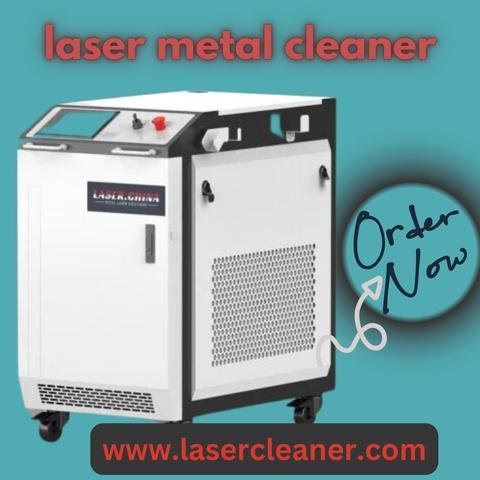
Metal surfaces often require regular cleaning before manufacturing, maintenance, coating, welding, or restoration. Traditional cleaning processes can involve chemicals, abrasive materials, solvents, or extensive manual labor. These methods may require additional handling, preparation, and cleanup after the surface treatment. A laser metal cleaner provides a modern approach by using concentrated laser energy to remove unwanted materials from metal surfaces with controlled precision.
From rust and oxidation to paint, oil, grease, and other surface contaminants, laser cleaning technology can be applied to many industrial and maintenance tasks. Its precise operation makes it suitable for workshops, factories, automotive applications, fabrication facilities, restoration projects, and metal-processing environments.
What Is a Laser Metal Cleaner?
A laser metal cleaner is a specialized cleaning system that directs a controlled laser beam onto a metal surface. The laser energy interacts with unwanted layers such as rust, paint, dirt, oxidation, and other contaminants. When the selected laser parameters are correctly adjusted, the unwanted material absorbs sufficient energy to separate from the surface while the underlying metal remains comparatively unaffected.
The cleaning process can be controlled according to the type of material being removed and the condition of the metal underneath. Operators can adjust factors such as laser power, scanning speed, frequency, and beam movement depending on the application.
This technology is commonly associated with industrial laser cleaning machines, including handheld systems designed for flexible operation and automated solutions intended for production environments.
How Does Laser Metal Cleaning Work?
Laser cleaning works through a process commonly known as laser ablation. A focused laser beam is directed toward the contaminated area of a metal component. The unwanted coating or contaminant absorbs the laser energy and is rapidly heated or vaporized, fragmented, or detached from the surface.
The operator moves the laser across the treatment area using a controlled scanning pattern. Different materials react differently to laser energy, so the machine must be configured appropriately for each application.
For example, rust and oxidation can respond differently from paint or oil contamination. Proper parameter selection helps achieve effective cleaning while reducing unnecessary interaction with the base material.
Modern systems may include adjustable settings that allow operators to adapt the cleaning process to different metals and contamination levels.
Cleaning Rust From Metal Surfaces
Rust removal is one of the most recognized applications for laser cleaning technology. Steel and iron components can develop rust when exposed to moisture and oxygen. If corrosion is not addressed, it can affect appearance and potentially contribute to further deterioration.
A laser metal cleaner can scan over rusted areas and remove corrosion layers without requiring abrasive blasting media. This makes laser technology useful for machinery parts, automotive components, metal structures, tools, molds, and fabricated products.
For restoration work, controlled laser cleaning can also help expose the original metal surface while limiting unnecessary mechanical contact.
Removing Paint and Coatings
Paint removal is another important application. Metal components may need to be stripped before repainting, welding, inspection, or refurbishment.
Instead of manually sanding the surface or using chemical stripping products, laser cleaning can selectively process the coating. The operator can adjust the system according to the thickness and type of paint.
This approach can be especially useful when a component contains detailed shapes, edges, grooves, or areas that are difficult to reach with conventional tools.
Removing Oil, Grease, and Industrial Contamination
Manufacturing and maintenance environments frequently deal with oil, grease, carbon deposits, and accumulated dirt. These contaminants can interfere with welding, coating, inspection, or subsequent manufacturing processes.
A laser metal cleaner can be used to process contaminated areas before a component moves to its next production stage. Cleaning parameters can be adjusted to suit the material and contamination being treated.
This makes laser cleaning relevant to workshops where metal parts require preparation without adding another abrasive material to the cleaning process.
Applications in Manufacturing
Laser metal cleaning can be incorporated into many manufacturing workflows. Metal parts may require surface preparation before welding, painting, coating, bonding, or inspection.
In welding operations, removing contaminants from the joining area can help prepare the metal for subsequent processing. In coating applications, surface preparation can help create a cleaner substrate before the coating stage.
Manufacturers can also integrate laser cleaning equipment into production lines or use handheld machines for individual components and maintenance tasks.
Automotive and Machinery Maintenance
Automotive workshops and industrial maintenance teams regularly encounter rust, paint, oil, grease, and other contaminants on metal components. Laser cleaning provides a controlled method for treating these surfaces.
Engine components, mechanical parts, molds, tools, brake components, fabricated structures, and other metal items can potentially be processed depending on their material and condition.
For maintenance operations, portability can be particularly useful because technicians may need to clean different parts or work on larger equipment without moving everything to a dedicated cleaning station.
Laser Cleaning for Welding Preparation
Clean metal is important for many welding operations. Paint, rust, oil, oxidation, and other contaminants can interfere with surface preparation.
A laser metal cleaner can be used before welding to remove unwanted layers from selected areas. This allows technicians to prepare the joining zone with a controlled cleaning process.
After cleaning, the surface can be inspected before welding begins. This additional preparation step can help create a more consistent workflow in fabrication and repair environments.
Cleaning Molds and Precision Components
Industrial molds can accumulate residue and deposits during repeated manufacturing cycles. Cleaning these components manually may take considerable time, especially when the mold contains detailed patterns or narrow sections.
Laser cleaning can be applied to selected areas with a controlled beam, making it suitable for precision-oriented maintenance tasks.
The ability to direct energy onto specific areas is particularly relevant when cleaning valuable components where uncontrolled mechanical abrasion could alter the surface.
Choosing the Right Laser Metal Cleaner
Selecting a laser cleaning system should begin with the application rather than simply looking at machine specifications. Consider the type of metal, contamination, surface condition, cleaning area, required working speed, and frequency of use.
Laser power is another important consideration. Different applications may require different power levels and cleaning configurations. A small workshop handling light contamination may have different requirements from an industrial facility processing heavily rusted components.
The available scanning system, operating controls, safety equipment, portability, and technical support should also be considered before purchasing equipment.
Safe Operation and Workplace Preparation
Laser cleaning equipment should always be operated according to the manufacturer's instructions and appropriate workplace safety requirements. Industrial laser systems can present hazards to eyes and skin if used incorrectly.
Operators should receive proper training and use the required protective equipment and controlled work area. Suitable ventilation or fume extraction may also be necessary because removing coatings, paint, oils, or other contaminants can produce airborne particles or fumes.
A well-prepared workspace helps maintain consistent cleaning results while supporting responsible operation.
Maintenance of Laser Cleaning Equipment
Regular equipment maintenance helps keep a laser cleaning system operating consistently. Operators should follow the manufacturer's recommendations for inspection, cleaning, cooling systems, optical components, cables, and other machine parts.
The cleaning head and optical path should be protected from contamination. Regular checks can also help identify potential problems before they interfere with production.
Proper maintenance is particularly important in industrial environments where machines may operate frequently or for extended periods.
Where Is Laser Metal Cleaning Heading?
As manufacturers continue searching for precise and controllable surface preparation methods, laser cleaning technology is becoming increasingly relevant across different industries. Applications continue to expand from basic rust removal into manufacturing preparation, restoration, maintenance, coating preparation, and specialized industrial cleaning.
Final Thoughts
A laser metal cleaner offers a modern method for treating rust, paint, oxidation, oil, grease, and other unwanted materials from metal surfaces. Its controlled laser beam allows operators to target specific areas while adapting the cleaning process to different applications.

 English
 Arabic
 French
 Spanish
 Portuguese
 Deutsch
 Turkish
 Dutch
Dutch
 Italiano
 Russian
 Romaian
 Greek
Greek