


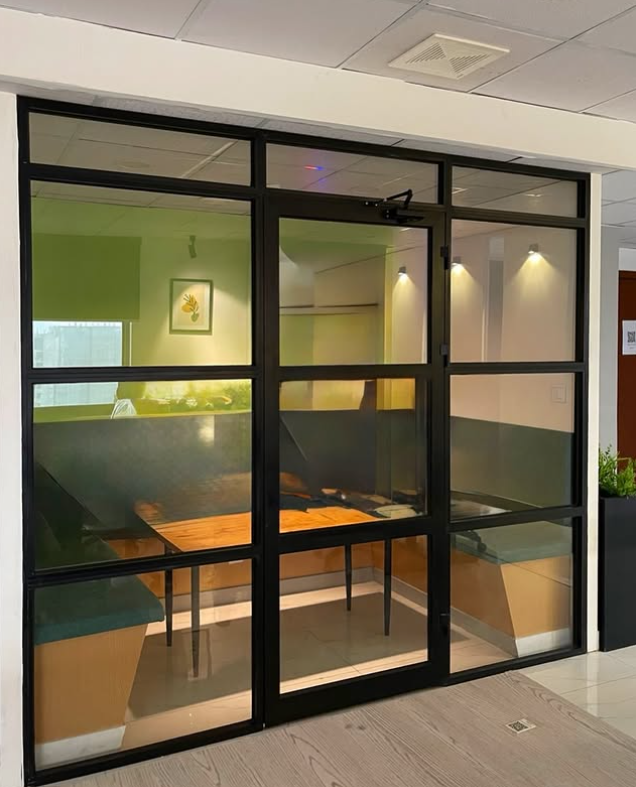
In 2016, Lahore entrepreneur Hassan Shahid was trying to solve a problem many startup founders eventually face. His small team needed a proper place to work, but finding an office that made sense for a young business was difficult.
The available options created the kind of trade-off startups often want to avoid. Some offices were too expensive for a small team, while others required spending more money on furniture, setup, and day-to-day operations. The business needed somewhere professional to work, but taking on a traditional office still felt like a big commitment.
That problem eventually helped Hassan Shahid, Saad Riaz, and Khawaja Raza move toward a shared workspace model. Their first Lahore location opened in 2016 with just 40 desks inside 1,500 square feet.
Their story is useful because it shows what usually happens before a startup starts thinking seriously about workspace.
Working from home is often the right decision in the beginning. It keeps costs low and gives founders room to experiment. A small team can communicate quickly, and nobody needs to worry about office furniture, meeting rooms, maintenance, or a commercial lease.
The difficulty starts when the company changes but the working setup does not.
More people join. Client meetings become more serious. Employees need quiet places for calls. New hires need help understanding how the company works. Internet problems that were once irritating begin affecting customers and deadlines.
That is when a founder should stop asking, “Can we still work from home?” and start asking, “Is working from home still helping us work well?”
Here are seven signs that your growing startup may have reached that point.
1. Your Team Is Growing but Simple Collaboration Is Taking Too Long
A startup with two or three people can usually coordinate through WhatsApp, Slack, Zoom, and a shared task board without much trouble.
As the company grows, communication becomes more complicated.
Your developer may need an answer from the product. The product may be waiting for the founder. Sales may need pricing confirmed before sending a proposal. Operations may need everyone to agree on a client deadline.
What should be a short conversation can turn into hours of messages.
This is not a sign that remote work itself is failing. It is a sign that the team now has more dependencies than it had in the beginning.
Gallup's 2026 Hybrid Work research found that 52% of U.S. employees with remote-capable jobs worked in a hybrid arrangement, while 26% worked fully remotely and 22% worked fully on-site. Gallup also found that coordination and management quality have a major effect on whether hybrid teams perform well.
The numbers are from the U.S., so they should not be treated as Lahore workplace data. What they do show is that growing teams do not necessarily have to choose between being fully remote and being in an office every day.
A Lahore startup may only need a place where the team can meet for product reviews, planning sessions, onboarding, or difficult decisions.
The warning sign is simple. If employees keep saying, “This would have been easier if we were sitting together,” the current setup deserves another look.
2. Meeting Clients in Cafes or at Home No Longer Feels Practical
Meeting your first few clients over coffee is completely normal.
For an early-stage business, a cafe in Gulberg, Liberty, MM Alam Road, or DHA may be convenient. You meet, discuss the project, open a laptop if needed, and move on.
The situation becomes different when the conversations get more serious.
You may be discussing a large contract, pricing, financial details, employee information, product plans, or customer data. You may also need three or four people from your team in the same meeting.
A busy cafe is not ideal for that.
Privacy becomes a real concern. Background noise can make presentations harder. You may not have a screen available. Seats may not be arranged properly for a longer discussion.
Home can create similar problems. Many founders are comfortable working from their house but do not want clients, candidates, suppliers, or investors entering their personal space.
This does not mean a fancy office makes your startup more credible. Good work and professional communication matter far more.
What you need is simply an environment where a serious conversation can happen properly.
If you regularly search for a quiet cafe before a meeting, borrow a conference room from someone you know, or avoid in-person meetings because you do not have the right place, your startup has probably moved beyond informal meeting arrangements.
3. Home Is No Longer Giving Your Team Enough Focus
Working from home can be very productive when the environment supports it.
The problem is that not everyone has the same home setup.
One employee may have a dedicated room with a desk and reliable internet. Another may be working from a shared bedroom. Someone else may need to move between different areas of the house depending on who needs the space.
These differences matter more as the work becomes demanding.
A developer dealing with a production issue needs uninterrupted attention. A salesperson needs a quiet room during an important client call. A designer may need several hours to concentrate on one difficult problem. A strategist may spend hours of research studying a market before turning that information into a useful recommendation.
One distracting afternoon does not mean your team has outgrown working from home.
A repeated pattern does.
If people regularly miss calls, struggle to concentrate, move to cafes to finish work, or delay important tasks because their home environment is not suitable, the setup is affecting the business.
It is also important not to assume that office work is automatically more productive.
A major Stanford study led by economist Nicholas Bloom examined more than 1,600 Trip.com employees. Employees who worked from home two days per week performed as well as those working fully from the office. They were also just as likely to receive promotions, while resignations in the hybrid group fell by 33%.
The practical lesson is not that every startup should copy that exact schedule. It is that flexibility can work well when people also have access to the environment they need.
4. Internet and Power Problems Are Starting to Affect the Business
When one person's internet goes down, it is frustrating.
When several employees depend on cloud tools, video calls, online dashboards, remote clients, and digital platforms throughout the day, connectivity becomes part of business operations.
This is particularly relevant for technology and service startups in Pakistan.
The Pakistan Economic Survey 2025-26 reported that ICT export remittances reached US$3.38 billion during July to March FY2026, up 19.7% from the same period a year earlier. Technology freelancer exports reached US$856.3 million, an increase of 51%.
Those figures show how important digitally delivered work has become in Pakistan.
For a Lahore startup serving overseas clients, reliable power and internet are basic working requirements.
Look at what happens during a normal week. Do employees frequently switch to mobile data during meetings? Does someone disappear from a call because their connection failed? Are developers unable to access cloud systems? Does the team relocate to cafes when power or connectivity becomes unreliable?
One outage is not enough to change your entire working model.
When the same issue repeatedly affects deadlines, client calls, or customer service, it has become an operating problem.
That is the stage where co working spaces can become a practical option because they give teams access to work infrastructure without requiring them to build and maintain a complete office themselves.
5. New Employees Are Taking Too Long to Understand the Company
The first employees in a startup usually learn directly from the founders.
They hear customer conversations. They know how the product developed. They understand why certain decisions were made because they were present when those decisions happened.
Employee number ten does not have that history.
A new hire may receive documents, video calls, access to internal tools, and a list of tasks. That covers the formal side of onboarding, but a large part of startup learning happens informally.
A junior developer may need a quick explanation before making the wrong assumption. A salesperson can learn by hearing how an experienced colleague handles a difficult customer question. A new operations employee may understand priorities much faster by watching how the team deals with an urgent problem.
Remote onboarding can work, but it requires more structure.
Gallup's research on hybrid and remote teams found that teams with a formal collaboration plan were 66% more likely to be engaged at work and 29% less likely to experience burnout than teams without one.
For a growing startup, this can mean bringing new employees together more often during their first few weeks without requiring the whole company to work on-site every day.
If new hires regularly feel disconnected, need longer to become productive, or struggle to understand how decisions are made, the working environment may be part of the problem.
6. Working From Home Is Reducing Useful Business Connections
Founders can become surprisingly isolated when they work from home every day.
You may spend the entire week talking only to your employees, existing clients, and the same few suppliers.
The business can still function, but there are fewer chances to meet people outside your immediate circle.
Those unexpected connections can be useful.
You may meet a developer who knows someone you should hire. Another founder may recommend an accountant who understands startups. A casual conversation may introduce you to a potential client or help you solve a problem another company has already faced.
There is a real Lahore example.
Entrepreneur Alina Zahid Khan left her full-time job in 2019 and stayed in a Lahore coworking environment while launching her startup. In an account published by the Digital Rights Foundation, she explained that people around her helped with the practical process of starting the business. They offered advice, helped her understand logistics, and encouraged her to attend useful conferences and networking events.
That does not mean joining a shared workspace will automatically bring customers.
Most conversations will not turn into business.
The benefit is that you are spending part of your working week around founders, freelancers, professionals, and companies you would probably never meet while sitting at home.
7. You Need More Space but a Traditional Office Still Feels Too Expensive or Permanent
This is often the clearest sign.
Your team has outgrown the home setup, but renting and setting up a full office still feels like too much.
That hesitation is reasonable because office costs go beyond monthly rent.
You may need furniture, internet installation, backup power, utilities, cleaning, maintenance, security, meeting-room equipment, deposits, and someone to manage day-to-day workplace issues.
There is also the question of growth.
A startup with six employees today might have twelve next year. It might also decide to stay small and hire remote specialists instead.
Taking a large office means making a decision about future space before you know exactly what your future team will look like.
This is also where founders should question the assumption that working from home is completely free.
You may not be paying commercial rent, but the business can still lose money through missed meetings, unreliable connections, employees travelling between cafes, paid meeting rooms, repeated interruptions, and slow coordination.
You do not need a complicated formula to judge this.
Look at the last month.
If the team is regularly paying in time or money to work around the limitations of home, the setup is no longer as cheap as it appears.
A flexible workspace can provide a middle step. The company can use the amount of space it needs now without building an office around a headcount that may change six months later.
When the Limits of Home Start Costing More Than the Flexibility Is Worth
Moving out of a home setup should not be treated as a startup milestone.
Having an office does not prove that a company is successful.
The decision should come from the problems your team is already facing.
Think about the past four weeks. Have decisions repeatedly taken too long because the right people could not get together? Have important client meetings been difficult to arrange? Have internet or power issues interrupted work more than once? Are new employees struggling to settle in? Are team members constantly searching for somewhere quiet to take calls?
One bad day is normal.
A recurring pattern is different.
For many startups in Lahore, the answer may also be a mix rather than a full move. Some employees can continue working from home when they need quiet focus. The team can meet on specific days for planning and collaboration. New hires can spend more time with colleagues during onboarding, while client meetings can happen in a professional setting when privacy matters.
The aim is not to replace flexibility with office attendance.
It is to stop flexibility from turning into friction.
When your team starts spending more time working around the limitations of home than benefiting from working there, your startup has probably reached the point where it needs a better place to operate.
Frequently Asked Questions
When should a startup move out of a home workspace?
There is no fixed employee number. Look for repeated problems with collaboration, client meetings, privacy, internet reliability, onboarding, or lack of space. When these issues begin affecting work every week, it is worth reconsidering the setup.
How can a founder tell whether a coworking space is worth the cost?
Compare the monthly workspace cost with the hidden costs of the current arrangement. Include paid meeting rooms, backup internet, time lost to interruptions, travelling between cafes, and coordination problems. A setup that looks free can still become expensive once the team grows.
Does a growing startup need everyone in an office five days a week?
No. Stanford's hybrid work research found that employees working from home two days per week maintained performance while resignations fell by 33%. For many startups, combining home working with shared workspace days may be more practical than requiring full-time office attendance.

 English
 French
 Spanish
 Portuguese
 Deutsch
 Turkish
 Dutch
Dutch
 Italiano
 Russian
 Romaian
 Portuguese (Brazil)
 Greek
Greek