


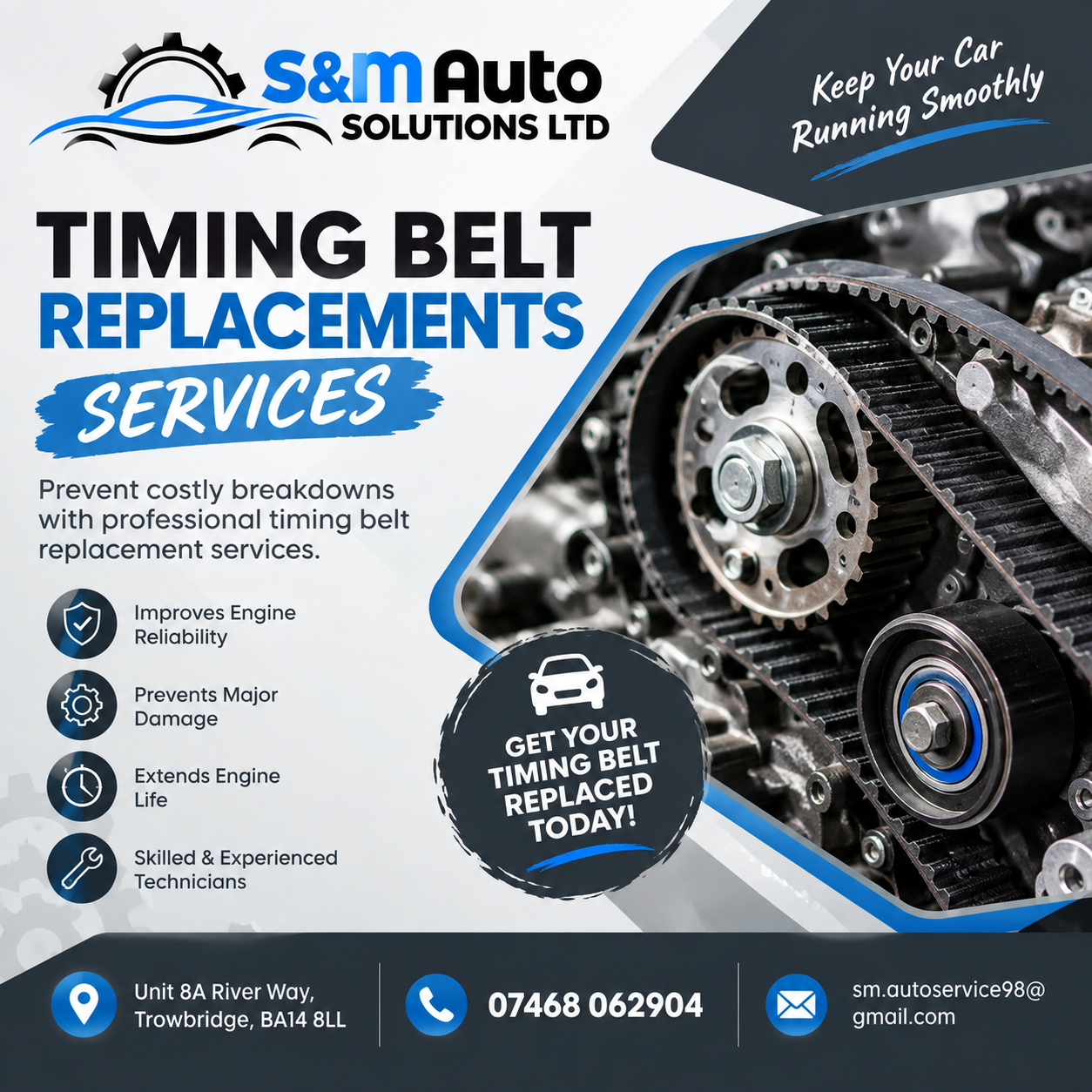
A vehicle’s timing belt is a critical engine component that helps maintain precise coordination between the crankshaft and camshaft. When it operates correctly, the engine’s valves open and close at the appropriate times, supporting smooth performance and efficient operation. However, wear, ageing, and inadequate maintenance can increase the risk of belt failure, potentially resulting in extensive engine damage.
For motorists seeking Timing Belt Replacements Trowbridge, understanding recommended replacement intervals, warning signs, and professional maintenance options can help prevent unexpected breakdowns. Although timing belts are designed to withstand considerable use, they are not permanent components and should be replaced according to the vehicle manufacturer’s guidance.
Understanding Timing Belt Replacement Requirements
A timing belt works under continuous mechanical stress and can deteriorate through exposure to heat, friction, and environmental conditions. Unlike some engine components, a timing belt may show limited external signs of deterioration before failure occurs.

Manufacturers typically specify replacement intervals based on mileage, age, or a combination of both. These intervals vary according to the engine design, vehicle model, and belt material. Drivers should therefore consult their vehicle handbook or seek advice from a qualified technician rather than relying on a universal mileage recommendation.
Several factors can influence replacement requirements:
- Vehicle age: Rubber components naturally deteriorate over time, even when a vehicle covers relatively few miles.
- Driving conditions: Frequent short journeys, heavy traffic, and repeated engine starts can affect maintenance requirements.
- Engine design: Different manufacturers use different belt systems and replacement schedules.
- Maintenance history: Missing service records can make it difficult to determine when replacement is due.
Following the recommended schedule is generally more reliable than waiting for noticeable symptoms.
Common Signs of Timing Belt Wear
Timing belt problems are not always easy to identify without a professional inspection. Nevertheless, certain symptoms may indicate that an engine requires further investigation.
Unusual ticking noises, difficulty starting, rough engine operation, or visible cracks and fraying may point to mechanical problems. However, these symptoms can also be associated with other engine faults, so they should not automatically be attributed to the timing belt.
A damaged or incorrectly tensioned belt can disrupt engine timing. In interference engines, belt failure may allow pistons and valves to collide, leading to expensive internal damage.
Drivers should arrange an inspection if they notice unusual engine behaviour or have concerns about their vehicle’s maintenance history. If a belt failure is suspected, stopping the engine safely and arranging professional assistance is preferable to continuing to drive.

Choosing Professional Timing Belt Replacement Services
Professional Timing Belt Replacements Services involve more than simply fitting a new belt. Depending on the vehicle, the procedure may require the removal of several surrounding components and precise alignment of engine timing marks.
A qualified technician can assess the engine configuration, confirm the correct replacement parts, and follow the manufacturer’s installation procedures. Incorrect tension, poor alignment, or unsuitable components can compromise engine performance and reliability.
When arranging a replacement, motorists should consider the following:
- Correct parts: Ensure the replacement belt meets the vehicle manufacturer’s specifications.
- Associated components: Ask whether tensioners, idler pulleys, and other relevant parts should be replaced at the same time.
- Water pump condition: Where the water pump is driven by the timing belt, replacing it during the same repair may be practical, depending on its design and condition.
- Clear documentation: Request details of the work completed and retain the invoice for future maintenance records.
- Post-repair checks: The technician should verify correct timing, belt tension, and engine operation before returning the vehicle.
For motorists researching Timing Belt Replacements UK, these considerations apply whether the vehicle is used for daily commuting, family travel, or business purposes.

Wet Timing Belts and Replacement Costs
Some modern engines use wet timing belts, which operate within the engine and are exposed to oil. These systems differ from conventional dry timing belts and require particular attention to the manufacturer’s oil specifications and servicing recommendations.
Incorrect oil, contamination, or deterioration of the belt material can contribute to problems in certain wet-belt engine designs. In some cases, belt material can break down and contaminate the lubrication system, potentially affecting oil circulation and engine components.
The wet timing belt replacement cost depends on several factors, including the vehicle model, engine layout, labour requirements, parts availability, and whether additional components need attention. Some repairs are more labour-intensive because access to the belt is restricted.
Before approving work, drivers should request a written estimate that explains the parts, labour, and any additional repairs that may be required. Comparing quotations on a like-for-like basis helps motorists understand the proposed work without focusing solely on the lowest initial figure.
Preventive maintenance can also help reduce the likelihood of unexpected repair bills. Using the correct engine oil, observing service intervals, and investigating relevant manufacturer guidance are sensible steps for vehicles fitted with wet timing belts.

Final Takeaway Maintaining Engine Reliability Through Preventive Care
Regular servicing remains one of the most effective ways to manage timing belt risks. Drivers should keep service records, check the recommended replacement schedule, and avoid postponing maintenance once the specified interval has been reached.
For local motorists, S&M Auto Service provides information about timing belt maintenance and replacement through its Timing Belt Replacement Services page. Reviewing service information and discussing vehicle-specific requirements with a qualified technician can help drivers make informed maintenance decisions.
Ultimately, timing belt replacement is a preventative measure rather than a repair that should be delayed until symptoms become severe. Understanding the replacement schedule, recognising potential warning signs, and ensuring that the correct procedures are followed can help protect engine performance, improve reliability, and reduce the risk of avoidable mechanical damage.
Contact Us : https://www.smautoservice.co.uk/contact-us/
About Us : https://www.smautoservice.co.uk/about-us/
Website Link : https://www.smautoservice.co.uk/

 English
 Arabic
 Spanish
 Portuguese
 Deutsch
 Turkish
 Dutch
 Italiano
 Russian
 Romaian
 Portuguese (Brazil)
 Greek