


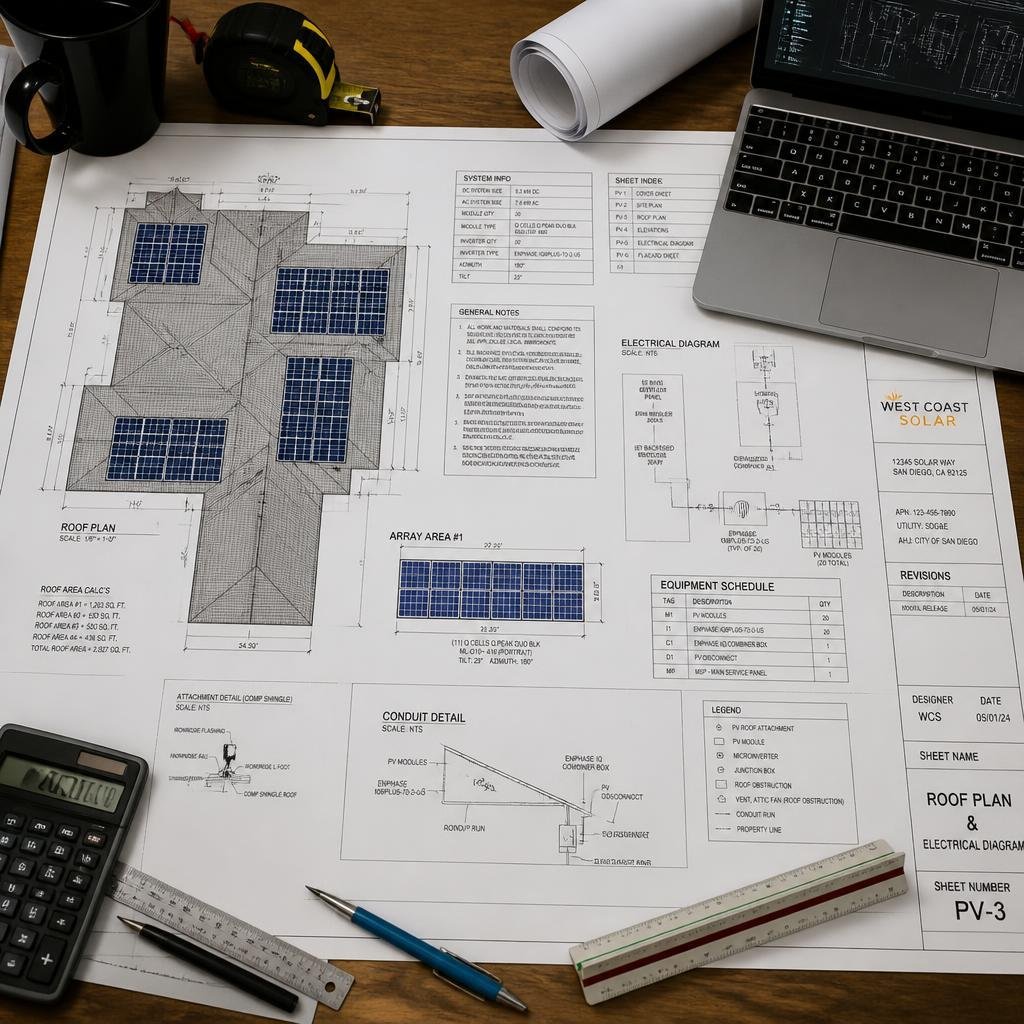
Every reliable solar installation starts with pv plan sets that reflect the real conditions on a homeowner's roof, not a template pulled from a previous job. When these documents are built with genuine site data, everything downstream, from permitting to final utility approval, tends to move far more predictably. Because so many delays trace back to design inconsistencies, installers who prioritize accuracy at this stage save themselves considerable trouble later on. PTOEdge works alongside installers to produce plan sets, permitting packages, and engineering documentation that hold up under review the first time around.
Before exploring how plan sets connect to the rest of the process, it helps to understand just how much weight this single document carries. A design error here rarely stays contained to one step; it tends to ripple through permitting, stamping, and even the final utility sign-off. If your team has been fighting the same recurring plan check comments, see how our design process eliminates that guesswork before your next batch of submissions goes out.
Why PV Plan Sets Are the Foundation of a Smooth Install
Because a plan set essentially serves as the blueprint for the entire project, small inaccuracies here tend to multiply as the project moves forward. Roof pitch, shading obstructions, and panel layout all need to reflect actual site conditions rather than generic assumptions carried over from another job. Consequently, a plan set built on outdated or incomplete site information often triggers avoidable questions from reviewers, which can add days or weeks to an otherwise straightforward approval.
What Reviewers Actually Look for in PV Plan Sets
In practice, jurisdictions reviewing pv plan sets are checking whether the electrical diagrams, equipment specifications, and structural notes are internally consistent with one another. Since even a minor mismatch between the site plan and the electrical schematic can raise a flag, thorough internal review before submission matters more than most installers realize. Therefore, teams that build in a quality check before a plan set ever reaches a building department tend to see noticeably fewer rejections.
Solar Sales Proposals Need to Match the Final Design
However, accuracy shouldn't start at the engineering stage; it should begin much earlier with the solar sales proposal presented to the homeowner. When production estimates and equipment models in that initial proposal align closely with what eventually appears in the finalized solar plan sets, homeowners face fewer surprises and installers face fewer change orders. Otherwise, gaps between what was promised and what gets built tend to surface at the worst possible moment, right as a project nears completion.
Local Permitting Rules Can Make or Break Your Timeline
Meanwhile, permitting introduces its own layer of complexity since no two cities apply solar code identically. Some jurisdictions require additional documentation around rapid shutdown, while others enforce stricter fire setback distances than their neighbors. Managing Permit Design & AHJ Compliance properly means understanding these local nuances well before a plan set and permit package ever land on a reviewer's desk.
For installers active in Southern California, solar permit services san diego teams typically already know which HOA restrictions or fire department amendments tend to surprise installers new to the area. Because these local rules shift periodically, staying current matters just as much as getting the underlying engineering correct.
Where PV Plan Sets Intersect With Permit Approval
Ultimately, pv plan sets and the permit application need to arrive together in a coordinated package rather than as separate submissions handled by different teams. If the plan set contradicts the permit narrative in any way, reviewers generally pause the entire file rather than approving individual pieces. That is exactly why aligning these documents from the start produces cleaner, faster turnarounds.
Stamping and Structural Sign-Off Come Next
Once the design and permit package are ready, most jurisdictions require solar panel stamping from a licensed engineer confirming the structural and racking calculations meet code. This step depends entirely on the accuracy of the underlying plan set, since an engineer cannot responsibly stamp a design built on incorrect load assumptions. Working with a knowledgeable solar stamping service tends to prevent the kind of last-minute structural questions that stall projects right before installation.
Getting to PTO Without the Guesswork
After installation and inspection are complete, the project still isn't finished until the utility grants permission to operate the system. Solid pto services generally include double-checking utility-specific interconnection forms before submission, which noticeably reduces unnecessary back-and-forth. Likewise, installers coordinating pto solar requests across several utility territories benefit from a consistent tracking process so nothing slips through the cracks.
Because utilities can be every bit as particular as building departments, dependable permission to operate services often determine whether a system activates on schedule or sits idle for weeks after the physical work wraps up. If utility paperwork has been slowing down your activations, book time with our permitting specialists to get ahead of it before your next round of interconnection requests.
Bringing Plan Sets, Permits, and Growth Together
When plan sets, permitting, and stamping all function as one coordinated process, the benefits extend well beyond a single project. Fewer resubmissions and faster activations directly support Solar Installer Growth, since crews spend less time on corrections and more time completing new installs. A clean PTO application process closes that loop, letting homeowners start generating savings without unnecessary delay at the finish line.
Similarly, consistent Permit Design & AHJ Compliance work and dependable pv plan sets allow installers to expand confidently into new markets without relearning local code from scratch on every project. Together, these pieces let a growing solar business scale its volume while keeping approval timelines predictable and stress-free.
Frequently Asked Questions
Why do PV plan sets need to reflect actual site conditions?
Site-specific data prevents mismatches during permit review that would otherwise trigger costly resubmissions.
How does a solar sales proposal connect to the final plan set?
Consistency between the two prevents surprises for homeowners and reduces change orders during design.
What makes permitting rules different across U.S. cities?
Each jurisdiction enforces its own code amendments, which is why local Permit Design & AHJ Compliance knowledge matters.
Why is solar panel stamping dependent on the plan set's accuracy?
An engineer can only responsibly stamp a design built on correct, site-specific structural data.
What commonly delays permission to operate approval?
Incomplete or inconsistent utility interconnection paperwork is the most frequent cause of PTO delays.

 English
 Arabic
 French
 Spanish
 Portuguese
 Deutsch
 Turkish
 Dutch
Dutch
 Russian
 Romaian
 Portuguese (Brazil)
 Greek
Greek