


INTRODUCTION
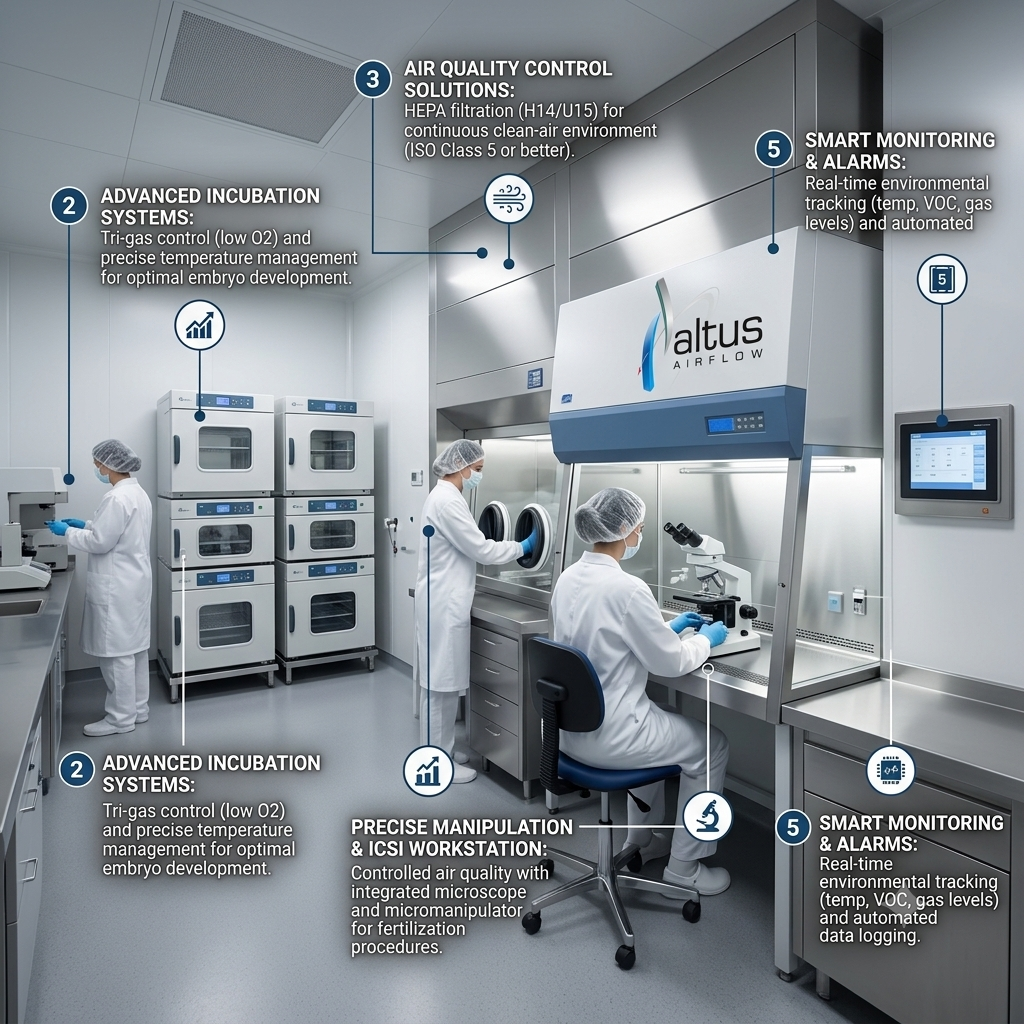
IVF Labs Design is fundamentally different from conventional laboratory design because it is specifically engineered to create a highly controlled environment for handling human gametes, embryos, and reproductive tissues. Unlike standard laboratories that focus on routine testing or research, IVF laboratories require exceptional precision in environmental control, contamination prevention, workflow optimization, and equipment integration. Every aspect of IVF Labs Design, from cleanroom engineering and HVAC systems to HEPA filtration, temperature stability, humidity regulation, and laboratory zoning, is carefully planned to support embryo development and improve treatment outcomes. A professionally designed IVF laboratory not only ensures operational efficiency but also helps fertility clinics maintain consistent environmental conditions that are critical for successful assisted reproductive procedures.
This blog explains the major differences between IVF Labs Design and conventional laboratory design, highlighting why specialized infrastructure is essential for fertility centers.
Understanding IVF Labs Design
An IVF laboratory is one of the most sensitive healthcare environments because it handles living reproductive cells.
Professional IVF Labs Design focuses on:
- Embryo protection
- Contamination control
- Stable environmental conditions
- Efficient laboratory workflow
- Equipment integration
- Cleanroom engineering
- Regulatory compliance
Every design decision is made to create an environment that supports successful IVF procedures.
What Is a Conventional Laboratory?
A conventional laboratory is generally designed for:
- Clinical testing
- Pathology
- Chemical analysis
- Research
- Educational purposes
- Industrial quality testing
These laboratories perform valuable scientific work but typically do not require the strict environmental conditions needed for embryo culture.
Purpose of the Laboratory
One of the biggest differences lies in the laboratory's purpose.
An IVF laboratory is dedicated to:
- Fertilization procedures
- Embryo culture
- Micromanipulation
- Cryopreservation
- Sperm preparation
- Oocyte handling
A conventional laboratory usually performs diagnostic or analytical testing rather than maintaining living embryos.
Environmental Control
Professional IVF Labs Design requires precise environmental stability.
Critical parameters include:
- Temperature control
- Humidity regulation
- Air pressure
- Carbon dioxide levels
- Air cleanliness
- VOC reduction
Conventional laboratories generally operate under less stringent environmental conditions.
Cleanroom Engineering
Cleanroom technology is a defining feature of IVF laboratories.
Professional IVF Labs Design incorporates:
- Controlled air quality
- Positive pressure rooms
- Seamless construction
- Hygienic interiors
- Air filtration systems
Many conventional laboratories do not require full cleanroom engineering.
HVAC System Requirements
HVAC plays a much greater role in IVF laboratories.
Specialized systems provide:
- Stable temperature
- Humidity control
- Fresh air supply
- Pressure balancing
- Air circulation
Conventional laboratories often use standard HVAC systems designed primarily for occupant comfort.
HEPA Filtration
IVF laboratories require advanced HEPA filtration to remove airborne particles.
Benefits include:
- Cleaner air
- Reduced contamination
- Protection of embryos
- Stable laboratory conditions
Standard laboratories may not require HEPA filtration throughout all working areas.
Volatile Organic Compound (VOC) Control
Embryos are extremely sensitive to airborne chemicals.
Professional IVF Labs Design includes:
- VOC filtration
- Activated carbon filters
- Clean air circulation
- Chemical-free interior finishes
Conventional laboratories usually have fewer VOC control requirements.
Laboratory Zoning
An IVF laboratory contains multiple specialized zones such as:
- Reception area
- Andrology laboratory
- Embryology laboratory
- Cryopreservation room
- Equipment room
- Storage area
Conventional laboratories often use larger shared workspaces rather than highly specialized zones.
Workflow Optimization
Efficient workflow is critical in IVF procedures.
Professional IVF Labs Design minimizes:
- Sample movement
- Staff travel distance
- Cross-contamination risks
- Delays between procedures
Optimized workflows improve laboratory productivity and specimen safety.
Equipment Integration
IVF laboratories require highly specialized equipment, including:
- CO₂ incubators
- Tri-gas incubators
- Inverted microscopes
- Micromanipulators
- Laminar airflow workstations
- Cryogenic storage tanks
Conventional laboratories typically use analytical instruments instead of embryo culture equipment.
Air Quality Management
Air quality directly influences embryo development.
Professional IVF Labs Design integrates:
- Air purification systems
- HEPA filtration
- Activated carbon filtration
- Continuous air monitoring
Conventional laboratories usually focus on general ventilation rather than embryo-sensitive air quality.
Contamination Control
Contamination prevention is a primary objective of IVF laboratory engineering.
Measures include:
- Positive pressure
- Seamless wall panels
- Hygienic flooring
- Controlled entry
- Air filtration
Conventional laboratories generally follow standard hygiene practices but require fewer contamination-control measures.
Cryopreservation Infrastructure
IVF laboratories require dedicated cryogenic storage facilities.
These include:
- Liquid nitrogen storage
- Cryogenic monitoring
- Secure specimen storage
- Controlled ventilation
Cryopreservation facilities are rarely required in standard laboratories.
Environmental Monitoring
Professional IVF Labs Design includes continuous monitoring of:
- Temperature
- Humidity
- Pressure
- Air quality
- Carbon dioxide
- Particle counts
Automated monitoring systems help maintain consistent laboratory performance.
Utility Integration
IVF laboratories require carefully coordinated utility systems, including:
- Medical gases
- Backup electrical power
- Purified water
- HVAC controls
- Data connectivity
Conventional laboratories often have simpler utility requirements.
Ergonomic Workstations
Embryologists perform highly delicate procedures requiring exceptional precision.
Professional IVF Labs Design provides:
- Ergonomic benches
- Comfortable seating
- Efficient equipment positioning
- Improved accessibility
This enhances productivity while reducing operator fatigue.
Validation and Qualification
Every IVF laboratory undergoes extensive testing before becoming operational.
Validation includes:
- Airflow testing
- HEPA integrity testing
- Pressure verification
- Temperature mapping
- Equipment qualification
Conventional laboratories generally require less comprehensive environmental validation.
Regulatory Compliance
IVF laboratories are expected to comply with specialized healthcare, fertility, and cleanroom standards.
Professional IVF Labs Design supports compliance through:
- Documentation
- Environmental monitoring
- Quality control
- Validation procedures
- Standard operating practices
Conventional laboratories may follow different regulatory frameworks depending on their purpose.
Future Expansion
Modern IVF laboratories are designed for long-term flexibility.
Professional IVF Labs Design allows:
- Additional workstations
- Equipment upgrades
- Laboratory expansion
- Digital integration
- Utility upgrades
Future-ready infrastructure protects the laboratory investment.
Key Differences Between IVF Labs Design and Conventional Laboratory Design
| IVF Labs Design | Conventional Laboratory Design |
|---|---|
| Embryo-focused environment | General laboratory functions |
| Cleanroom engineering | Standard laboratory construction |
| HEPA filtration | Conventional ventilation |
| VOC control | Limited VOC management |
| Specialized zoning | Shared laboratory spaces |
| Advanced HVAC integration | Standard HVAC systems |
| Continuous environmental monitoring | Basic environmental control |
| Specialized IVF equipment | General laboratory equipment |
| Cryopreservation infrastructure | Usually not required |
| Extensive validation | Standard commissioning |
Benefits of Professional IVF Labs Design
Choosing professional IVF Labs Design provides several advantages:
- Improved laboratory workflow
- Better contamination control
- Stable environmental conditions
- Superior air quality
- Efficient equipment integration
- Reduced operational risks
- Better embryo protection
- Enhanced staff productivity
- Regulatory compliance support
- Future-ready laboratory infrastructure
- Reliable operational performance
- Long-term value for fertility clinics
These benefits help fertility centers deliver consistent and high-quality reproductive care.
Conclusion
Professional IVF Labs Design differs significantly from conventional laboratory design by focusing on the unique environmental, technical, and operational requirements of assisted reproductive technology. Through cleanroom engineering, advanced HVAC systems, HEPA filtration, VOC control, specialized laboratory zoning, environmental monitoring, ergonomic workstations, and optimized workflow planning, IVF laboratories provide the stable conditions necessary for handling delicate reproductive cells and embryos. Unlike general laboratories, every element of an IVF laboratory is engineered to minimize contamination, improve efficiency, and support successful clinical outcomes. Investing in specialized laboratory infrastructure enables fertility clinics to achieve greater reliability, enhanced patient safety, and long-term operational excellence. For complete IVF laboratory planning, engineering, installation, validation, and turnkey solutions, Altus Airflow delivers customized infrastructure designed to meet the highest standards of modern fertility care.
Frequently Asked Questions
1. How is IVF Labs Design different from conventional laboratory design?
IVF Labs Design differs from conventional laboratory design by incorporating cleanroom engineering, HEPA filtration, advanced HVAC systems, contamination control, specialized zoning, and environmental monitoring specifically for embryo handling.
2. Why is cleanroom engineering important in IVF Labs Design?
Cleanroom engineering in IVF Labs Design helps maintain air cleanliness, minimize contamination, and create a stable environment for embryo culture and reproductive procedures.
3. Does IVF Labs Design require specialized HVAC systems?
Yes. IVF Labs Design includes advanced HVAC systems that regulate temperature, humidity, air pressure, and air quality to maintain optimal laboratory conditions.
4. What equipment is unique to IVF Labs Design?
Professional IVF Labs Design includes CO₂ incubators, tri-gas incubators, inverted microscopes, micromanipulators, laminar airflow workstations, and cryogenic storage systems.
5. Why should fertility clinics invest in professional IVF Labs Design?
Professional IVF Labs Design improves workflow efficiency, contamination control, environmental stability, regulatory compliance, equipment integration, and overall laboratory performance, helping fertility clinics provide high-quality reproductive care.
Read Our Previous Blog------>How is a Modular Ophthalmic OT Engineering Company different from a general OT contractor?

 English
 Arabic
 French
 Spanish
 Portuguese
 Deutsch
 Dutch
Dutch
 Italiano
 Russian
 Romaian
 Portuguese (Brazil)
 Greek
Greek