


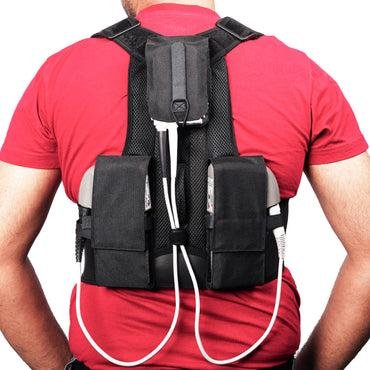
Living with a left ventricular assist device involves more than managing the medical equipment itself. Daily routines such as sleeping, getting dressed, traveling, and staying warm can require thoughtful planning. Clothing designed with LVAD users in mind can help make these activities more manageable while providing convenient access to equipment.
Adaptive clothing is particularly useful during colder months when additional layers are needed. Shirts, belts, and other garments can be designed to accommodate batteries, controllers, cables, and other components without unnecessarily restricting movement. The goal is generally to improve organization and comfort while keeping essential equipment accessible.
Understanding the Role of LVAD Support Clothing
An LVAD system typically includes components that need to remain accessible and properly positioned throughout the day. Depending on the device and the individual's care plan, users may carry batteries and controllers on their body or close to it.
A properly designed lvad battery belt can provide a practical way to keep batteries secured while walking, working, or performing routine activities. Rather than placing equipment loosely in a pocket or bag, a dedicated support garment can help distribute the weight more comfortably.
Another consideration is stabilization. An lvad stabilization belt may help keep certain equipment from moving excessively during everyday activities. The appropriate design depends on the specific LVAD system, body position, personal comfort, and recommendations from the individual's clinical team.
Why Sleeping Requires Different Clothing Considerations
Sleep creates different challenges because the body changes position repeatedly. Equipment that feels comfortable while standing or walking may become inconvenient when lying down.
Some users explore specialized sleepwear and support systems designed around their equipment. For example, an lvad sleeping belt for heartmate may be designed to help organize or secure components during rest. Similarly, an lvad sleeping belt for heartware may be considered by users of compatible systems who need a comfortable way to manage equipment while sleeping.
The exact arrangement should always follow the instructions provided by the LVAD manufacturer and healthcare team. Clothing or accessories should never interfere with the driveline, controller, batteries, alarms, or prescribed equipment configuration.
Adaptive Flannel Shirts for Colder Weather
Cold weather introduces another clothing challenge. Traditional winter garments may provide warmth but can make access to medical equipment more difficult. Multiple layers can also create additional bulk around the torso.
An Adaptive flannel shirt for LVAD users can address some of these practical concerns by combining familiar cold weather styling with features intended to accommodate medical equipment. Depending on the garment, this could include strategically positioned openings, modified closures, or additional space around areas where equipment needs to be accessed.
This type of design can make seasonal dressing more convenient without requiring users to rely exclusively on conventional oversized clothing.
Combining Practical Access With Personal Style
Medical equipment does not necessarily mean that personal style has to be abandoned. Clothing manufacturers have increasingly explored adaptive designs that resemble familiar everyday garments.
Flannel with LVAD device access can provide a more conventional appearance while incorporating functional details for equipment access. This can be useful for people who want adaptive clothing that fits naturally into casual wardrobes.
Similarly, Stylish LVAD shirts for cold weather can offer warmth while considering the practical requirements associated with carrying or accessing LVAD equipment. The most useful garment is generally one that balances accessibility, comfort, fit, and personal preference.
What to Look For in an LVAD Flannel
When evaluating an LVAD flannel shirt for men, several practical characteristics may be worth considering.
Convenient Equipment Access
Access points should be positioned so that necessary equipment can be reached without excessive manipulation of the garment. Easy access can be particularly valuable when batteries or controllers need to be checked.
Comfortable Fit
A garment should allow natural movement without placing unnecessary pressure around the equipment or driveline area. Excessive tightness can make a garment uncomfortable, while excessive looseness may create unwanted movement.
Suitable Fabric
Flannel is commonly associated with cooler weather because it provides warmth and a familiar casual appearance. However, breathability and softness can also be important because users may wear the garment for extended periods.
Practical Closures
Buttons, snaps, zippers, and other closures can affect how easily a garment can be opened. Adaptive clothing may use different closure arrangements to make access more convenient.
Equipment Compatibility
Not every adaptive garment is compatible with every LVAD system or setup. Users should check whether the clothing design works with their specific equipment before relying on it as part of a daily routine.
Clothing Should Support the Care Plan
Adaptive clothing is a convenience rather than a substitute for proper LVAD management. The driveline and other components still require appropriate care, and equipment should be positioned according to clinical instructions.
Before using a new belt, shirt, sleeping accessory, or other garment, users can discuss it with their LVAD coordinator or healthcare provider. This is particularly important when a design changes how equipment is carried or positioned.
Clothing should also avoid creating pressure, pulling, twisting, or accidental obstruction around important components. If an accessory causes discomfort or interferes with equipment, it should not be used without professional guidance.
Everyday Benefits of Thoughtful Adaptive Design
Well-designed adaptive clothing can provide several practical benefits. It may reduce the need for oversized garments, make equipment easier to access, and help users maintain a more familiar personal style.
For people who spend considerable time outdoors during colder months, a properly designed flannel can also simplify layering. Instead of treating medical equipment as something that must be hidden under several layers, adaptive clothing can incorporate access and storage considerations directly into the garment.
The broader purpose of adaptive clothing is therefore not simply appearance. It is about making everyday routines more manageable while respecting the technical and safety requirements of LVAD therapy.
Conclusion
Adaptive clothing can make everyday LVAD management more convenient by combining practical equipment access with comfort and personal style. Options such as an lvad stabilization belt, lvad battery belt, and specialized sleeping accessories may help organize compatible equipment, while an Adaptive flannel shirt for LVAD users can provide a familiar cold weather option.
The best clothing choice depends on the individual's LVAD system, equipment arrangement, lifestyle, and clinical recommendations. Whether selecting an LVAD fashion flannel or other adaptive garment, safety, comfort, accessibility, and compatibility should remain the primary considerations.
Frequently Asked Questions
Can an LVAD stabilization belt be worn throughout the day?
An lvad stabilization belt may be useful for organizing or securing compatible equipment, but suitability depends on the user's individual setup. The LVAD care team should confirm whether a particular belt is appropriate.
What is the purpose of an LVAD sleeping belt?
An lvad sleeping belt for heartmate or an lvad sleeping belt for heartware may be designed to help organize equipment during rest. Users should follow their clinical team's instructions regarding safe sleeping positions and equipment placement.
Can an LVAD battery belt replace a medical equipment bag?
An lvad battery belt can provide an alternative carrying method for some users, but it should not automatically be considered a replacement for prescribed equipment-carrying arrangements. Compatibility and safety should be confirmed with the LVAD care team.
Are adaptive flannel shirts only designed for winter?
Many adaptive flannel designs are intended for cooler conditions, but their usefulness depends on fabric weight, construction, and local climate. Layering can allow some garments to be used across different temperatures.
What makes an LVAD flannel shirt different from a regular flannel?
An LVAD flannel shirt for men may include specialized access points, modified closures, additional room, or other adaptive features intended to accommodate LVAD equipment. The exact features vary by manufacturer and design.

 English
 Arabic
 French
 Spanish
 Portuguese
 Deutsch
 Turkish
 Dutch
Dutch
 Russian
 Romaian
 Portuguese (Brazil)
 Greek
Greek