


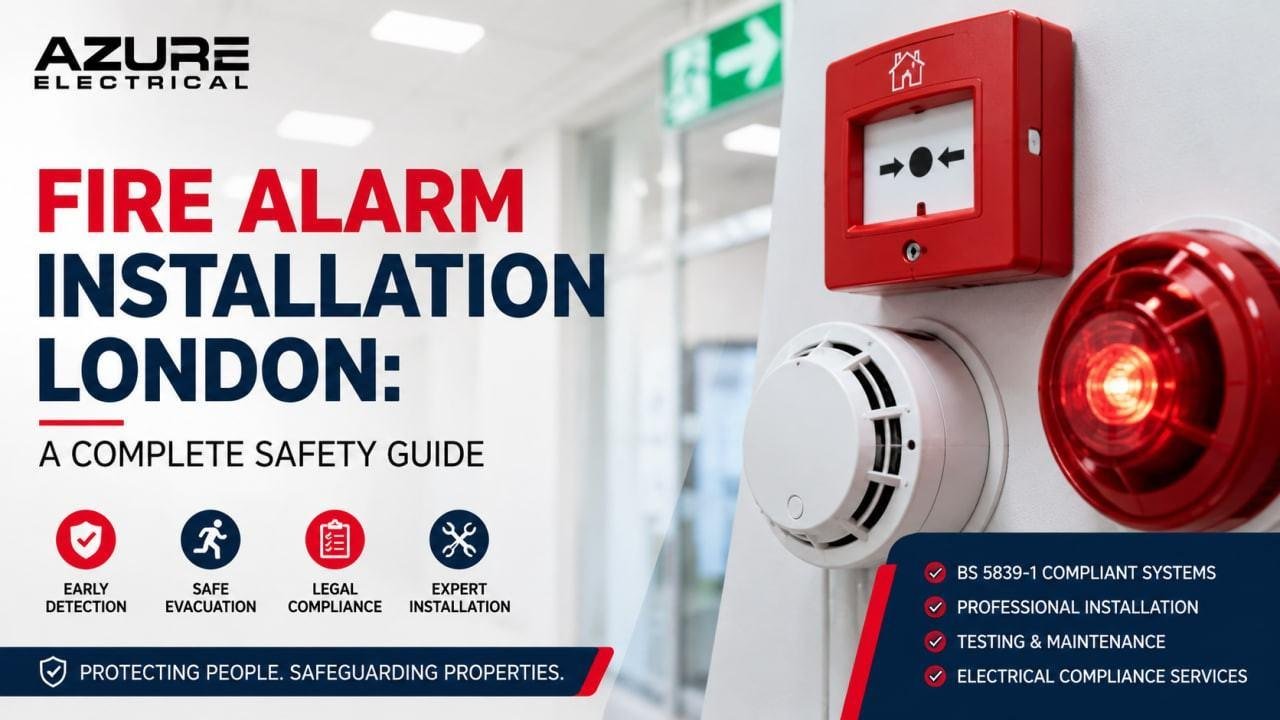
Fire safety is a critical responsibility for businesses, landlords, property managers, and other building operators across London. A properly designed and maintained fire alarm system can provide early warning, support faster evacuation, and reduce the potential impact of a fire.
For commercial and other non-domestic premises, fire safety responsibilities are governed primarily by the Regulatory Reform (Fire Safety) Order 2005, while the appropriate fire detection and alarm arrangements depend on the building, occupancy, layout, and identified risks.
This guide explains what property owners and businesses should know about Fire Alarm Installation London, including system types, installation considerations, compliance, testing, and how to choose a competent installer.
Why Is Fire Alarm Installation Important?
A fire can spread rapidly, particularly in buildings containing combustible materials, electrical equipment, kitchens, storage areas, or multiple occupied floors. A suitable alarm system is designed to detect fire or smoke and warn occupants early enough to begin evacuation.
Government guidance states that workplaces must have an appropriate fire detection and warning system, with the type of detector depending on the building and activities carried out there. Systems also need regular checks and maintenance to ensure they remain operational.
Professional Fire Alarm Installation London therefore involves more than simply fitting smoke detectors. The system should be selected and positioned according to the building's fire risks and evacuation strategy.
What Does a Fire Alarm System Include?
Depending on the premises, a modern fire alarm system can contain several interconnected components:
-
Smoke detectors for detecting smoke particles
-
Heat detectors for areas where smoke detectors may cause unwanted alarms
-
Manual call points or break-glass units
-
Alarm sounders and visual indicators
-
Fire alarm control and indicator panels
-
Automatic detection devices
-
Backup power supplies
-
Remote monitoring or signalling equipment, where appropriate
The exact configuration should be determined through a suitable fire risk assessment and system design rather than choosing equipment solely on price.
For larger or more complex premises, an electrical fire warning system may be necessary because occupants may not be able to hear or respond to a manually operated warning from every area.
Understanding Fire Alarm Categories
Fire alarm systems are not one-size-fits-all. Different premises may require different levels of detection.
Category L systems are primarily concerned with life protection, while Category M systems rely on manual fire detection and alarm arrangements. Category P systems focus on property protection.
The appropriate category depends on factors such as:
-
Building size and layout
-
Number of floors
-
Occupancy levels
-
Sleeping accommodation
-
Escape routes
-
Fire hazards
-
Areas that may remain unoccupied
-
Vulnerable occupants
-
Business activities and equipment
A competent professional should assess these factors before recommending a system.
Fire Alarm Installation and BS 5839-1
For many commercial fire alarm systems in the UK, BS 5839-1 is an important technical standard covering the planning, design, installation, commissioning, and maintenance of fire detection and alarm systems.
Government guidance recommends that new automatic fire detection systems are designed and installed by a competent person, with further guidance provided by BS 5839-1.
This is why selecting a qualified and experienced installer is important. Correct detector positioning, cable installation, sounder coverage, zoning, control-panel configuration, and commissioning can all affect system performance.
What Are Electrical Compliance Services?
Fire alarm systems are electrical safety systems, so their installation should be considered alongside wider building electrical safety.
Electrical Compliance Services can help property owners identify electrical issues that may affect safety, reliability, and regulatory responsibilities. Depending on the property and requirements, these services may include electrical inspection, testing, fault identification, remedial work, and documentation.
Integrating fire alarm planning with wider Electrical Compliance Services can be particularly useful during commercial property upgrades, refurbishments, or compliance reviews.
A company such as Azure Electrical can be considered when property owners are looking to coordinate electrical requirements with fire alarm installation, provided the relevant work is undertaken by appropriately competent professionals.
The Fire Alarm Installation Process
A professional Fire Alarm Installation London project generally involves several stages.
1. Fire Risk Assessment
The process should begin with understanding the property's fire risks and evacuation requirements. The responsible person has duties under fire safety legislation and must ensure appropriate precautions are provided.
2. System Design
The installer determines the appropriate detector types, alarm coverage, manual call-point locations, control equipment, sounder coverage, and other system requirements.
3. Installation
Qualified installers then install the equipment and associated wiring while considering the building's construction, accessibility, and existing electrical infrastructure.
4. Testing and Commissioning
After installation, the system needs to be tested and commissioned to confirm that the components operate correctly and provide appropriate coverage.
5. Documentation and Handover
Important system information should be provided to the responsible person, including relevant records, instructions, and maintenance requirements.
Azure Electrical can be involved in coordinating electrical installation requirements where fire alarm work forms part of a broader electrical project.
Testing and Maintenance After Installation
Installing a fire alarm is only the beginning of effective fire protection. Regular testing and maintenance are essential because detectors, batteries, wiring, sounders, and control equipment can develop faults over time.
GOV.UK guidance states that businesses should carry out regular checks to ensure fire alarm systems are working and should record faults identified in fire safety equipment.
Maintenance should also consider changes to the building. For example, extensions, internal alterations, new equipment, changes in occupancy, or changes to escape routes may affect the suitability of an existing system.
Azure Electrical can be considered for ongoing electrical and fire alarm-related maintenance where the required competence and service scope match the property's needs.
Fire Safety Responsibilities in London
For most non-domestic premises, the Responsible Person has important legal duties under the Fire Safety Order. These include carrying out a suitable fire risk assessment, implementing appropriate fire safety measures, and maintaining those measures.
Since October 2023, changes introduced through Section 156 of the Building Safety Act 2022 have strengthened documentation and cooperation requirements for responsible persons. Findings from fire risk assessments must be recorded regardless of the size of the business.
The London Fire Brigade is responsible for enforcing the Fire Safety Order in London.
How to Choose a Fire Alarm Installer in London
Before choosing a contractor for Fire Alarm Installation London, consider:
-
Relevant experience: Check whether the installer has experience with properties similar to yours.
-
Competence: Ask about qualifications, training, and relevant third-party certification where applicable.
-
System design: Avoid contractors who recommend equipment without first understanding your building and fire risks.
-
Standards: Ask which standards and guidance the proposed system will follow.
-
Commissioning: Confirm that the completed system will be properly tested and commissioned.
-
Documentation: Ensure appropriate records and system information are provided.
-
Maintenance: Ask about ongoing inspection, testing, and fault-response arrangements.
-
Electrical integration: Where required, check whether associated Electrical Compliance Services can be coordinated.
Azure Electrical may be suitable for property owners seeking an electrical contractor that can address fire alarm installation alongside wider electrical requirements, subject to the project's specific compliance and competence requirements.
Final Thoughts
Effective Fire Alarm Installation London is about creating a reliable warning system that matches the risks and characteristics of a particular property. Choosing the right system, installing it correctly, commissioning it properly, and maintaining it regularly are all important parts of fire safety management.
For businesses and property managers, fire alarm work should also form part of a wider fire safety strategy rather than being treated as an isolated electrical installation. Combining appropriate fire risk assessment, competent installation, regular testing, staff awareness, and suitable Electrical Compliance Services can help create a more comprehensive approach to property safety.
Frequently Asked Questions
1. Is a fire alarm required in commercial properties in London?
Commercial premises generally need an appropriate fire detection and warning system based on their specific fire risks and circumstances. The responsible person must ensure suitable fire precautions are provided under applicable fire safety legislation.
2. What standard is used for fire alarm installation in the UK?
BS 5839-1 provides important recommendations for fire detection and alarm systems in non-domestic premises. The appropriate system design should reflect the building's risk and intended use.
3. How often should a fire alarm system be maintained?
Fire alarm systems require regular checks and maintenance to ensure they remain operational. The exact maintenance programme should reflect the system, premises, risk assessment, and applicable recommendations. GOV.UK also advises businesses to carry out regular checks and record faults.
4. Can electrical services and fire alarm installation be handled together?
Yes, depending on the contractor's competence and scope. Coordinating Electrical Compliance Services with fire alarm work can be useful when a commercial property requires broader electrical inspection, installation, or remedial work.
5. Why choose a professional fire alarm installer?
Professional installation helps ensure that the system is appropriately designed, correctly installed, tested, and commissioned. Government guidance specifically recommends that new automatic fire detection systems are designed and installed by a competent person.
For more information Click Here:- https://azureelectrical.co.uk/electrical-services/statutory-compliance

 English
 French
 Spanish
 Portuguese
 Deutsch
 Turkish
 Dutch
Dutch
 Italiano
 Russian
 Romaian
 Portuguese (Brazil)
 Greek
Greek