


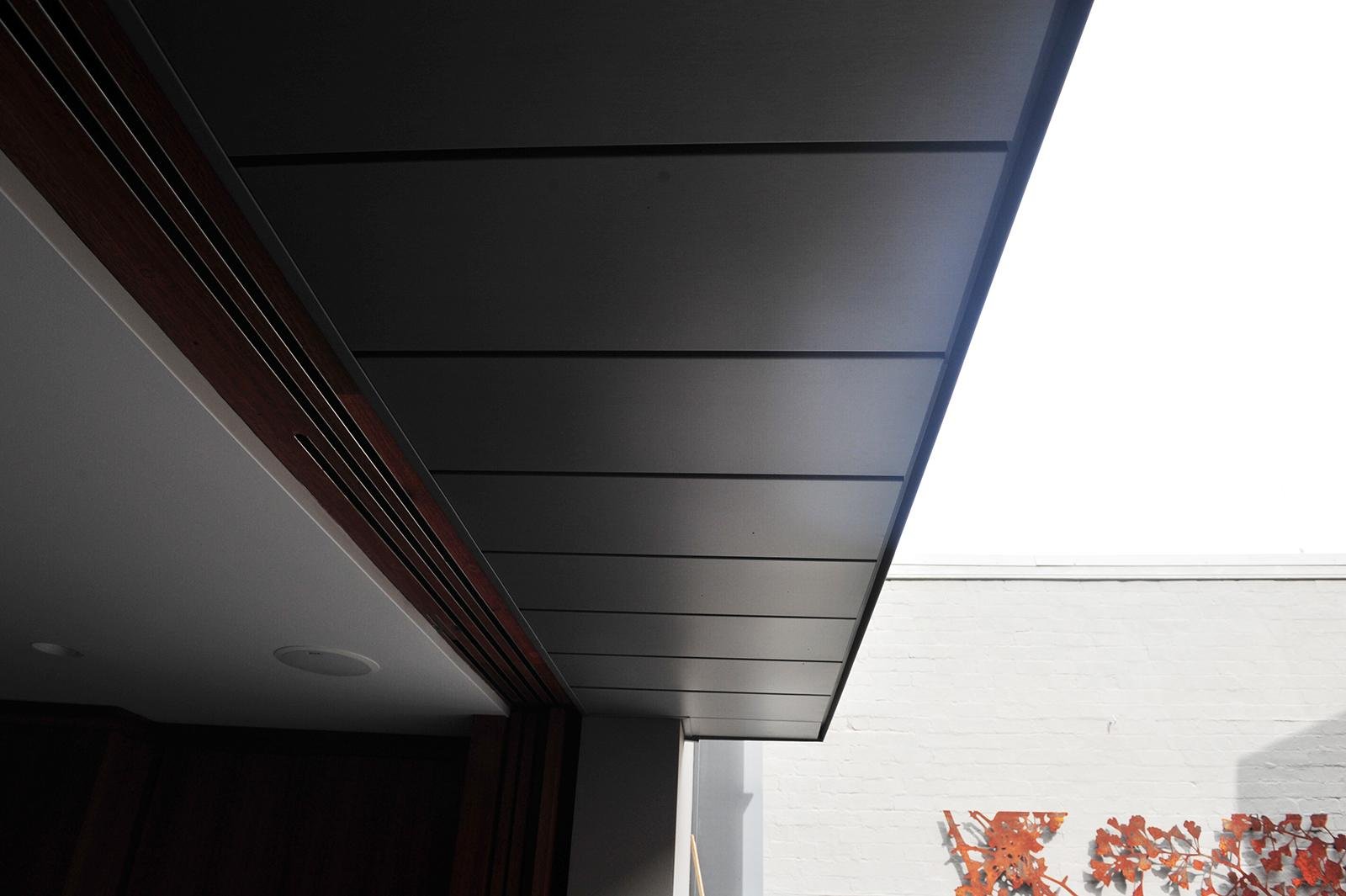
Modern architecture increasingly focuses on clean lines, minimal detailing, and materials that combine visual appeal with long-term performance. Flat lock panels are one solution that fits this design approach, offering a smooth metal surface with subtle recessed joints.
Used for architectural cladding and soffits, flat-lock systems can create a contemporary appearance while providing the flexibility needed for different building designs.
What Are Flat Lock Panels?
Flat-lock panels are factory-formed metal panels featuring an interlocking fold on all four sides. Each panel connects with the adjacent panel to create a continuous surface with defined negative details.
Unlike traditional corrugated profiles, flat-lock systems provide a relatively smooth appearance. The result is a clean architectural finish suitable for modern residential and commercial projects.
Roofing Group describes its Flat-lock Panel System as a solution for cladding and soffit applications, with materials including zinc, copper, aluminium, COLORBOND®, Corten and stainless steel.
Why Choose Flat Lock Panels?
Clean Architectural Appearance
One of the main reasons architects and designers specify flat-lock systems is their appearance.
The panels create a smooth surface with subtle negative joints, giving façades a refined and contemporary look. This makes them suitable for projects where the external envelope is an important part of the architectural design.
Flexible Panel Layouts
Flat-lock panels can be arranged in different directions depending on the material and project requirements.
Roofing Group's technical information lists horizontal, vertical and diagonal installation options, with curved applications also available for several materials.
This flexibility allows architects to create different visual patterns across a building façade.
Concealed Fixings
The panels are mechanically attached using concealed clips positioned beneath the upper edges of the panels.
This keeps the visible surface clean because the fixing system is hidden beneath the panel connections.
Multiple Material Options
Flat-lock systems aren't limited to one type of metal.
Depending on the project, panels can be manufactured using:
-
Zinc
-
Copper
-
Aluminium
-
COLORBOND® steel
-
Corten steel
-
Stainless steel
Each material provides a different appearance and performance profile, giving architects greater flexibility when specifying the building envelope.
Flat Lock Panels for Cladding
Flat-lock panels are particularly effective for architectural wall cladding.
Their smooth appearance can complement contemporary façades, while the recessed joints create visual definition across large surfaces.
Because panels can be arranged horizontally, vertically or diagonally depending on the material, designers can use the direction of the joints as part of the building's architectural expression.
Flat Lock Panels for Soffits
Flat-lock systems can also be used for soffit applications.
A consistent metal panel system across façades and soffits can help create a coordinated architectural appearance. The clean surface and concealed fixing approach are especially useful when designers want to avoid visually distracting fasteners.
Materials Available for Flat Lock Systems
Zinc
Zinc provides a distinctive architectural appearance and develops a natural protective patina over time. Roofing Group states that its VMZINC option is composed of high-quality zinc alloyed with copper and titanium and has an expected lifespan of approximately 50–80 years depending on location.
Copper
Copper develops a natural patina as it weathers. Depending on environmental conditions, its appearance can transition through different tones over its service life. Roofing Group lists an expected lifespan of approximately 70–100 years depending on location.
Aluminium
Aluminium provides a lightweight metal option for architectural applications. Roofing Group states that its aluminium is produced in Europe and uses a PVDF paint system, with a stated lifespan of approximately 40–60 years depending on location.
COLORBOND®
COLORBOND® steel provides another option for designers seeking a broad range of architectural finishes. Roofing Group states that its COLORBOND® option is manufactured in Australia to relevant Australian Standards.
Corten
Corten, also known as weathering steel, develops a characteristic rust-like surface appearance when exposed to weather. Its patina contributes to the distinctive aesthetic often associated with contemporary architectural projects.
Installation Considerations
Flat-lock panels require an appropriate substrate and installation system.
Roofing Group specifies a construction-grade substrate for its Flat-lock and Recessed Flatlock applications. Its technical information also specifies a breathable waterproofing membrane over the substrate and concealed clips installed at maximum 300 mm spacing.
For zinc applications, ventilation requirements are particularly important. Roofing Group specifies a continuous 20 mm ventilation gap beneath the plywood substrate for VMZINC installations.
Because installation requirements vary according to material, building design and conditions, the system should be specified and installed according to the applicable technical requirements.
Choosing the Right Flat Lock Panel
When selecting a flat-lock system, consider:
-
Building location
-
Desired architectural appearance
-
Panel material
-
Panel dimensions
-
Installation direction
-
Substrate requirements
-
Ventilation
-
Waterproofing
-
Wind loading
-
Project design
-
Maintenance expectations
The right combination can help create a façade that is both visually distinctive and suitable for its environment.
Flat Lock Panels from Roofing Group
Roofing Group – Flat-lock Panels offers architectural flat-lock solutions for cladding and soffits using materials such as zinc, copper, aluminium, COLORBOND®, Corten and stainless steel.
With custom panel sizing, concealed clips and multiple installation directions available depending on the material, flat-lock panels provide architects and builders with a flexible approach to contemporary metal architecture.
Conclusion
Flat lock panels combine a smooth architectural appearance with an interlocking installation system that can be adapted to different building designs.
Whether used for façade cladding or soffits, the system provides clean lines, concealed fixings and a choice of architectural metals. With the correct substrate, waterproofing, ventilation and installation details, flat-lock panels can form an important part of a modern building envelope.
For architects, builders and property developers looking for a refined metal cladding solution, flat-lock panels are worth considering as part of a contemporary architectural design.

 English
 Arabic
 French
 Portuguese
 Deutsch
 Turkish
 Dutch
Dutch
 Italiano
 Russian
 Romaian
 Portuguese (Brazil)
 Greek
Greek