


Introduction
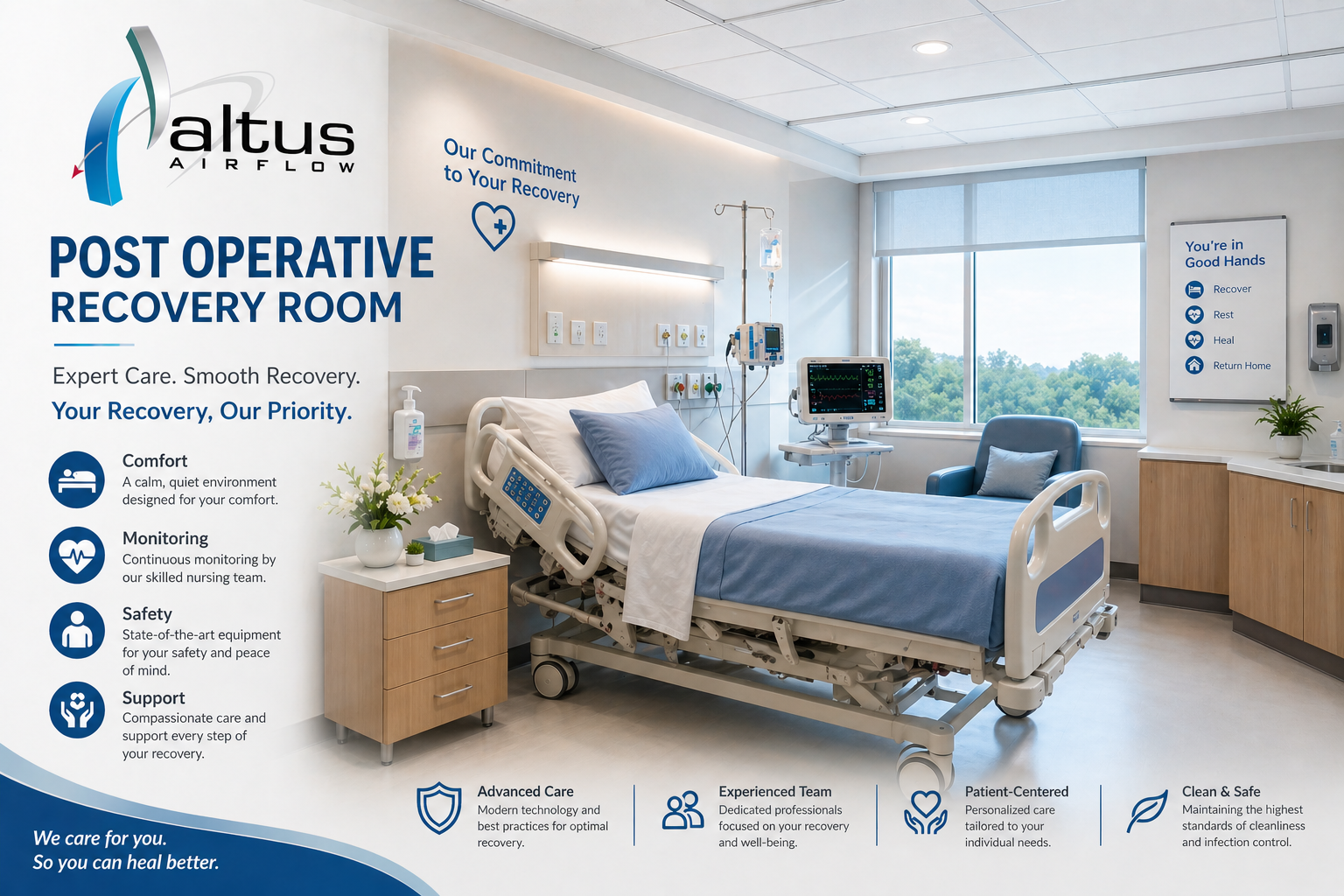
A Post Operative Recovery Room provides a controlled clinical environment where patients can be observed after surgery and anesthesia while they regain physiological stability. The initial recovery period may involve monitoring breathing, circulation, consciousness, pain, temperature, and other relevant conditions. A properly planned recovery environment provides healthcare professionals with appropriate monitoring equipment, medical utilities, emergency resources, and patient-care facilities to support this important stage.
Immediate Patient Observation
One of the primary functions of a postoperative recovery area is close observation following a procedure.
Healthcare professionals assess the patient's condition and monitor relevant physiological parameters according to the type of procedure, anesthesia, and clinical requirements.
Respiratory Monitoring
Respiratory status can require particular attention after anesthesia.
Monitoring may include respiratory rate, oxygen saturation, breathing pattern, and other clinical observations as appropriate.
Oxygen Support
Some patients may require supplemental oxygen during the initial recovery period.
Suitable oxygen-delivery equipment and medical gas infrastructure can provide access when clinically indicated.
Cardiovascular Monitoring
Recovery teams may monitor heart rate, blood pressure, ECG, and other cardiovascular parameters according to the patient's condition.
This allows clinicians to identify changes that may require further assessment or intervention.
Temperature Monitoring
Body temperature can change during and after surgery.
Appropriate temperature monitoring and warming or cooling measures may be used according to clinical requirements.
Level of Consciousness
Patients recovering from anesthesia gradually regain alertness.
Healthcare professionals observe responsiveness and consciousness as part of the overall postoperative assessment.
Pain Management Support
Pain assessment is an important part of recovery.
Clinical teams can evaluate pain and administer prescribed analgesia or other appropriate interventions while continuing to monitor the patient's response.
Nausea and Vomiting Management
Some patients experience nausea or vomiting after anesthesia.
The recovery environment should provide access to appropriate clinical support and monitoring for these symptoms.
Airway Management
Airway observation is particularly important during the immediate period after anesthesia.
Recovery areas should provide access to suitable airway equipment, oxygen, suction, and emergency resources according to clinical protocols.
Suction Facilities
Suction may be required for airway management or secretion removal.
Central vacuum outlets or portable suction equipment can be incorporated according to the clinical requirements of the facility.
Intravenous Therapy
Some patients require intravenous fluids or medications during recovery.
Infusion pumps, IV equipment, and suitable electrical and equipment-support infrastructure can facilitate prescribed treatment.
Continuous Monitoring
The level of monitoring depends on the patient's clinical condition and the procedure performed.
Bedside monitors can provide information on relevant physiological parameters and allow healthcare professionals to identify changes promptly.
Nursing Supervision
Trained healthcare professionals provide observation and care during recovery.
The layout should allow staff to access patients quickly and maintain appropriate visibility of recovery positions.
Emergency Preparedness
Although most patients progress through recovery without major complications, the environment should be prepared for emergencies.
Crash carts, defibrillators, airway equipment, oxygen, suction, and other emergency resources should be readily accessible according to hospital protocols.
Medical Gas Infrastructure
Recovery beds may require oxygen, medical air, and vacuum.
Appropriate outlets should be positioned near patient beds without creating obstacles for staff or equipment.
Electrical Infrastructure
Recovery equipment depends on reliable electrical power.
Adequate outlets, grounding, essential circuits, backup power, and cable-management arrangements should be incorporated according to applicable requirements.
Patient Positioning
Appropriate positioning can support respiratory function, comfort, observation, and clinical intervention.
Recovery beds should provide suitable adjustability according to the patient's needs and the clinical team's requirements.
Privacy
Patients may require examinations, medication administration, and personal care.
Curtains, screens, partitions, or individual bays can provide privacy while maintaining suitable clinical observation.
Infection Control
Postoperative patients benefit from an environment that supports infection-prevention practices.
Cleanable surfaces, hand hygiene facilities, appropriate patient spacing, organized equipment, and controlled circulation can contribute to infection control.
Environmental Conditions
Temperature, humidity, ventilation, filtration, and airflow should be appropriately managed.
Environmental systems should be designed according to the room's function and applicable healthcare requirements.
Lighting
Adequate lighting helps healthcare professionals assess patients and perform necessary procedures.
Adjustable lighting can also support patient comfort during routine recovery.
Noise Management
Monitors, alarms, staff conversations, and equipment can create significant noise.
Appropriate acoustic planning and alarm-management practices can help maintain a calmer environment while preserving essential clinical alerts.
Staff Workflow
Recovery room layouts should support efficient movement between patients, monitoring systems, medication areas, emergency equipment, storage, and documentation facilities.
A well-organized workflow can help staff respond efficiently to patient needs.
Communication
Recovery teams may need to communicate with operating theatres, anesthesiology departments, wards, ICUs, laboratories, and other hospital services.
Nurse call, telephone, intercom, and approved data systems can support this communication.
Safe Transfer to the Next Care Area
Once the patient meets the appropriate clinical criteria, they may be transferred to a ward, intensive care unit, or another suitable care setting.
Clear routes and adequate space should support safe movement of patients, beds, equipment, and staff.
Documentation
Recovery observations and interventions should be documented according to hospital procedures.
Suitable workstations and digital connectivity can support timely clinical documentation without interfering with patient observation.
Flexible Infrastructure
Recovery requirements can change with surgical services and medical technologies.
Flexible infrastructure can make it easier to upgrade monitoring systems, modify equipment arrangements, or adapt utilities in the future.
Conclusion
A Post Operative Recovery Room supports patients during the initial recovery phase by providing an environment for appropriate observation, respiratory and cardiovascular monitoring, oxygen and airway support, pain management, temperature assessment, emergency preparedness, nursing supervision, and safe transition to the next stage of care. Well-planned infrastructure, including medical gases, electrical systems, monitoring equipment, infection-control provisions, communication systems, and patient-focused environmental features, helps healthcare teams deliver organized postoperative care.
FAQs
1. What is the main purpose of a Post Operative Recovery Room?
Its main purpose is to provide appropriate observation and clinical support while patients recover from surgery and anesthesia before they transition to another suitable care area.
2. What is monitored during the initial recovery phase?
Depending on clinical requirements, healthcare professionals may monitor breathing, oxygen saturation, heart rate, blood pressure, ECG, temperature, consciousness, pain, and other relevant parameters.
3. Why is oxygen support available in recovery rooms?
Some patients may require supplemental oxygen after anesthesia or surgery. Medical gas infrastructure and oxygen-delivery equipment provide access when clinically indicated.
4. What emergency facilities should be accessible?
Emergency resources can include crash carts, defibrillators, airway equipment, oxygen, suction, and other equipment required by the hospital's emergency protocols.
5. When can a patient leave the recovery room?
Transfer decisions are made by qualified healthcare professionals based on the patient's clinical condition and established hospital protocols and discharge criteria.
Read Our Previous Blog----------->What infrastructure is required for a well-equipped Hospital Recovery Room?

 English
 Arabic
 French
 Spanish
 Portuguese
 Deutsch
 Turkish
 Dutch
Dutch
 Russian
 Romaian
 Portuguese (Brazil)
 Greek
Greek