


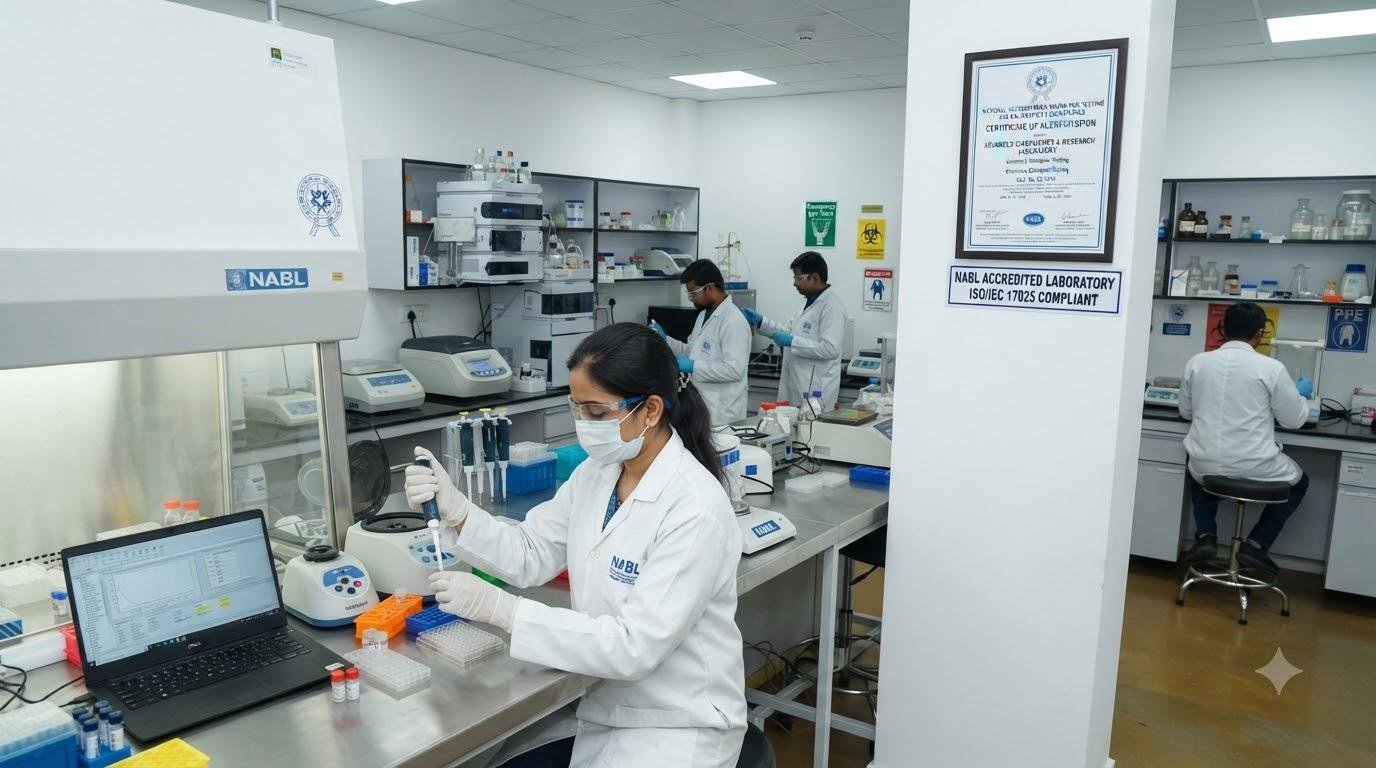
Have you ever visited a specialist in Bangalore with a stack of diagnostic reports, only to be told to redo the tests? This happens frequently when patients bring in results from pathology centers that lack formal accreditation. Physicians, especially in multi-specialty hospitals, rely heavily on standardized testing protocols to prescribe treatments. Without accreditation, your lab report is just a sheet of paper with numbers that cannot be clinically verified.
If you want to ensure your test results are universally accepted and never questioned by a specialist, locating a trusted nabl lab in bangalore is essential. It eliminates the frustration of repeat testing, prevents delayed treatments, and ensures your healthcare decisions are based on completely reliable data.
The Problem with Non-Accredited Diagnostic Centers
Not all diagnostic centers operate under the same quality mandates. A non-accredited lab might use cheaper reagents, skip daily quality control checks, or rely on outdated analyzers to cut costs. The result? A slight variation in your blood glucose or thyroid levels that pushes you from a normal range into a pre-disease category.
When doctors see reports from unknown or unverified labs, they cannot trust the baseline numbers. A 10% variance in a critical marker like Troponin (used to diagnose heart attacks) or HbA1c (used to manage diabetes) can lead to dangerously incorrect medication adjustments. This is precisely why hospitals often reject external reports and insist on in-house testing—they have no way of verifying the analytical competence of an unaccredited external provider.
Why Seek a NABL Lab in Bangalore for Specialized Tests?
Routine tests like a basic lipid profile might yield similar results across most labs. However, when it comes to specialized diagnostics—hormonal assays, tumor markers, autoimmune panels, or genetic testing—the margin for error increases exponentially. These tests require high-end immunoassay analyzers and highly specific handling protocols.
When you prioritize choosing a nabl lab in bangalore for these complex tests, you are ensuring the facility has been audited for exactly these parameters. NABL does not just check the machine; it checks the entire system surrounding the machine.
Inter-Laboratory Comparison Programs
A core requirement for accreditation is participation in External Quality Assessment Services (EQAS). This means the lab’s results are periodically compared against a peer group of other accredited labs across the country. If a lab consistently reports outliers in these blind testing programs, its accreditation is at risk. This constant cross-verification ensures that a TSH level of 4.5 means exactly the same thing at any accredited facility.
Traceability of Results
Accredited labs must ensure their measurements are traceable to national or international reference standards. For example, the calibration of a chemistry analyzer must be linked to standard reference materials. This traceability guarantees that the numbers on your report are not arbitrary, but anchored to globally recognized scientific baselines.
Hospital-Attached vs. Standalone: Does Accreditation Differ?
Bangalore has a mix of massive hospital-attached pathology departments and standalone diagnostic chains. Patients often assume that a lab inside a big hospital is automatically superior, but that is not always the case.
Many large hospitals do hold NABL accreditation for their labs. However, some hospital labs are run as cost centers and may not seek external accreditation, relying instead on the hospital's brand name. On the other hand, standalone diagnostic chains survive purely on the accuracy of their reports. Their entire business model depends on earning the trust of referring physicians. Consequently, major standalone labs in Bangalore were among the first to aggressively pursue and maintain NABL accreditation.
When in doubt, always ask for the accreditation certificate, regardless of whether the lab is inside a five-star hospital or a standalone neighborhood center.
How Bangalore’s Infrastructure Impacts Sample Integrity
One unique challenge in Bangalore is the city's notorious traffic and sprawling geography. A blood sample drawn in Whitefield might need to be processed at a central hub in Koramangala. The time delay and temperature fluctuations during transit can severely degrade certain analytes.
For instance, bilirubin is light-sensitive, and glucose levels drop rapidly in a test tube at room temperature. A non-accredited lab might transport samples in regular bags without climate control. Every nabl lab in bangalore must adhere to strict Standard Operating Procedures (SOPs) for sample transportation.
The Cold Chain Challenge in Local Transport
Accredited labs use temperature-controlled transport boxes (ice chests with data loggers) to ensure samples remain within the required temperature range during transit across the city. They also mandate strict turnaround times between collection and processing. If a sample exceeds the allowable transit time, it is rejected and recollected. Non-accredited labs often process delayed samples to avoid the cost of recollection, leading to artificially skewed results.
The Hidden Risk of Outsourced Tests
Here is a fact many patients do not realize: the lab where you give your blood sample is not always the lab that processes it. Many smaller diagnostic centers act as mere collection points and outsource the actual testing to a third-party hub.
If the collection center is accredited, but they outsource a specific test to a non-accredited hub, the guarantee of quality for that specific test is void. NABL accreditation strictly requires that outsourced tests are sent only to other NABL-accredited laboratories. If you visit a nabl lab in bangalore, you are protected from hidden outsourcing to sub-standard facilities. The lab is legally bound by its accreditation scope to ensure your sample is processed only at a verified, competent center.
What to Ask When You Walk Into a Diagnostic Center
Do not be shy about verifying a lab’s credentials before you roll up your sleeve. A transparent, accredited center will gladly answer your questions. Here is what you should ask the front desk:
-
"Can I see your current NABL certificate and scope of accreditation?" They should display it readily. Check the validity date.
-
"Are all my prescribed tests processed in-house?" If they outsource, ask for the name and accreditation status of the receiving lab.
-
"How are samples transported to the processing hub?" Listen for mentions of temperature control and time limits.
-
"What is your policy if a sample gets hemolyzed or delayed?" A good lab will inform you immediately and offer a free recollection.
-
"Do you run daily Internal Quality Control before processing patient samples?" This is a mandatory NABL requirement, and a confident lab technician will confirm this without hesitation.
Understanding the Accreditation Timeline
New diagnostic centers open in Bangalore every month. Many of them put up a "NABL Applied" or "NABL Pending" board within a few months of operation. However, applying for accreditation is not the same as holding it.
The NABL accreditation process is exhaustive and takes anywhere from 12 to 18 months for a new lab to complete. It involves establishing SOPs, running the lab for several months to generate quality control data, and passing a rigorous two-stage audit by technical assessors teams. Until the final certificate is granted, the lab is not accredited. For critical health decisions, it is safer to stick to labs that have a proven track record and an active, unexpired certificate.
Protect Your Health by Choosing Verified Diagnostics
Medical treatments are only as effective as the diagnoses driving them. By settling for the nearest or cheapest lab without verifying its accreditation, you gamble with the baseline data your doctor uses to treat you. Whether it is a routine preventive checkup or a critical cancer marker test, the quality of the pathology lab directly influences your health trajectory.
Always opt for visiting a nabl lab in bangalore to ensure your test results are accurate, globally benchmarked, and accepted by any specialist you consult. It is a simple step that safeguards you from misdiagnosis, unnecessary treatments, and the hidden costs of repeat testing.
Frequently Asked Questions
Do all big hospital labs in Bangalore have NABL accreditation?
No, not necessarily. While many major hospitals do accredit their labs, some do not, relying instead on their hospital's brand reputation. It is always safer to ask for the NABL certificate rather than assuming a lab is accredited just because it is attached to a large hospital.
Can I use reports from a standalone lab for surgery prep?
Yes, but only if the lab is NABL accredited. Surgeons and anesthetists require guaranteed accuracy for pre-surgical fitness tests. Most hospitals will accept NABL-accredited reports from standalone external labs, saving you the hassle of getting tested at the hospital's own lab.
How long does it take for a lab to get NABL accreditation?
The process is rigorous and typically takes 12 to 18 months from the initial application to the final grant of accreditation. A lab claiming to be "NABL Applied" or "NABL Pending" is not yet accredited and should not be treated as such for critical tests.
Is home sample collection safe from an accreditation standpoint?
Yes, provided the lab is NABL accredited. Accreditation mandates strict SOPs for home collection, including the qualifications of the phlebotomist, the barcoding of samples at the doorstep, and temperature-controlled transport. An accredited lab's home collection process is audited just as strictly as its in-house operations.

 Arabic
 French
 Spanish
 Portuguese
 Deutsch
 Turkish
 Dutch
Dutch
 Italiano
 Russian
 Romaian
 Portuguese (Brazil)
 Greek
Greek