


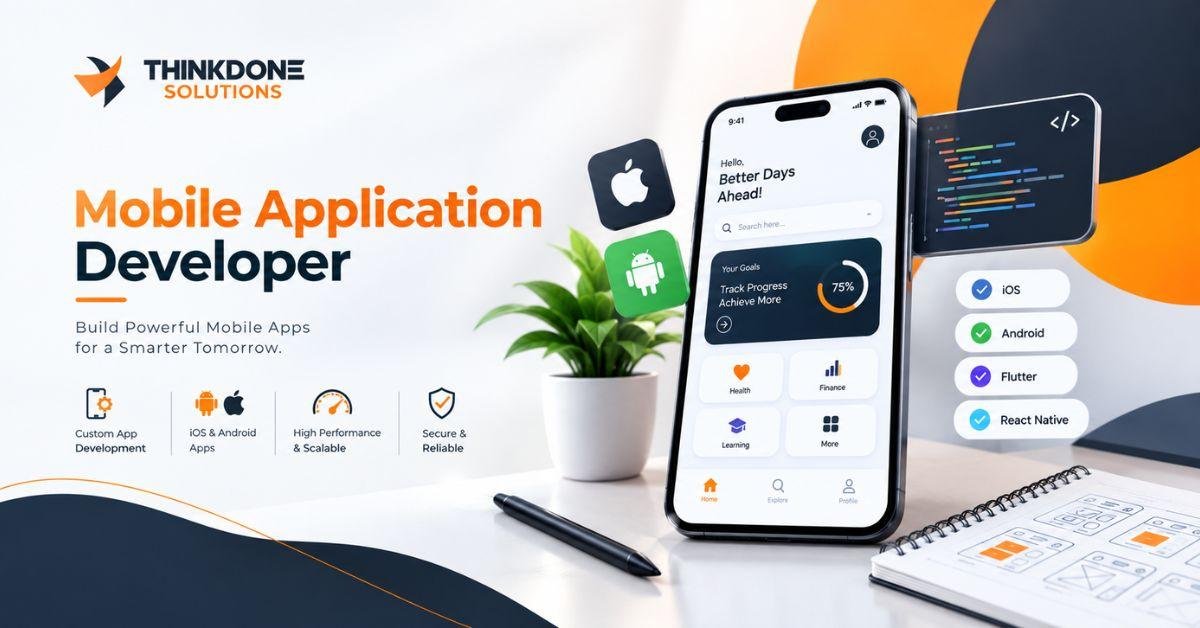
Have you ever opened an app on your phone and wondered, "Who actually built this thing?" Behind every smooth swipe, every satisfying button click, and every notification that pops up at just the right time, there's a mobile application developer working quietly in the background. Their job looks simple from the outside, but it's actually a mix of creativity, logic, and a whole lot of problem-solving.
In this article, we'll walk through exactly how mobile app development happens, step by step, in plain and simple language. No confusing jargon, no boring textbook talk. Just a real look at how your favorite apps come to life.
What Does a Mobile Application Developer Actually Do?
At its core, a mobile app developer takes an idea and turns it into a working product that lives on your phone. Think of them as a digital builder. Just like a construction worker needs a blueprint before laying a single brick, a developer needs a clear plan before writing a single line of code.
Let me share a quick story to make this real. A small bakery owner once wanted an app where customers could order cakes online. She had no idea how apps were made. She just knew what she wanted the customer to feel: quick, easy, and joyful ordering. That's where the developer stepped in, turning her vision into a working, tappable reality. This is the heart of mobile application development: translating human needs into digital tools people actually enjoy using.
The Mobile App Development Process, Step by Step
Understanding the mobile app development process helps you see why good apps take time and skill to build. Here's how it usually unfolds.
1. Understanding the Idea and Planning
Before touching any tool, a developer sits down and asks questions. What problem does this app solve? Who will use it? What should it look like? This planning stage sets the direction for everything that follows, and skipping it almost always leads to a messy final product.
2. Designing the User Experience
Next comes design. This is where wireframes and mockups are created, basically simple sketches showing where buttons, menus, and screens will sit. A good design makes an app feel natural, almost like it reads your mind before you even tap anything.
3. Choosing the Right Development Approach
Here's where things get technical, but stay with me. Developers decide whether to build a native app (one built specifically for iPhone or Android) or a cross-platform app (one that works on both with shared code). This decision affects speed, cost, and performance, so it's never taken lightly.
4. Writing the Code
This is the stage most people picture when they think of app building. Using mobile app development tools and mobile app development frameworks, developers write the actual code that makes the app function. Popular choices include Flutter, React Native, Swift, and Kotlin, each with its own strengths depending on the project.
5. Testing Everything, Again and Again
An app that isn't tested is like a car that's never been test-driven. Developers check for bugs, crashes, slow loading times, and anything that might frustrate a user. This step often gets repeated multiple times before the app is considered ready.
6. Launching the App
Once everything works smoothly, the app gets submitted to the App Store or Google Play. There are guidelines to follow here too, so developers make sure everything meets platform standards before going live.
7. Maintaining and Updating
Believe it or not, the work doesn't stop after launch. Phones get new updates, users request new features, and small bugs pop up. A responsible developer keeps improving the app long after its first release.
Modern Mobile App Development Technologies
Today's mobile app development technologies move fast. Cloud integration, AI-powered features, and real-time data syncing are now common in even simple apps. This is exactly how to develop a mobile app that feels current rather than outdated the moment it launches. Staying updated with these technologies isn't optional anymore, it's what separates a forgettable app from one people keep coming back to.
Why Trust Matters When Choosing a Development Partner
Here's the honest truth: building an app is a big investment of time, money, and trust. That's exactly why so many businesses turn to ThinkDone Solutions for their app development needs. With a team that understands both the technical and human side of building apps, ThinkDone Solutions focuses on creating products that don't just work, they genuinely connect with users.
Whether you're a small business owner like the bakery example earlier, or a startup founder with a bigger vision, working with a reliable partner means fewer headaches and a smoother journey from idea to launch. You deserve a team that treats your app idea with the same care you would.
Conclusion
At the end of the day, a mobile application developer is part builder, part problem-solver, and part storyteller, turning ideas into apps people use every single day. From planning and design to coding, testing, and long-term support, every step matters. If you're ready to bring your own app idea to life, partnering with experienced professionals like ThinkDone Solutions can make that journey a whole lot smoother and give you the confidence that your idea is in good hands.
Frequently Asked Questions
1. What skills does a mobile application developer need?
A good developer needs coding knowledge, problem-solving skills, and an understanding of user experience design to build apps people actually enjoy using.
2. How long does mobile app development usually take?
It depends on the app's complexity, but simple apps can take a few weeks, while more advanced apps may take several months from planning to launch.
3. What is the difference between native and cross-platform app development?
Native apps are built specifically for one platform like iOS or Android, while cross-platform apps use shared code to work on multiple platforms at once.
4. Which mobile app development frameworks are most popular today?
Flutter, React Native, Swift, and Kotlin are among the most widely used frameworks, each offering different benefits depending on the project's needs.
5. Why should I hire a professional team instead of building an app myself?
A professional team brings experience, proper testing, and technical know-how, which reduces costly mistakes and helps your app launch smoothly and confidently.

 Arabic
 French
 Spanish
 Portuguese
 Deutsch
 Turkish
 Dutch
Dutch
 Italiano
 Russian
 Romaian
 Portuguese (Brazil)
 Greek
Greek