


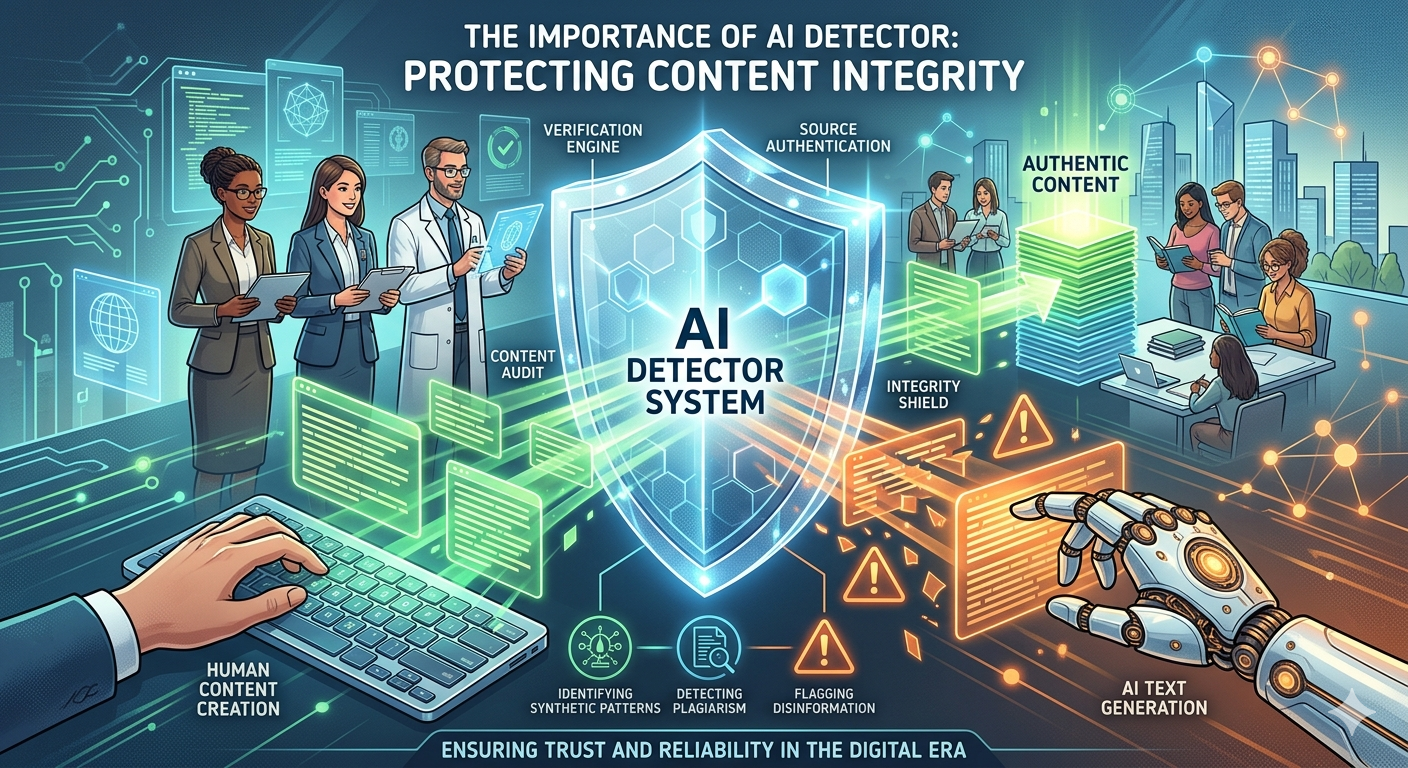
As artificial intelligence (AI) continues to shape various industries, the content we interact with daily is also becoming increasingly influenced by these powerful systems. Whether it's text, images, or videos, AI is capable of creating content that is often indistinguishable from what a human could produce. While this offers exciting possibilities, it also raises significant concerns about authenticity and trust. Enter AI detector—advanced tools that help ensure the integrity of digital content by identifying when it has been created or altered by AI. This article delves into the significance of AI detectors, how they work, and why they are essential for maintaining trust in an increasingly AI-driven world.
What Are AI Detectors?
AI detectors are tools or systems designed to identify content that has been generated or modified by artificial intelligence. These tools rely on various technologies, including machine learning (ML), natural language processing (NLP), and computer vision, to analyze digital content and spot patterns or anomalies that suggest machine involvement.
For example, in text, AI detectors analyze the linguistic features of a piece of writing, looking at things like sentence structure, word choice, and coherence. In images or videos, these detectors focus on visual cues—such as lighting inconsistencies or unnatural facial movements—that AI-generated content often exhibits. In essence, AI detectors work by identifying the fingerprints of machine-generated content that may go unnoticed by the human eye.
The Growing Need for AI Detectors
With the continuous rise of AI capabilities, the lines between human-created and machine-generated content are becoming increasingly blurred. This presents several challenges in maintaining the authenticity and reliability of digital content. Here’s why AI detectors have become more important than ever:
1. Fighting Misinformation and Deepfakes
One of the most significant concerns in today’s digital landscape is the spread of fake news and misinformation. AI-generated deepfakes—realistic yet fabricated videos or audio clips—are a growing issue, often used to deceive or manipulate the public. By detecting AI-generated content, detectors can prevent harmful misinformation from spreading, safeguarding public trust and security.
2. Ensuring Academic Integrity
In education, AI tools have made it easier for students to generate essays, reports, and even creative writing. While this can be a useful tool for learning and drafting ideas, there’s a risk that students might rely too heavily on AI, submitting work that is not their own. To maintain academic integrity, schools and universities are increasingly using AI detectors to ensure that students submit original work and avoid plagiarism.
3. Protecting Intellectual Property
As AI continues to produce creative works—such as art, literature, and music—there are important questions about authorship and copyright. AI detectors can help determine whether a piece of content is AI-generated, ensuring that creators are credited for their work. This helps protect the intellectual property rights of individuals in creative industries.
4. Enhancing Digital Security
AI is also being used in cybercrime, particularly in phishing scams and fraudulent websites. AI-generated emails or websites can closely resemble legitimate communications, tricking individuals into disclosing sensitive personal information. AI detectors can identify suspicious, machine-generated content, preventing such attacks and protecting online security.
How Do AI Detectors Work?
AI detectors are powered by a variety of advanced technologies that allow them to identify content created by machines. Here’s a breakdown of how these tools function:
1. Machine Learning (ML) Algorithms
At the core of AI detection lies machine learning. AI detectors are trained using vast datasets containing both human- and AI-generated content. As these algorithms analyze more examples, they become better at recognizing patterns and features unique to AI-generated content. This continuous learning process enables AI detectors to identify subtle signs that might indicate the involvement of a machine in content creation.
2. Natural Language Processing (NLP)
For text-based content, Natural Language Processing (NLP) is a key technology used to detect AI involvement. NLP algorithms examine sentence structure, vocabulary, and grammatical nuances to identify if a piece of text is likely to have been generated by AI. AI-written text often lacks the subtle nuances, emotional depth, and coherence typically found in human writing. NLP helps pinpoint these discrepancies.
3. Computer Vision for Images and Videos
When it comes to detecting AI-generated images and videos, computer vision plays a vital role. AI-generated visuals, like deepfakes or synthetic images, often show subtle errors that are difficult for humans to spot. Detectors analyze visual cues such as unnatural lighting, inconsistent facial expressions, or pixel distortions that AI tools commonly produce. These anomalies can signal that the content was artificially created.
4. Statistical Analysis and Predictive Modeling
AI detectors also use statistical analysis and predictive modeling to assess the likelihood that a piece of content was generated by a machine. By examining factors like word frequency, sentence complexity, and visual characteristics, detectors can compare the content against known patterns of human and AI generation. If the content deviates significantly from typical human patterns, it may be flagged as AI-generated.
The Future of AI Detectors
As artificial intelligence continues to advance, AI detectors will need to evolve as well. The future of these tools lies in improving their accuracy and speed, enabling them to identify AI-generated content in real time across various digital platforms. As AI tools become more sophisticated, it will be essential for AI detectors to keep up with emerging trends and new forms of content creation.
Additionally, as AI detection becomes more widespread, it will raise new ethical questions. How do we ensure that these tools are used fairly and transparently? Will AI detectors be used to stifle creativity or censor legitimate content? These questions will be important to address as we move forward in an AI-powered world.
Conclusion
AI detectors are an essential tool in maintaining the integrity and authenticity of digital content. Whether combating misinformation, ensuring academic honesty, protecting intellectual property, or enhancing digital security, AI detectors play a crucial role in the fight against the potential dangers posed by AI-generated content. As technology advances, the need for these tools will only grow, and AI detectors will continue to evolve to meet new challenges. By embracing and improving these detection systems, we can ensure a safer, more transparent digital world where authenticity remains at the forefront.

 English
 Arabic
 Spanish
 Portuguese
 Deutsch
 Turkish
 Dutch
Dutch
 Italiano
 Russian
 Romaian
 Portuguese (Brazil)
 Greek
Greek