


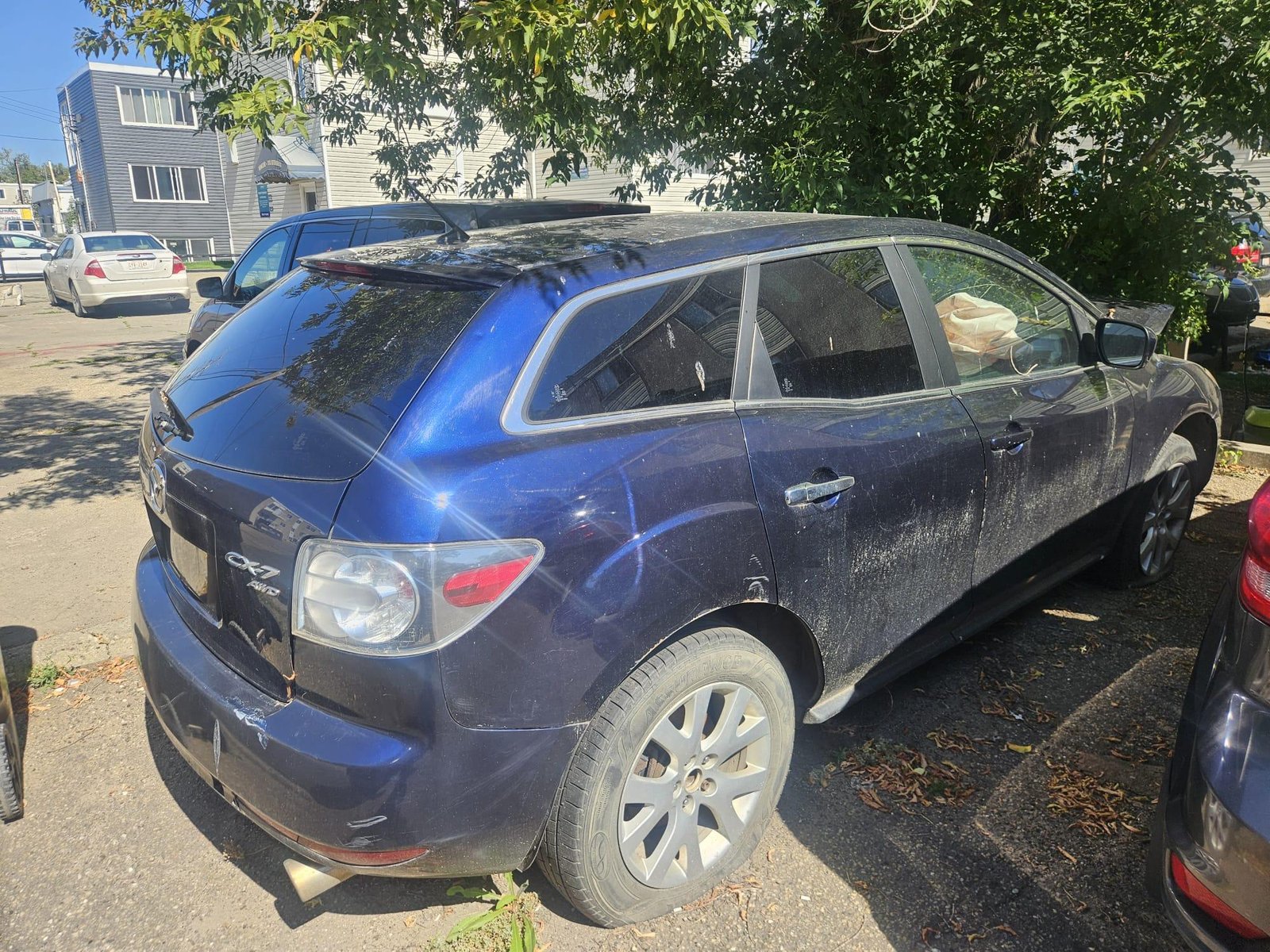
Seeing a six-digit number on your odometer can make you think your car has lost most of its value.
Maybe your vehicle has 180,000 km. Maybe it has crossed 250,000 km. Or perhaps the odometer is approaching 300,000 km, and you are wondering if anyone would still pay good money for it.
Here is the surprising part: high mileage does not automatically make a car worthless.
Mileage matters, but it is only one piece of the puzzle. The vehicle’s make and model, mechanical condition, maintenance history, demand for its parts, overall age, body condition, and even the current scrap market can influence what your car is worth.
If you are considering cash for cars Calgary, understanding these factors can help you avoid making one expensive mistake: assuming your high-mileage vehicle is worth nothing before you even ask for an offer.
Does High Mileage Really Reduce a Car’s Value?
Yes, mileage can reduce a vehicle's resale value because higher mileage usually means the car has experienced more wear and tear.
But there is a major difference between:
A high-mileage car that has been maintained well
and
A high-mileage car that has been neglected.
For example, a 2015 Toyota with 220,000 km and a strong maintenance history may be more attractive than a poorly maintained vehicle with only 150,000 km.
Why?
Because the lower-mileage vehicle could still need expensive repairs involving the transmission, engine, suspension, brakes, cooling system, or electrical components.
Mileage gives buyers a clue about how much use a vehicle has experienced. It does not tell the entire story.
What Mileage Range Is Considered High?
There is no universal number that suddenly turns a normal vehicle into a “high-mileage” vehicle.
However, Canadian drivers commonly start viewing vehicles differently as they approach or pass approximately 200,000 km.
A rough way to think about mileage is:
- Under 100,000 km: Generally considered lower mileage.
- 100,000–160,000 km: Moderate mileage for many older vehicles.
- 160,000–200,000 km: Higher mileage begins to become a consideration.
- 200,000+ km: High mileage for many vehicles.
- 250,000+ km: Very high mileage, although some vehicles can continue running for years with proper maintenance.
These numbers should never be treated as strict valuation rules.
A well-maintained vehicle with 240,000 km may still have useful components and strong demand, while another vehicle with 170,000 km could have serious mechanical problems.
Why Some High-Mileage Cars Still Have Good Value
This is where things become interesting.
A high-mileage vehicle can still have significant value because buyers do not necessarily value the car only as a complete, road-ready vehicle.
They may also value:
- The engine
- Transmission
- Catalytic converter
- Wheels and tires
- Alternator
- Starter
- Doors
- Bumpers
- Interior components
- Electronics
- Suspension components
- Body panels
- Usable replacement parts
- Scrap metal
In other words, your car can have value even when its odometer looks scary.
This is especially important if you are selling an older vehicle that is no longer practical to repair.
A 250,000 KM Car Isn't Automatically a Junk Car
The terms “high mileage” and “junk car” are not interchangeable.
A vehicle can have 250,000 km and still run reliably.
Likewise, a vehicle with 140,000 km can be considered a junk car if it has severe collision damage, a failed engine, major rust, or expensive mechanical problems.
The condition matters.
Think about two vehicles:
Vehicle A:
220,000 km, starts easily, transmission works, tires are decent, interior is complete, and the vehicle has been maintained.
Vehicle B:
150,000 km, blown engine, damaged transmission, missing parts, severe rust, and a neglected interior.
Which one would you expect to have more value?
The answer is not necessarily Vehicle B just because it has fewer kilometres.
This is why a proper vehicle assessment is much more useful than judging a car by mileage alone.
What Matters More Than Mileage?
Mileage is important, but several other factors can influence a cash offer.
1. Mechanical Condition
Does the engine run?
Does the transmission shift properly?
Does the vehicle start?
Can it move under its own power?
A high-mileage vehicle with a functioning powertrain can have more value than one with a much lower odometer reading but a failed engine.
2. Make and Model
Some vehicles maintain demand for years because replacement parts are widely needed.
Popular trucks, SUVs, sedans, and certain Japanese and domestic models may attract interest from buyers looking for parts.
Your vehicle's make and model can therefore matter almost as much as the mileage.
3. Maintenance History
Oil changes, transmission servicing, cooling-system maintenance, brake work, and other repairs can tell a buyer how the vehicle was treated.
A documented maintenance history can make a high-mileage car easier to evaluate.
4. Body Condition
Calgary vehicles deal with snow, ice, road salt, moisture, gravel, and changing temperatures.
Rust and corrosion can become increasingly important as vehicles age.
A car with high mileage but a relatively solid body may have more usable value than a low-mileage vehicle with severe corrosion.
5. Parts Demand
This is one of the biggest reasons mileage does not tell the whole story.
A vehicle does not need to be a perfect daily driver to have valuable components.
A dismantler may be interested in an older vehicle because specific parts can be reused in other cars.
Does High Mileage Affect Scrap Value?
Not always in the way people expect.
When a vehicle is primarily being valued for scrap, the odometer may matter much less than the vehicle's physical composition and the value of recoverable materials.
Scrap and recycling buyers may consider:
- Vehicle weight
- Ferrous metal
- Non-ferrous metals
- Catalytic converter value
- Reusable components
- Wheels and tires
- Current recycling demand
- Transportation and towing costs
This means an old vehicle with 300,000 km may still have a meaningful recycling value.
If the vehicle is no longer worth repairing, comparing a repair estimate with its potential scrap or parts value can be a smarter decision.
Should You Repair a High-Mileage Car Before Selling It?
This is where many vehicle owners lose money.
Suppose your car has 230,000 km and needs a $3,500 transmission repair.
You might think:
“If I fix it, I can sell it for more.”
Possibly.
But the important question is:
Will the increase in selling price be greater than the cost of the repair?
Imagine the repaired vehicle could realistically sell for only $2,000 more than it would have sold for in its current condition.
Spending $3,500 to gain $2,000 does not make financial sense.
Before repairing a high-mileage vehicle, consider:
- The current value of the vehicle.
- The repair cost.
- Other repairs that may soon be needed.
- The vehicle's age.
- Its accident and damage history.
- Its expected value after repair.
- Whether you actually want to keep driving it.
Sometimes selling the vehicle as-is is the better financial decision.
What If Your High-Mileage Car Won't Start?
A non-running vehicle can still have value.
The engine may have failed, the battery may be dead, the starter could be faulty, or the vehicle could have a transmission problem.
Do not automatically assume that “won't start” means “worthless.”
A cash car buyer or auto recycler can evaluate the vehicle based on its parts, condition, weight, and overall demand.
If the car is not roadworthy, make sure you tell the buyer before arranging pickup. This allows them to plan appropriate towing equipment.
Can You Sell a High-Mileage Car Without Fixing It?
In many cases, yes.
This can be particularly useful when repair costs are approaching or exceeding the vehicle's realistic value.
You may be able to sell a high-mileage vehicle in its current condition if the buyer accepts vehicles with:
- Engine problems
- Transmission problems
- Accident damage
- Rust
- Failed inspections
- Dead batteries
- Flat tires
- Missing keys
- Cosmetic damage
- High kilometres
- Non-running conditions
The key is transparency.
Tell the buyer what works, what does not, and whether the vehicle can be driven or needs towing.
How to Get a Better Cash Offer for a High-Mileage Car
You cannot remove kilometres from the odometer, but you can make the selling process easier.
Clean Out the Vehicle
Remove personal belongings, garbage, paperwork, and anything you want to keep.
Gather Your Documents
Have ownership and vehicle information ready. If you have maintenance records, keep those available as well.
Be Honest About Problems
Do not hide an engine problem or accident history. A buyer will usually discover major issues during assessment anyway.
Mention Valuable Features
Tell the buyer if the vehicle has newer tires, a recently replaced battery, a working engine, a functional transmission, or other useful components.
Compare Complete Offers
When comparing buyers, look at the final amount you will actually receive.
Ask whether towing, pickup, or other services are included.
A quote that sounds higher initially may not be better if additional costs are deducted later.
What About High-Mileage Trucks and SUVs?
High mileage can be especially interesting when it comes to trucks and SUVs.
These vehicles often have larger engines, heavier frames, valuable drivetrain components, and parts that remain in demand.
A 200,000-km truck is not necessarily comparable to a 200,000-km compact car.
The vehicle's intended use, engine, drivetrain, configuration, condition, and market demand can all influence its value.
This is why a simple “price per kilometre” calculation does not accurately determine what your vehicle is worth.
When Is It Time to Stop Putting Money Into an Old Car?
There is no magic mileage number that tells you when to stop.
Instead, watch for warning signs.
Consider selling if:
- Repairs keep appearing one after another.
- The vehicle spends more time in the shop than on the road.
- A major repair costs a large percentage of the vehicle's value.
- Rust is spreading across important structural areas.
- The engine or transmission has failed.
- Insurance or registration costs no longer make sense.
- You no longer trust the vehicle for daily transportation.
- You are spending money simply to keep an old vehicle running.
The goal is not to get every possible kilometre out of a car.
The goal is to make a financially sensible decision.
Final Answer: Does High Mileage Always Lower Your Car's Value?
No. High mileage can lower a vehicle's market value, but it does not automatically make the car worthless.
Mileage should be considered alongside the vehicle's mechanical condition, make and model, maintenance history, body condition, parts demand, damage history, and scrap potential.
If your Calgary vehicle has 200,000, 250,000, or even 300,000+ kilometres, do not decide its value based on the odometer alone.
Instead, find out what the vehicle is realistically worth in its current condition.
For drivers considering cash for cars Calgary, an honest assessment can reveal options you may not have considered. Your vehicle may be too old to justify another expensive repair, but its engine, transmission, parts, or recyclable materials could still have value.
High mileage tells part of your car's story. It does not tell the whole story.

 English
 Arabic
 French
 Spanish
 Portuguese
 Deutsch
 Turkish
 Dutch
Dutch
 Italiano
 Russian
 Romaian
 Portuguese (Brazil)