


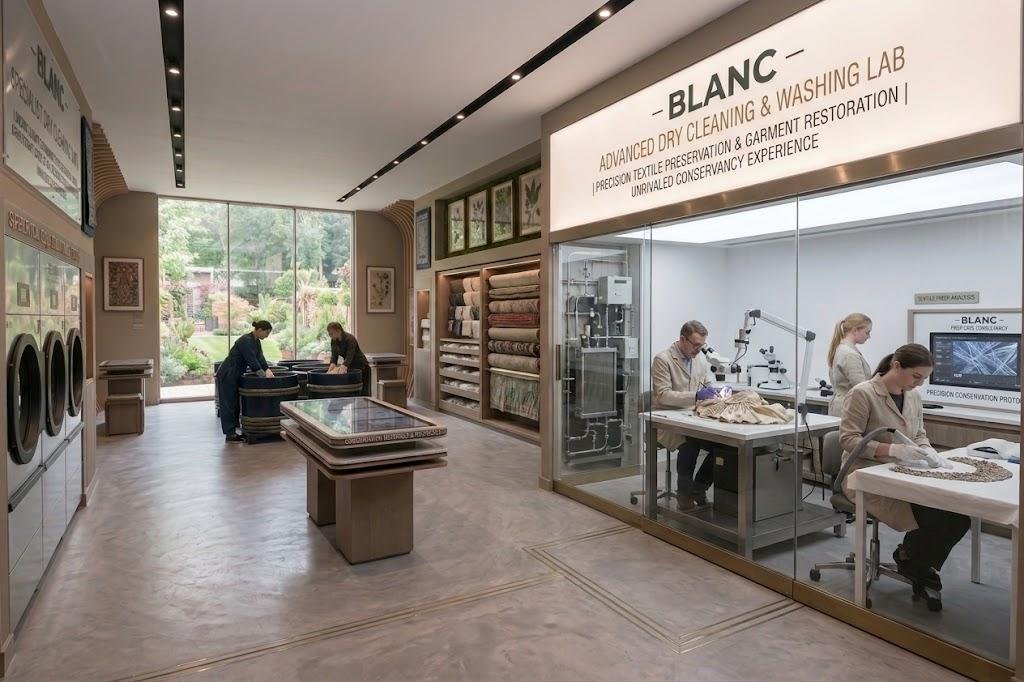
Dry dry cleaners and washing for fine clothing in London, with guidance on fabrics, cleaning methods, care steps, pricing and specialist garment services.
Fine clothing needs more than a standard wash cycle. Silk, cashmere, wool, velvet, lace, leather details and structured garments can respond differently to moisture, heat, friction and cleaning agents. The right process starts with the fabric and construction, not a generic machine setting.
For London wardrobes, specialist care can make sense when a garment has a delicate finish, intricate detailing or a significant sentimental value. What happens when a silk evening dress is treated like a cotton shirt? The fabric may lose its shape, finish or surface character.
Professional garment care combines inspection, stain treatment, cleaning, drying and finishing. Each stage matters. At BLANC Living, garments such as silk dresses, cashmere, couture pieces, bridalwear and structured tailoring are individually inspected before a cleaning method is selected.
The aim is simple: clean the garment without losing the qualities that made it special.
Specialist care for silk, wool, cashmere and fine fabrics
Different fibres react to cleaning in different ways. A silk blouse may need controlled moisture and gentle handling. Cashmere needs careful movement and drying. Wool can often be washed under the right care claim, yet its drying method remains important.
The Woolmark Company recommends checking the garment's care claim before washing wool. Approved machine-washable wool can usually be washed on a wool cycle, commonly around 40°C, with a mild neutral detergent.
Drying creates another point of risk. Wool knitwear should normally dry flat and away from direct heat. Hanging wet knitwear can stretch the garment because moisture adds weight to the fibres.
Fine fabrics need similar attention to detail. Silk can lose its surface character when exposed to unsuitable heat or aggressive movement. Velvet can become crushed. Lace can snag. Embellished garments can have beads, sequins or decorative elements that need individual assessment.
What should you do when the care label says dry clean only? Follow the label and give the garment to a service that can assess its fabric and construction before processing.
The same principle applies to couture and occasionwear. A dress may contain several materials in one piece, such as silk, lining fabric, embroidery and adhesive elements. One cleaning method may not suit every component.
Dr Allan De Boos, Program Manager for the Woolmark Wool Education Course, has worked across wool finishing, blended fabrics, garment manufacture and fibre science. His published Woolmark profile reflects the importance of understanding both fibre properties and garment construction when caring for wool pieces.
For a fine London wardrobe, dry cleaning and laundry London can involve different methods depending on the fabric, care label and construction. The important consideration is selecting a process that suits the individual garment rather than applying the same treatment to every item.
Cleaning methods for fine clothing in London
Professional cleaners may use several methods depending on the garment. Traditional solvent cleaning remains one route, yet modern specialist services can use wet cleaning or liquid CO₂ systems for selected pieces.
Dry cleaning uses a chemical solvent rather than water. The process can help remove particular oil-based soils without exposing some delicate materials to the swelling that water can cause.
Wet cleaning uses water with controlled chemistry, movement and temperature. This can suit selected washable fibres when the garment construction permits it.
Liquid CO₂ cleaning uses carbon dioxide under pressure as the cleaning medium. BLANC Living states that its London service uses liquid CO₂ and biodegradable wet cleaning, with garments assessed individually before the method is chosen.
Hand treatment can form part of any specialist process. Stains may need local pre-treatment before the main cleaning cycle. A cleaner may assess oil, wine, perspiration, cosmetics or food marks differently because each stain interacts with the fabric in its own way.
Which method is right? The care label gives an important starting point, but the label alone does not describe every detail of a garment's condition. Construction, trims, lining, colour, previous cleaning and visible staining can change the approach.
| Care method | Suitable garments | Main consideration | London price indication |
| Professional wet cleaning | Selected washable wool, cotton and fine garments | Moisture and movement must match the fabric | Varies by garment |
| Solvent dry cleaning | Dry-clean-only garments and selected structured pieces | Solvent compatibility and stain type | Varies by garment |
| Liquid CO₂ cleaning | Selected delicate and luxury garments | Requires specialist equipment and assessment | Usually quoted by provider |
| Hand treatment and finishing | Couture, embellishments and complex pieces | More individual handling time | Often assessed individually |
| Specialist bridal care | Wedding gowns and complex bridalwear | Fabric, layers, trims and preservation needs | Individual quote |
Prices can vary sharply between garments because a silk evening dress requires a different process from a basic shirt. BLANC current London price guide lists dresses from £18.60, cocktail dresses from £35.90 and evening dresses from £49.90, with wedding dresses quoted individually.
These figures are provider-specific indications rather than a universal London tariff. The final amount depends on the item and work required.
How dry dry cleaners and washing works from collection to finishing
A specialist service begins before the garment enters a cleaning machine. The first stage is inspection.
The cleaner checks the care label, fibre composition, visible marks, garment construction and decorative elements. Buttons, beads, sequins, trims, linings and bonded sections can affect the cleaning route.
Stains receive their own assessment. An oil mark may need different treatment from wine or perspiration. Old stains can become harder to remove because chemical changes may occur over time.
Next comes the cleaning stage. The selected method depends on the garment's requirements. A professional may choose wet cleaning, solvent cleaning or another specialist process.
After cleaning, drying must suit the fabric. Wool knitwear, for example, may need flat drying. Woven wool jackets can be hung on suitable hangers away from direct sunlight.
Finishing follows. This can include steaming, pressing, reshaping, brushing, folding or hanging. A shirt may need collar and cuff pressing. A structured jacket may require careful shaping around the shoulders and lapels.
The final inspection checks the garment's appearance and presentation. Is the shape correct? Are the visible marks treated? Does the fabric feel as expected? Are trims secure?
That final check matters for fine clothing because cleaning alone does not create the finished appearance.
Consider a London client preparing a silk evening dress for a formal event. The dress has a delicate lining, fine embroidery and a small wine mark near the hem. Sending it through a standard household wash would expose several areas to unnecessary risk. A specialist can assess the fabric, treat the mark, select a suitable cleaning method and finish the garment according to its construction.
BLANC Living follows an individual inspection model for garments brought into its service, with wet cleaning or liquid CO₂ selected according to the fabric before hand finishing and quality checks.
The same care logic applies to cashmere coats, wool suits, silk blouses, velvet jackets and formal dresses.
What affects the cost of specialist garment care?
Price depends on more than garment size. Fabric, construction, staining, finishing and required handling all influence the final figure.
A simple cotton dress may need a straightforward process. A silk evening dress with lining, embroidery and delicate trims can require more inspection and hand work.
BLANC's published London pricing gives a useful example. Its current list starts at £18.60 for a standard dress, £35.90 for a simple cocktail dress and £49.90 for an evening dress. Wedding dresses are quoted after assessment.
Specialist pieces can require individual quotes. BLANC states that wedding dresses, couture pieces, heavily embellished garments, leather and suede receive assessment before the cleaning method is selected.
What should you ask before approving the work? Ask which cleaning method will be used, whether stain treatment is included, how the garment will be finished and whether delicate trims require special handling.
Turnaround can vary too. Standard garment care may take a few days, whereas leather, suede, bridalwear or complex pieces may need longer handling time. BLANC currently states a standard turnaround of 48 to 72 hours, with leather and suede typically taking two to three weeks.
The figure matters, yet the process matters just as much for a fine garment.
WRAP reports that the average clothing lifetime in the UK has been estimated at around 2.2 years, with an additional nine months of active use capable of reducing the environmental impact associated with clothing.
Care forms part of that longer-use picture. Proper washing, repair and maintenance can help keep valuable garments in circulation for more time.
Choosing a specialist for fine clothing in London
Start with the garment, not the company name. A cleaner who mainly handles everyday laundry may not have the same process for couture, bridalwear, leather or heavily embellished pieces.
Check whether the service explains its cleaning methods. Clear information about wet cleaning, solvent cleaning, liquid CO₂, stain treatment and finishing gives you a better sense of how garments are handled.
Look at the range of materials covered. A specialist dealing with silk, cashmere, wool, lace, velvet, leather, suede and embellished fabrics needs processes that account for very different material properties. BLANC lists these categories among the fabrics and garment types handled across its London service.
Location can matter too. London clients may search for dry cleaners in Chelsea, Marylebone, South Kensington, Notting Hill, Mayfair, Holborn, Maida Vale or the City. Collection and delivery can make specialist care easier when a garment needs assessment rather than a quick drop-off.
Ask about the inspection stage. Does the cleaner record the condition before cleaning? Are stains identified? Are loose trims checked? Is the garment inspected again after finishing?
A specialist such as BLANC Living focuses on garment care across several London studios and its West London Atelier, where garments are individually inspected and processed according to their fabric and construction.
Environmental handling can matter too. Some dry-cleaning installations fall under local environmental permitting arrangements, particularly where regulated solvents are used. Ask the provider which cleaning systems it operates and how solvent use is controlled.
Care should never end when the garment leaves the cleaning facility. Woolmark advises keeping wool away from direct heat and sunlight during drying and storing knitted wool folded rather than hanging it.
For fine clothing, the strongest service is one that treats cleaning as part of the garment's wider care cycle.
Frequently asked questions
What does dry dry cleaners and washing mean?
The phrase can describe professional garment care that combines dry-cleaning and washing methods according to the fabric. In practice, the correct method depends on the care label, fibre composition, construction and condition. A specialist may use solvent cleaning, wet cleaning, liquid CO₂ or hand treatment for different garments.
Is professional garment care suitable for silk clothing?
Yes, when the service has a process suited to silk. Silk can respond poorly to unsuitable heat, moisture and friction. The cleaner should check the care label, fabric, colour, lining and trims before choosing a method. A silk evening dress may need more individual handling than a simple silk blouse.
How much does fine clothing cleaning cost in London?
There is no single London price. Current BLANC pricing lists standard dresses from £18.60, simple cocktail dresses from £35.90 and evening dresses from £49.90. Wedding dresses receive individual quotations.
What is the cost of dry cleaning an evening dress in London?
Current BLANC pricing lists evening dresses from £49.90. The final amount can vary when the garment has intricate decoration, delicate fabric, unusual construction or significant staining. Ask for an assessment before cleaning if the garment has high material or sentimental value.
Can wool clothing be washed professionally?
Yes. Woolmark states that many approved wool garments can be machine washed when their care claim permits it. A gentle wool cycle and mild neutral detergent are recommended. Some wool garments still require hand washing or dry cleaning, so the care label should guide the process.

 Arabic
 French
 Spanish
 Portuguese
 Deutsch
 Turkish
 Dutch
Dutch
 Italiano
 Russian
 Romaian
 Portuguese (Brazil)
 Greek
Greek