


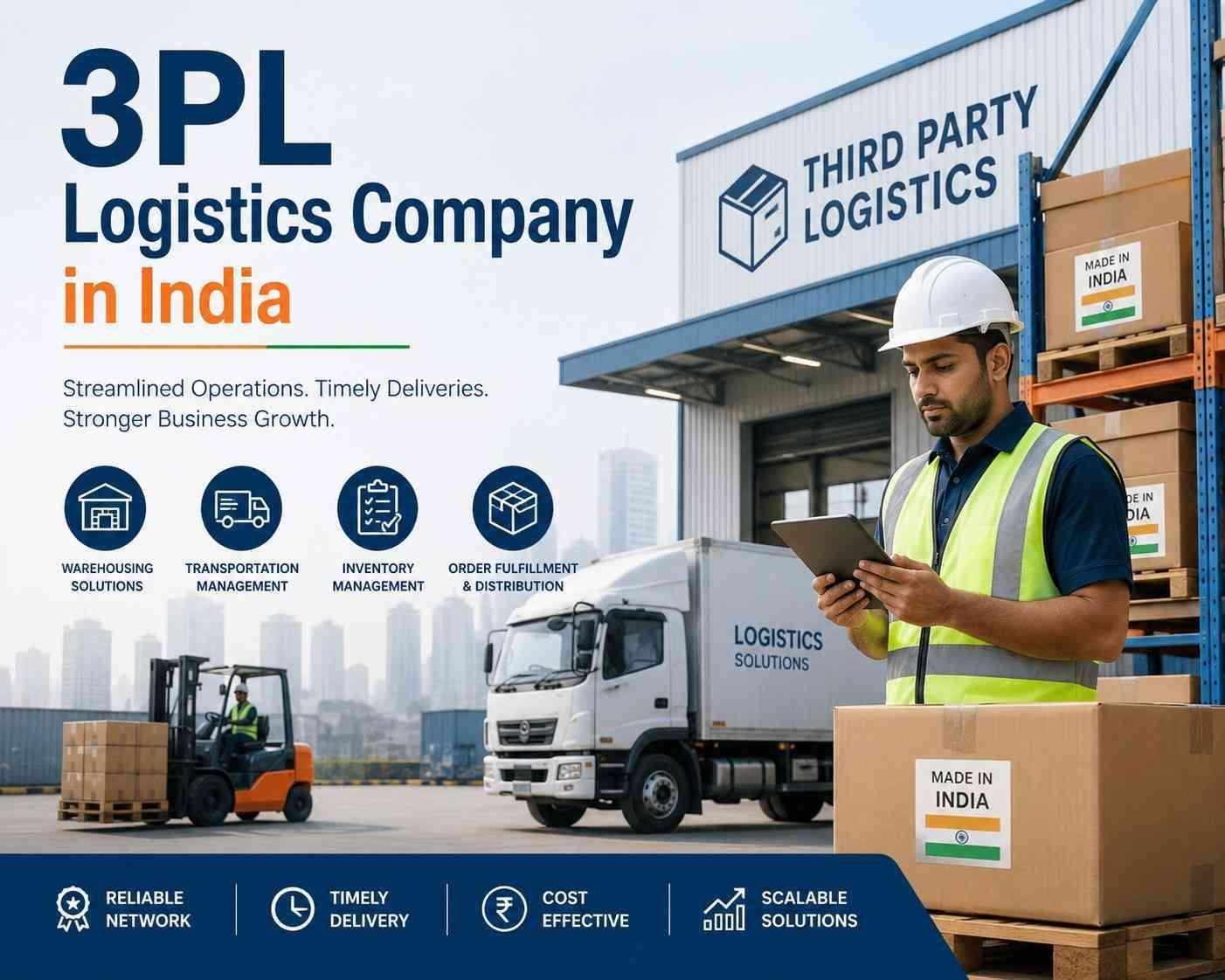
A logistics problem rarely begins with a truck arriving late. More often, it starts much earlier, when stock is not available at the right location, dispatch information is incomplete, or a delivery commitment is made without checking the actual transportation plan. This is why choosing a 3PL logistics company in India requires more thought than comparing freight rates or looking at the size of a provider's network.
For manufacturers, distributors, wholesalers, and growing e-commerce businesses, third-party logistics can help manage transportation, warehousing, inventory movement, and distribution. The real value, however, depends on how well these activities work together. A provider that offers several services but struggles to coordinate them may create more work for your team instead of reducing it.
Why Businesses Need to Rethink Third-Party Logistics
As businesses expand into new markets, logistics decisions become harder to manage internally. A company might begin by shipping from one warehouse to a few distributors. Over time, it may handle different shipment sizes, multiple delivery locations, changing order volumes, and tighter delivery commitments.
The difficulty is not always a shortage of transport capacity. Sometimes, goods are ready before a vehicle is available. In other cases, a vehicle reaches a warehouse, but the consignment is not prepared for loading. These small gaps can affect delivery schedules and increase handling costs.
This is where third-party logistics becomes useful. Instead of building every logistics capability independently, a business can work with an external provider for selected activities or a broader range of operations. The arrangement can give the business access to transportation and warehousing support without requiring it to manage every resource directly.
Still, outsourcing does not automatically solve operational problems. If internal teams cannot share accurate order details, dispatch priorities, or inventory information, a logistics partner will face the same difficulties. Businesses should therefore treat outsourcing as an operational change, not simply a vendor appointment.
What a 3PL Logistics Company in India Should Actually Handle
A third-party logistics provider can manage different combinations of transportation, storage, order processing, freight coordination, and distribution. The right combination depends on the business model rather than the number of services listed on a website.
For a manufacturer, the immediate requirement might be moving raw materials to a production facility and finished goods to distributors. A wholesaler may need regular replenishment across several markets, while an e-commerce business may require storage, order processing, parcel dispatch, and returns coordination. Each operation has a different pressure point.
Consider a distributor supplying retailers across several cities. If every shipment is arranged separately, the business may struggle to coordinate vehicle availability, delivery schedules, and shipment documentation. A suitable logistics arrangement can bring these activities into a more organized process, provided that responsibilities and communication channels are clearly defined.
A capable 3PL logistics company in India should also be transparent about the boundaries of its service. Does it arrange transportation only, or does it manage warehousing as well? Who tracks pending deliveries? How are delays communicated? What happens when a shipment arrives with damaged packaging or incomplete documentation?
These questions matter because unclear responsibility often becomes visible only after something goes wrong. Before signing an agreement, businesses should understand who owns each stage of the shipment and how exceptions will be handled.
Inventory Management Logistics Services Are About More Than Storage
Warehousing is often evaluated by available space and rental cost. That approach misses a major part of the operational picture. Goods need to be received, recorded, located, picked, prepared for dispatch, and reconciled against inventory records.
Inventory management logistics services can help businesses coordinate these activities and maintain a clearer view of stock movement. For example, a distributor handling fast-moving and slow-moving products needs to understand which items require frequent replenishment and which can remain in storage for longer periods.
A warehouse may have enough physical capacity but still perform poorly if products are difficult to locate or stock records are inaccurate. Employees may spend time searching for items, dispatches may be delayed, and the system may show stock that is not actually available for sale.
In reality, these problems cannot always be solved by introducing more software. A warehouse management system is useful when receiving procedures, product identification, stock updates, and dispatch records are followed consistently. Without reliable processes, technology simply records unreliable information faster.
Businesses should also decide how much inventory visibility they need from their logistics partner. Some require periodic stock reports, while others need more frequent updates to coordinate replenishment and customer orders. The reporting arrangement should match the speed at which the business makes decisions.
Affordable 3PL Logistics Solutions Should Be Judged by Total Cost
A low transportation quote can appear attractive until additional expenses begin to surface. Waiting charges, repeated handling, underutilized vehicles, extra storage, and missed delivery slots can affect the actual cost of moving goods.
This is why affordable 3PL logistics solutions should be assessed against the complete operating cost rather than the initial rate alone. A provider offering a lower freight charge may not be the most economical option if its delivery process creates repeated delays or requires additional coordination from the client's team.
For example, a business shipping smaller consignments to several destinations may benefit from consolidated transportation when delivery schedules allow it. A company moving a large, time-sensitive consignment may need a dedicated vehicle instead. The cheapest option depends on the shipment, route, cargo characteristics, and delivery commitment.
Honestly speaking, businesses sometimes focus so heavily on negotiating rates that they overlook how much time their own employees spend following up on shipments. Frequent calls, manual status updates, and resolving preventable dispatch errors also consume resources.
A more useful comparison examines the cost per shipment or delivery, service reliability, handling requirements, and the effort required from internal teams. Businesses should agree on which charges are included in the quotation and which may be billed separately. This makes the comparison more realistic and reduces the chance of disagreements later.
When End-to-End 3PL Logistics Services Make Sense
Some businesses prefer to work with separate vendors for transport, warehousing, and distribution. Others want a single provider to coordinate most of the supply chain movement. Neither arrangement is automatically better.
End-to-end 3PL logistics services can be useful when multiple logistics activities depend on one another. If a shipment moves from storage to dispatch and then through several delivery stages, coordinated planning can make it easier to identify delays and understand where a process is breaking down.
However, a single provider should not be selected merely because it promises to handle everything. Businesses need to examine its actual capabilities, geographic coverage, operating processes, and ability to manage their specific cargo requirements. The scope of responsibility should be documented rather than assumed.
A specialized provider may be more suitable for a particular route or handling requirement, while a broader logistics partner may fit a business that needs consistent coordination across several operations. The decision should reflect the complexity of the supply chain and the level of control the business wants to retain.
How to Evaluate a Third Party Logistics Service Provider
Choosing a third party logistics service provider should begin with an honest assessment of current operational problems. Before requesting quotations, review where delays occur, which routes create the most difficulty, how inventory is recorded, and what customers expect from delivery schedules.
Use the following checks when comparing potential partners:
-
Service fit: Confirm that the provider can handle your shipment sizes, cargo type, storage needs, and delivery locations.
-
Operational visibility: Ask how shipment updates, inventory reports, and delivery exceptions will be communicated.
-
Cost transparency: Review the full pricing structure, including additional handling, waiting time, storage, and other applicable charges.
-
Accountability: Establish who will resolve missed pickups, damaged consignments, delivery disputes, and documentation issues.
-
Scalability: Check whether the arrangement can accommodate seasonal demand or expansion into new markets without unnecessary complexity.
It is also worth running a controlled trial before shifting a large share of the business's logistics operations. Start with a defined route, shipment category, or warehouse activity. Review actual performance against agreed expectations, then expand the arrangement if the results justify it.
What Will Shape 3PL Logistics Services in India in 2026?
In 2026, businesses are increasingly interested in better shipment visibility, more accurate inventory information, and technology-supported transportation planning. These capabilities can help teams identify exceptions earlier and make decisions using operational data instead of relying entirely on phone calls and manual spreadsheets.
Yet technology should not be confused with operational maturity. A tracking dashboard has limited value if shipment updates are delayed or nobody is responsible for acting on them. Similarly, automated inventory reports cannot compensate for inaccurate receiving and dispatch records.
Another important consideration is flexibility. Businesses may face seasonal demand, changing order patterns, or new delivery destinations. Logistics arrangements should define how additional capacity, revised schedules, and exceptional shipments will be managed.
Sustainability and transportation efficiency may also influence logistics decisions, particularly where businesses can consolidate compatible shipments, improve vehicle utilization, or evaluate alternative transport modes. The appropriate choice will depend on delivery deadlines, cargo requirements, route availability, and the overall cost of the journey.
Conclusion
Selecting a logistics partner is ultimately a decision about how your business wants goods to move, how much operational responsibility it wants to retain, and where external expertise can make a measurable difference.
A suitable 3PL arrangement should address specific problems, whether those involve transportation coordination, warehouse operations, inventory accuracy, or distribution planning. Businesses should compare providers on service fit, transparent costs, communication, and accountability rather than relying on broad promises.
OnPoint Logistics is one option businesses can explore when assessing transportation and logistics support. Before making a decision, define your shipment requirements, discuss the operational details, and establish clear performance expectations. The right partnership is one that fits the way your business operates and helps your team manage logistics with greater clarity.
Frequently Asked Questions
1. What does a 3PL logistics company in India do?
Ans. A 3PL logistics company manages selected logistics activities for businesses, such as transportation, warehousing, inventory handling, and distribution. The exact services depend on the provider and the agreement with the client.
2. How can third-party logistics reduce business operating costs?
Ans. A suitable provider may help improve vehicle utilization, coordinate shipments, reduce avoidable handling, and organize warehouse operations. Savings depend on shipment patterns, service quality, pricing, and the efficiency of the existing logistics process.
3. What is the difference between 3PL and a transportation company?
Ans. A transportation company may focus mainly on moving goods between locations. A 3PL provider can offer a broader range of services, including storage, inventory coordination, order processing, and distribution, depending on its capabilities.
4. Are affordable 3PL logistics solutions suitable for small businesses?
Ans. They can be suitable for small businesses that want logistics support without independently managing every transport or storage activity. Businesses should compare minimum charges, shipment volumes, service coverage, and any additional fees before committing.
5. What should businesses check before hiring a third-party logistics service provider?
Ans. Check service coverage, cargo-handling capabilities, pricing transparency, shipment visibility, inventory processes, and responsibility for resolving delivery problems. A small trial can help validate whether the provider meets operational expectations.

 Arabic
 French
 Spanish
 Portuguese
 Deutsch
 Turkish
 Dutch
Dutch
 Italiano
 Russian
 Romaian
 Portuguese (Brazil)
 Greek
Greek